Before 1935
A family at home
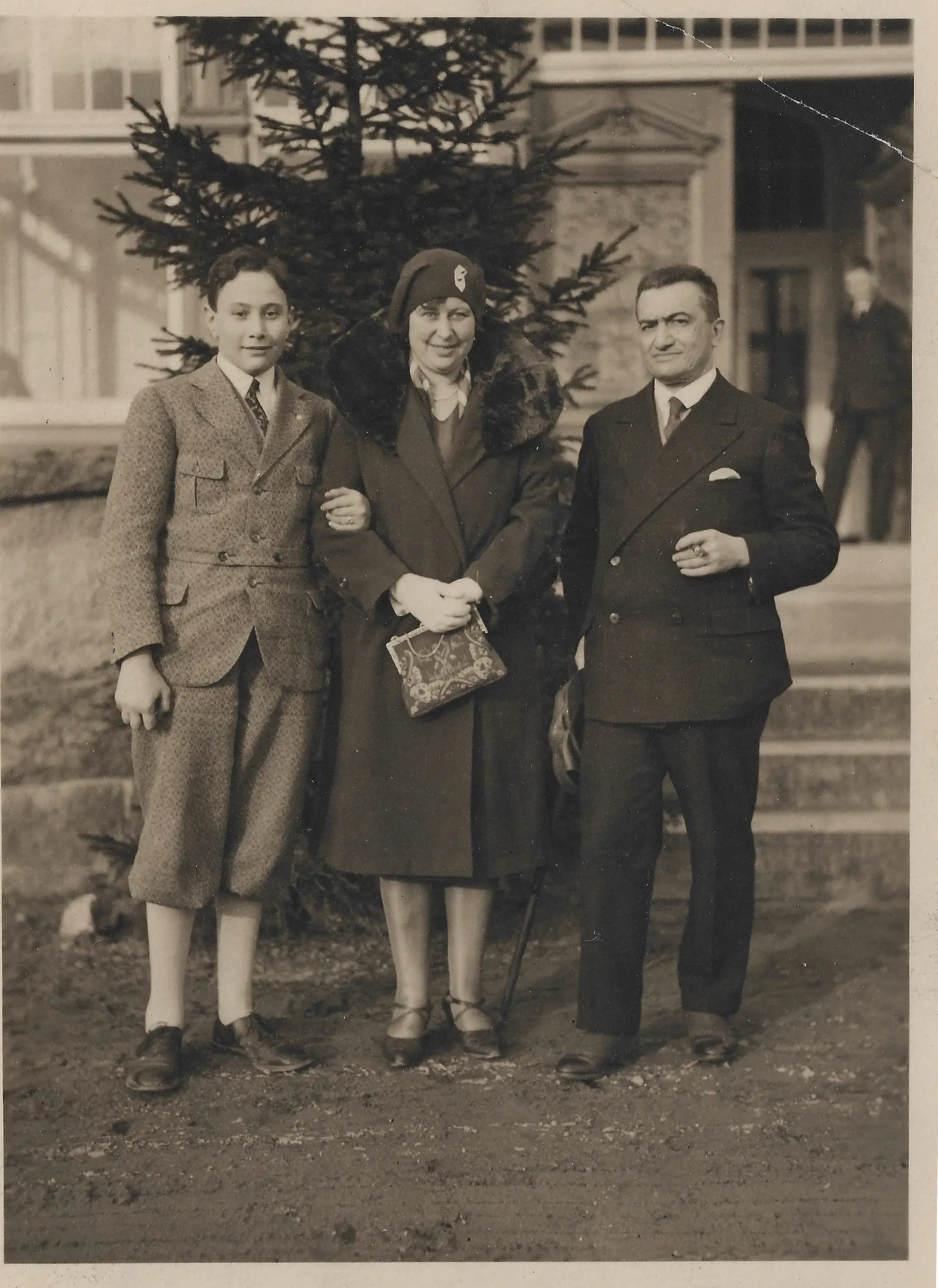
Dolf, Margarete and Paul, before exile separated the household.

Beginning with Dolf’s St. Moritz letter · 26 November 1938
Commerce · Citizenship · Persecution · Exile · Continuity
Dolf, Margarete and Paul Reichenbach · before 1935
From the family
Photographs, letters, store objects, municipal records and family memories carry this story. They preserve a family at home before persecution, the violence that separated its branches, and the work of building Jewish life again.
This archive lets the family remain people while showing the sources, uncertainties and later memories that shape what can be said.
St. Moritz · 26 November 1938
“Es ist draussen auch schön ohne Geld, man ist wieder Mensch, bedenke das immer.”
“It’s also nice outside without money, one is a person again, always keep that in mind.” — Dolf to his mother · English translation by Rabbi Dr. Esther Jilovsky
Start here
Dolf’s letter from St. Moritz is the heart of the archive: a son writing to his mother after November 1938, trying to give her courage to leave. From that page, the family story, One Day and the source records open outward.
Dolf’s St. Moritz letter · 26 November 1938The page that started the archive: Dolf writing to his mother after November 1938.
Halberstadt synagogue · c. 1930A chronicle of one of Central Europe’s great Jewish communities, from 1261 to the present.
J. Reichenbach wooden hangerLetters, photographs, commercial objects, memorials and records—with translations and provenance.
Modern AI reconstruction · not evidenceExplore all twelve historical advertising stamps beside clearly labeled reconstructions of the façade, sales rooms and workshops.
Three moments · one family history
Three records, held apart with enough space to see them: family life, destroyed streets, a name written back.
Before 1935
Dolf, Margarete and Paul, before exile separated the household.
8 April 1945
Halberstadt after the Allied bombing that destroyed the family’s former commercial quarter.
28 May 2022
Rabbi Daniel Dolph Reichenbach signs Halberstadt’s Golden Book during a return by descendants.
Each image opens to its complete archive record, including source, credit, treatment and remaining uncertainty.
A house of commerce
The store, the family homes, Paul’s Alpine Club membership and the graves in the Jewish cemetery show how deeply the Reichenbachs were rooted in the city.
The department store at Hoher Weg 27 and Martiniplan 10 joined two buildings beneath glass. Surviving hangers, photographs, advertisements and documents preserve the firm’s own language and the work of the people inside it.
One family · two Harz cities
Salomon Gustav Reichenbach was Jacob and Helene’s son and Adolf’s brother.
Gustav married Jeanette Rosenbaum, who became the proprietor of J. Reichenbach at Breite Straße 7. Their son Fritz was dispossessed and murdered; their grandson Werner carried the line to survival in Brazil.
Family portraits
Paul, Margarete, Ruth and Dolf appear here at work, at home, outdoors and together.
A town with a long Jewish history
Protection, expulsion, return, learning, commerce and religious innovation shaped the town’s Jewish life from the Middle Ages onward.
The site places the family inside that larger story without using local history as a substitute for family evidence. Visitors can move between street, synagogue, cemetery, store and document.