Reading Room
Selected documents and objects
Begin with a 14-record path through the family story, or browse all 64 records selected for the Reading Room. The Complete Catalog lists every one of the archive’s 375 public records across 9 series.
Filter and sort
The curated sequence is retained within this selected kind.
By kind
What survives
Open a selected card for its source, date, evidence status, credit and reuse terms. Use the Complete Catalog for the full public collection.
Showing 19 of 19 records
Halberstadt and Wernigerode
Photographs
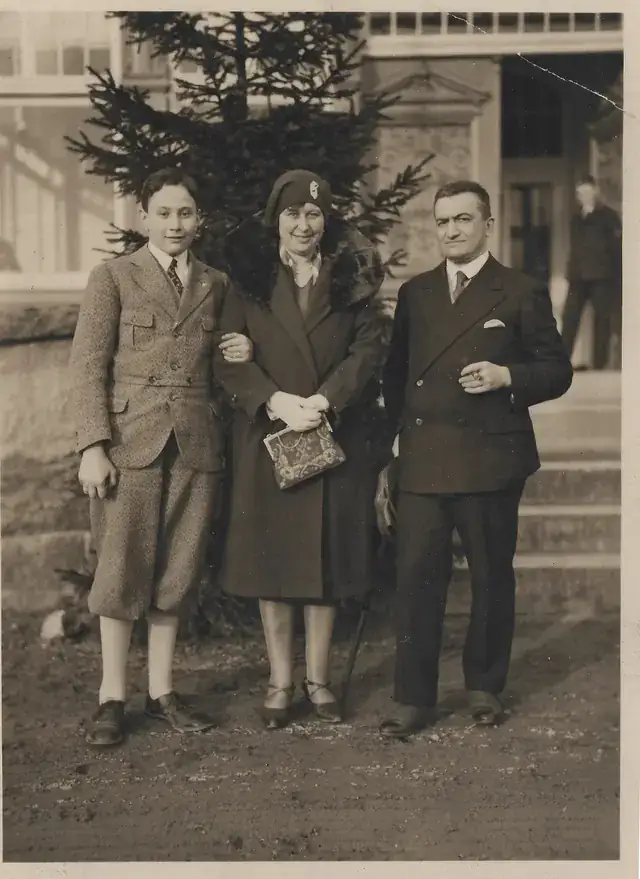
The Reichenbach family
Dolf stands beside Margarete and Paul in the principal surviving family portrait from before 1935.
Halberstadt and Wernigerode
Photographs
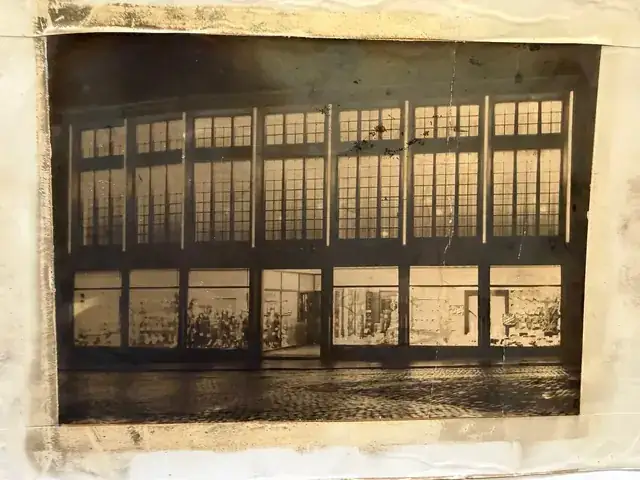
Kaufhaus Reichenbach at Martiniplan 10 at night
A family-held night photograph records the illuminated Martiniplan 10 façade and display windows.
The American chapter
Photographs
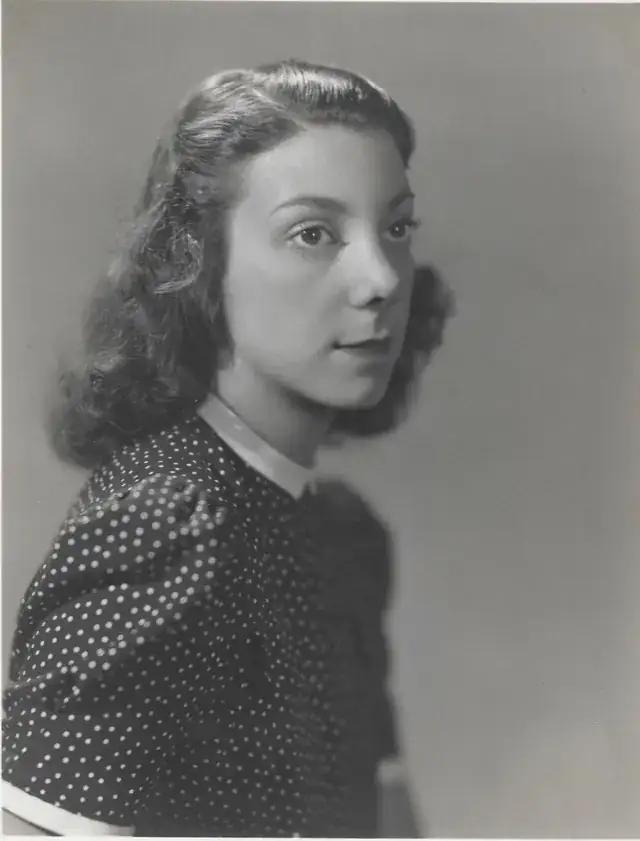
Susan “Subie” Ulmer Reichenbach at seventeen or eighteen
A family-held studio portrait shows Susan “Subie” Ulmer at about seventeen or eighteen, before her marriage to Dolf.
The American chapter
Photographs
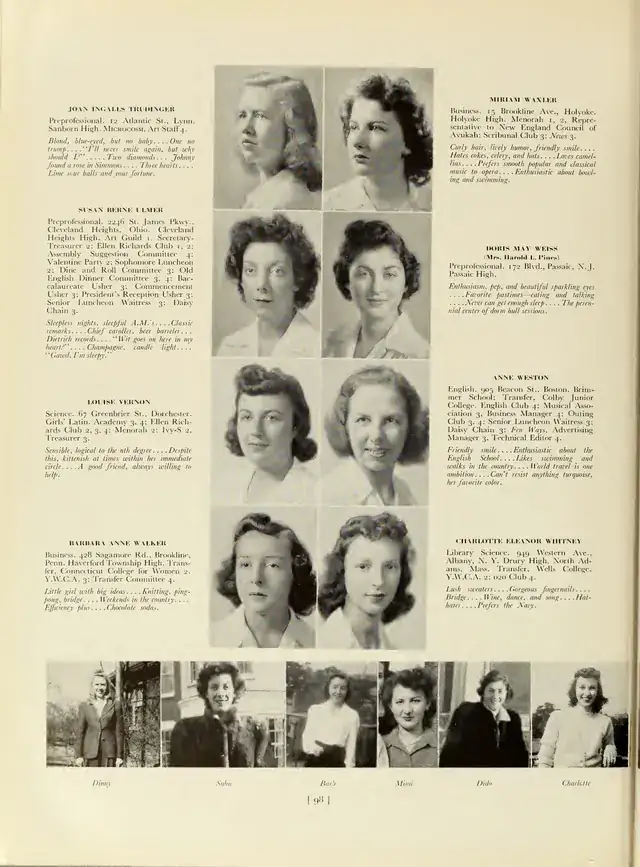
Classmates already called her Subie
The 1943 Simmons yearbook gives Susan Berne Ulmer’s portrait, school record and the nickname Subie.
Halberstadt and Wernigerode
Photographs
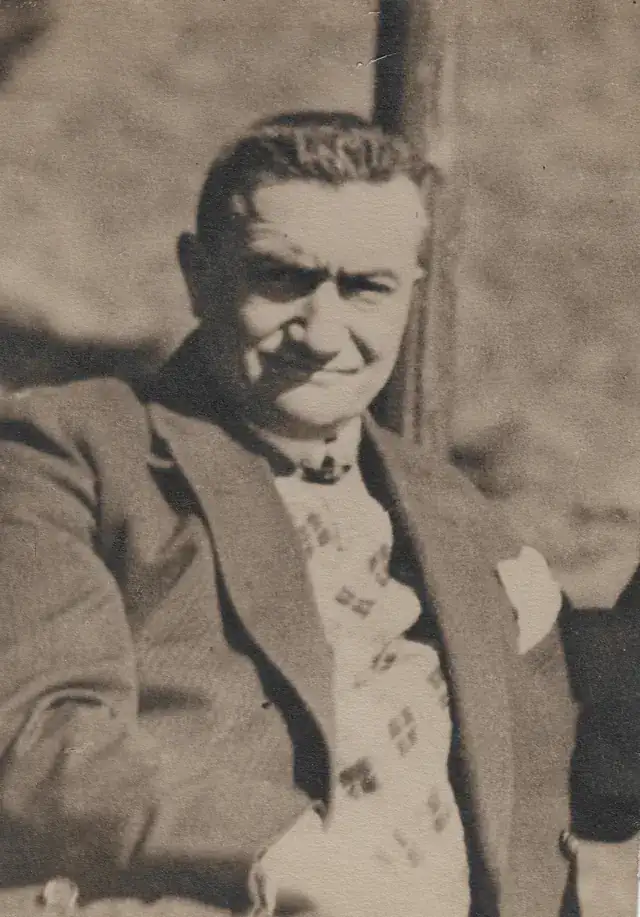
Paul Reichenbach late in life
Paul Reichenbach late in life. The direct scan keeps the print’s border, fading and surface marks. The date, place and photographer remain unknown.
Halberstadt and Wernigerode
Photographs
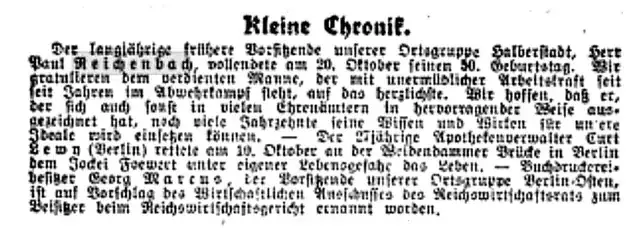
Paul Reichenbach at fifty
The Central-Verein-Zeitung congratulated Paul on his fiftieth birthday and recalled his leadership, honorary offices and years of work against antisemitism. The notice lets us hear how a Jewish civic organization described him in 1926; it is a public tribute, not a complete account of his life.
Halberstadt and Wernigerode
Photographs
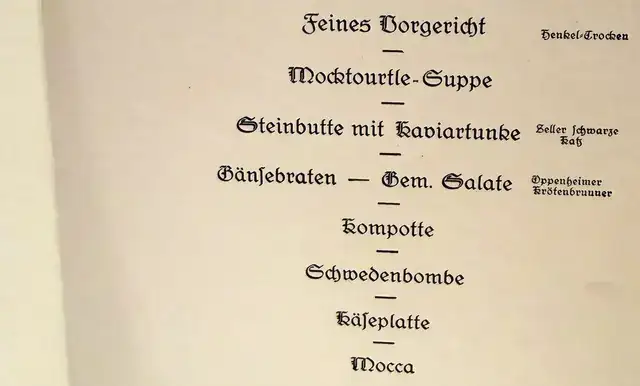
The menu from Ruth and Albert’s wedding meal
The printed menu from Ruth Reichenbach and Albert Rothschild’s wedding meal in Halberstadt on 3 August 1933: appetizer, mock-turtle soup, turbot with caviar sauce, roast goose, compotes, Swedish bombe, cheese and mocha. The menu lets us reconstruct what the guests were served. It does not name the cook, caterer or venue.
Halberstadt and Wernigerode
Photographs
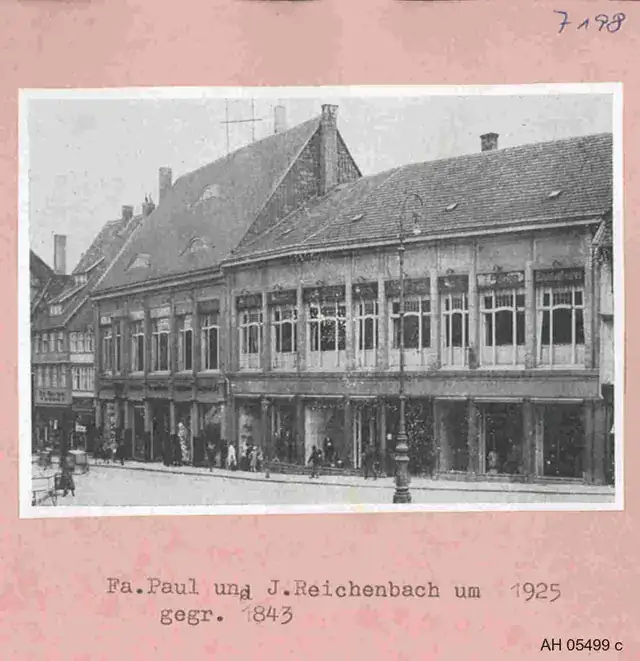
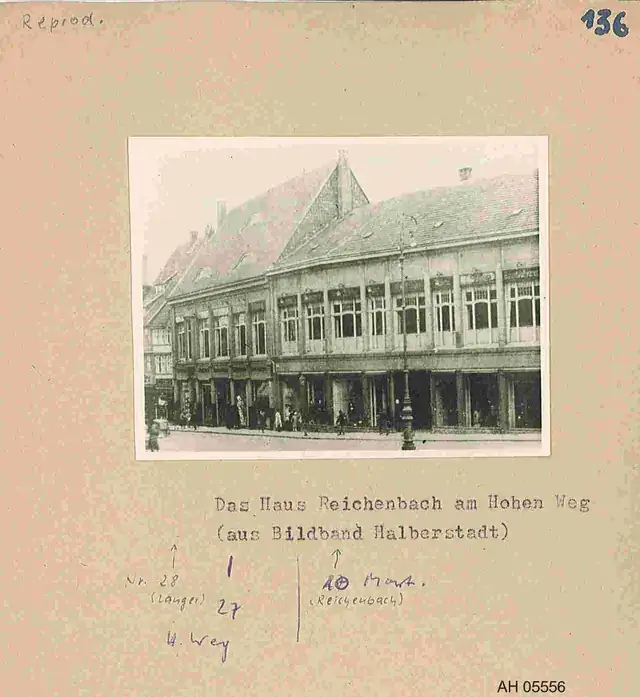
Kaufhaus Reichenbach exterior
The mounted print names Paul and J. Reichenbach and preserves the long Hoher Weg frontage as it was catalogued in 1925.
Halberstadt and Wernigerode
Photographs
Kaufhaus Reichenbach façade
This view gives the clearest straight-on record of the shopfront rhythm, upper windows and roofline.
Halberstadt and Wernigerode
Photographs
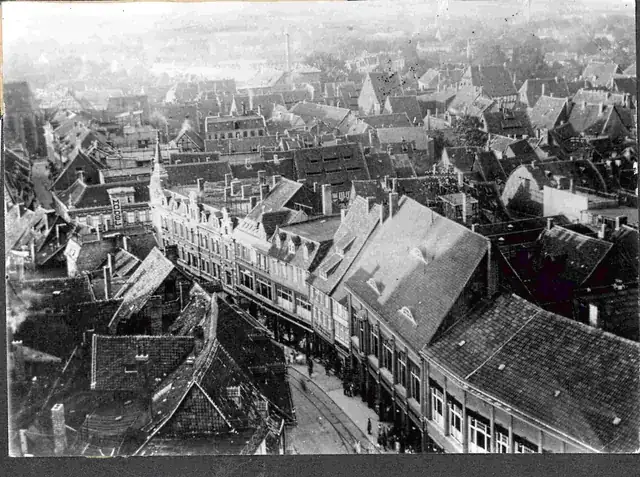
Hoher Weg 35–27 and Martiniplan 10
The elevated city view places the long commercial block within Halberstadt’s dense roofs and adjoining streets.
Halberstadt and Wernigerode
Photographs
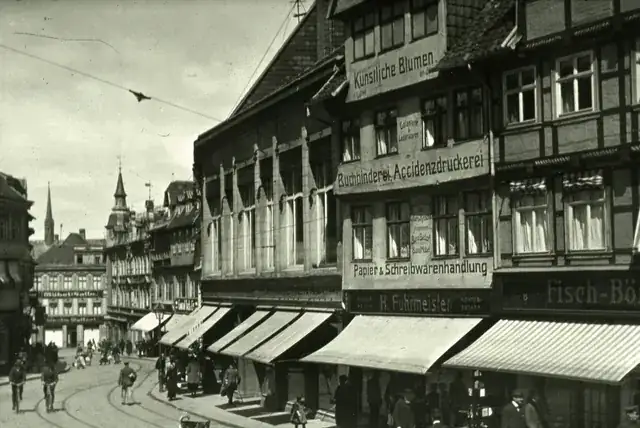
Hoher Weg toward Martiniplan
Rather than isolating the store, this view records the approach along a busy retail street of awnings, signs, pedestrians and neighboring businesses.
Halberstadt and Wernigerode
Photographs
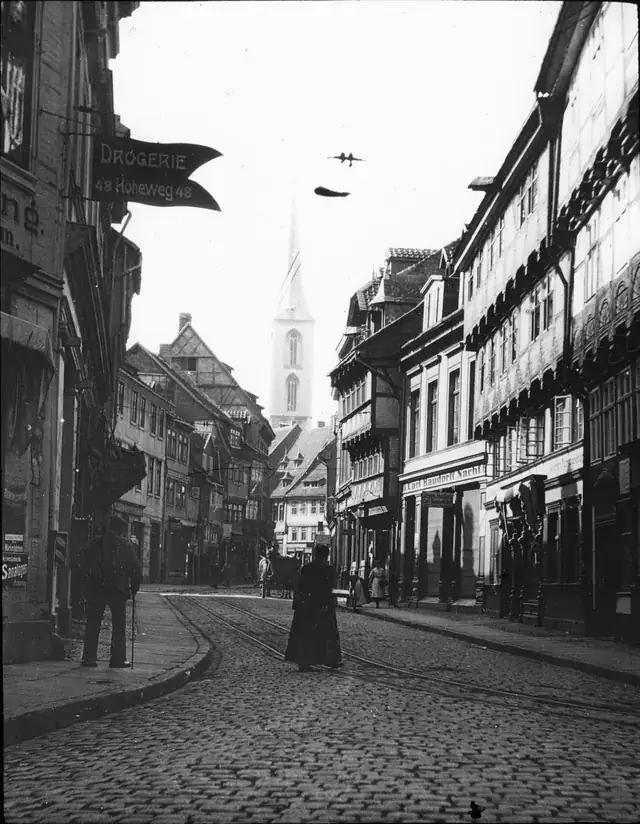
Hoher Weg with Martinikirche
This open-use street photograph predates the 1910–1913 Reichenbach rebuild and shows Hoher Weg as a dense retail street near Martinikirche. The visible sign reads Drogerie 48 Hoheweg, so it is contextual, not a view of Hoher Weg 27.
Halberstadt and Wernigerode
Photographs
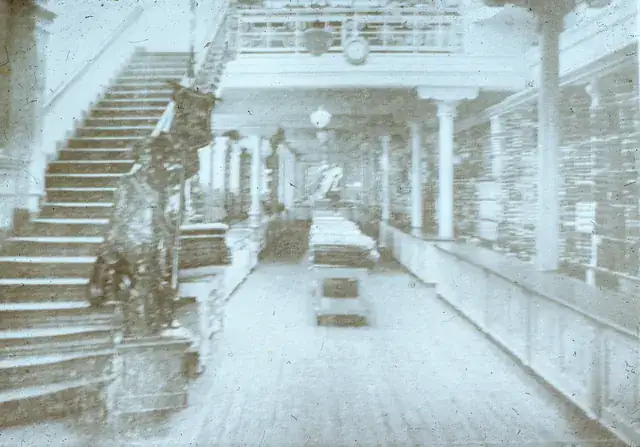
Inside the Kaufhaus Reichenbach sales floor
The sales floor joins the building plans to a working interior: staircase, counters, shelving and the upper gallery occupy one continuous space. The museum catalogue does not name the photographer, and the faded slide cannot tell us who was working in the room.
Halberstadt and Wernigerode
Photographs
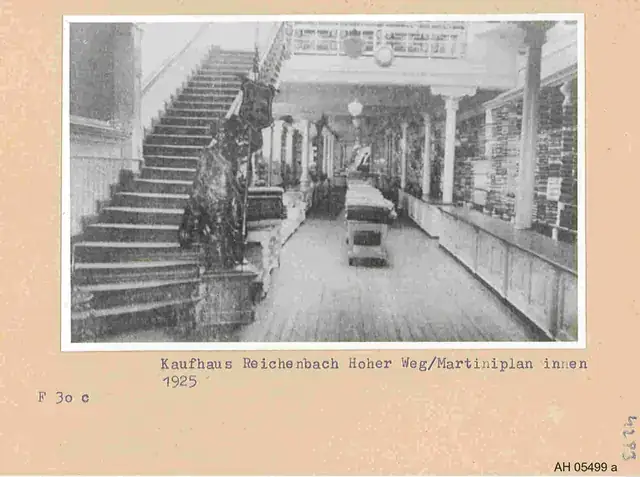
A mounted print of the Kaufhaus Reichenbach sales floor
A museum-mounted 1925 print preserves the same sales-floor view with its contemporary catalogue label and signature. The mount shows how the museum kept and catalogued the photograph, not a different room.
Halberstadt and Wernigerode
Photographs
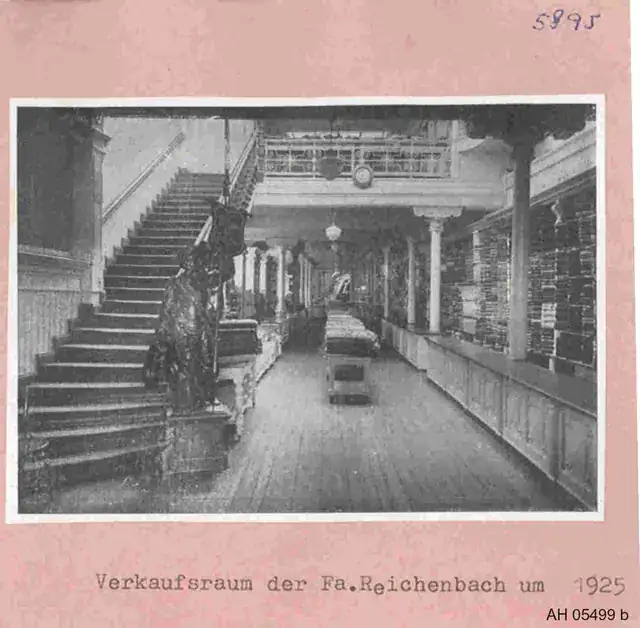
A second mounted print of the Kaufhaus Reichenbach sales floor
A second mounted print preserves the same interior photograph with a different crop and catalogue mount. Its changed crop does not establish a second room or a second date.
Halberstadt and Wernigerode
Photographs
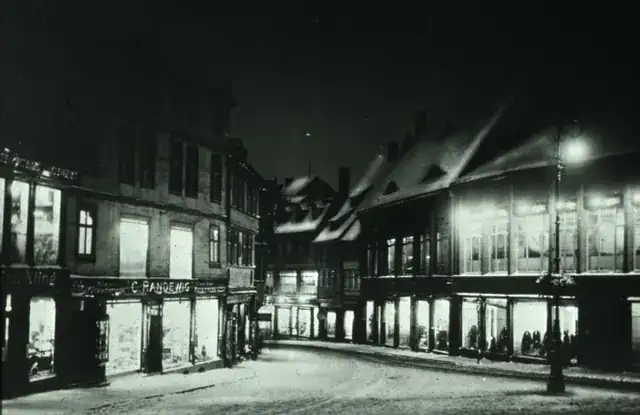
Martiniplan and Kaufhaus Reichenbach after dark
At night, the block becomes a field of illuminated display windows. The museum record identifies Martiniplan 11 at left and Nos. 10, 9 and 8 at right, including Kaufhaus Reichenbach.
Halberstadt and Wernigerode
Photographs
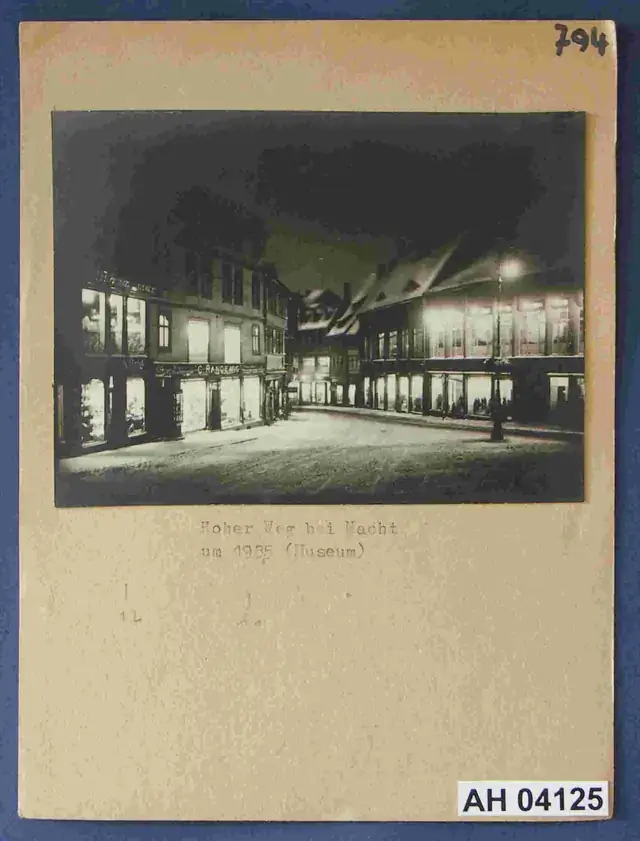
Hoher Weg and Martiniplan lit at night
The mounted print preserves a brighter version of the same night scene and the museum's handwritten 1935 identification. It shows the same scene as the direct slide; it does not document a separate night or a second view of the building.
Halberstadt and Wernigerode
Photographs
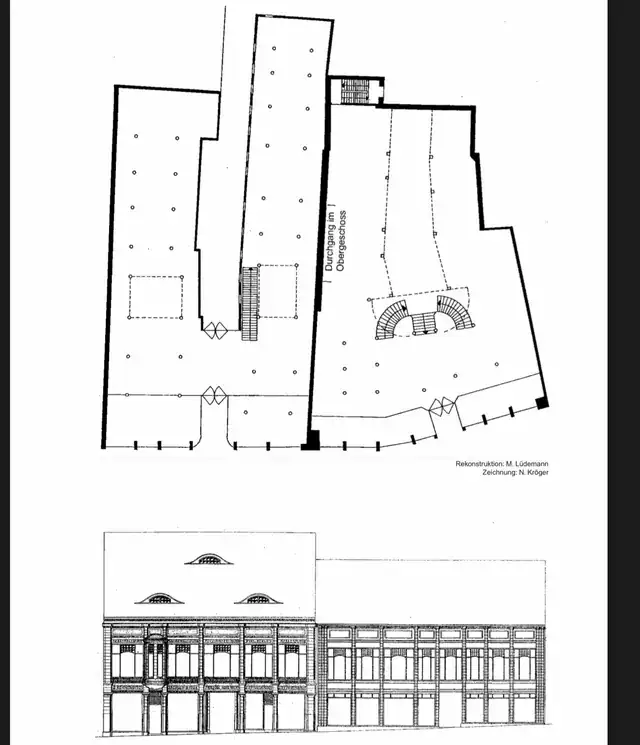
Reconstructed plan and elevations of Kaufhaus Reichenbach
Monika Lüdemann’s 2004 study reconstructs the connected ground plan and 1913 street elevations of Hoher Weg 27 and Martiniplan 10, drawn by Nicola Kröger from the cited municipal building files. The plate lets us see how the two street fronts joined. Exact dimensions and linework still have to be checked against the original municipal drawings.
Halberstadt and Wernigerode
Photographs
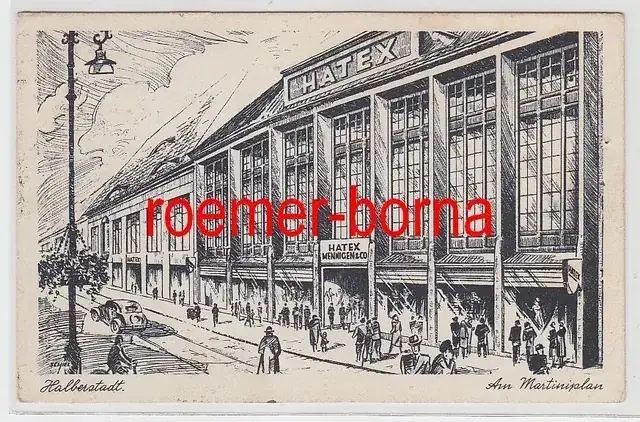
HATEX, Mennigen & Co. postcard of the former Reichenbach store
An illustrated postcard turns the former Reichenbach façade into an advertisement for HATEX, Mennigen & Co. The roofline carries enormous HATEX letters; the Reichenbach name has disappeared. Read beside the official Aryanization list, the image gives the transfer of a Jewish family’s commercial world an unusually direct visual and emotional force.
Explore all civil evidence: registers, citizenship, addresses and sources cited in the biographies.