Browse one archival series
Genealogy and research records
Compiled genealogies, access copies and records that support continuing research.
38 · 1808–2022
Arrangement: historical records follow their date; conventional viewing copies stay with their source, while new interpretations use their creation date. Related pages and views stay together; undated records follow.
Filter record results by archival series
Documents and objects Showing 1–38 of 38
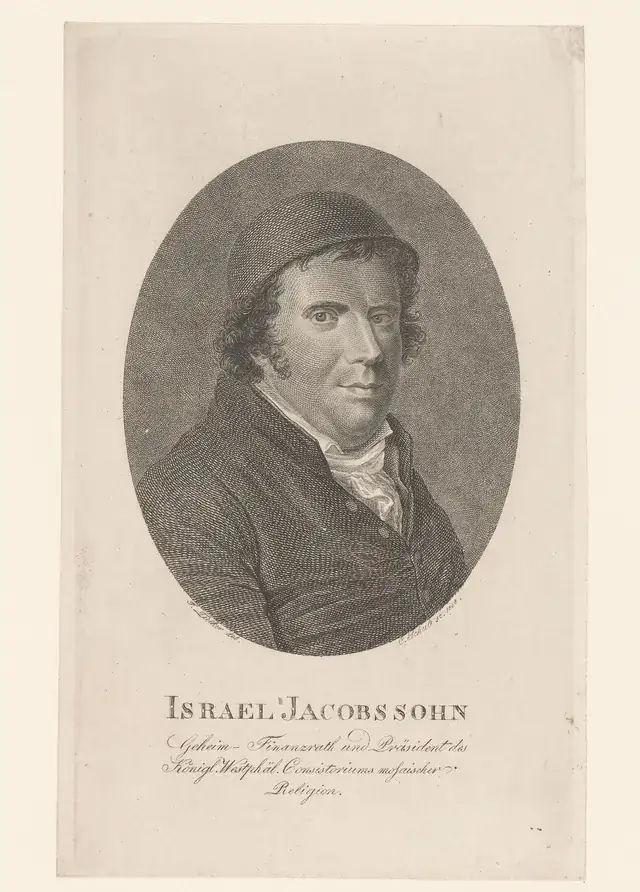 Document / objectThis portrait shows Halberstadt-born reformer Israel JacobsonThis historical portrait presents Israel Jacobson, born in Halberstadt in 1768 and active in Jewish civic emancipation and religious reform. An artist made the likeness for public circulation. It gives the city’s wider Jewish context, but it does not establish a connection to the Reichenbach family.
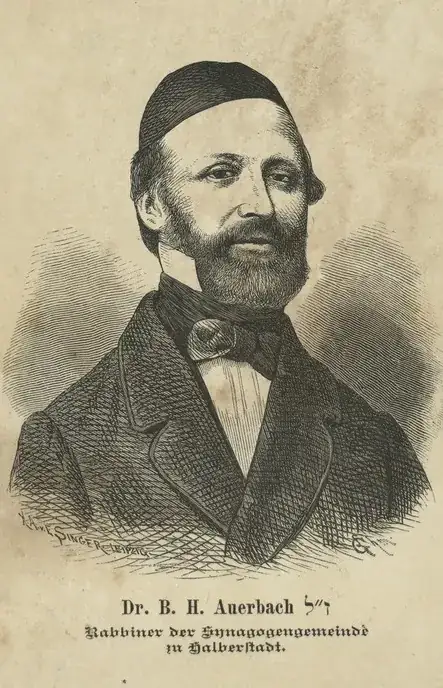 Document / objectThis portrait shows Rabbi Benjamin Hirsch AuerbachThis historical portrait presents Benjamin Hirsch Auerbach, rabbi of Halberstadt from 1863 and author of the congregation’s documentary history. An artist made the likeness for public circulation. It provides communal context, but it does not document a personal Reichenbach connection.
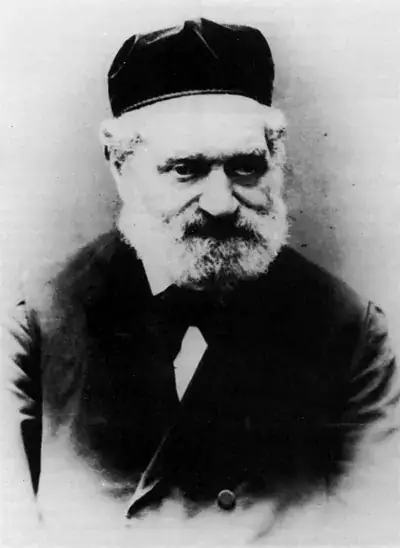 Document / objectThis portrait shows Halberstadt-born rabbi Esriel HildesheimerThis historical portrait presents Esriel Hildesheimer, born in Halberstadt in 1820 and later a leader of modern Orthodox Judaism. An artist made the likeness for public circulation. It belongs to the city’s Jewish history, not to a documented Reichenbach relationship.
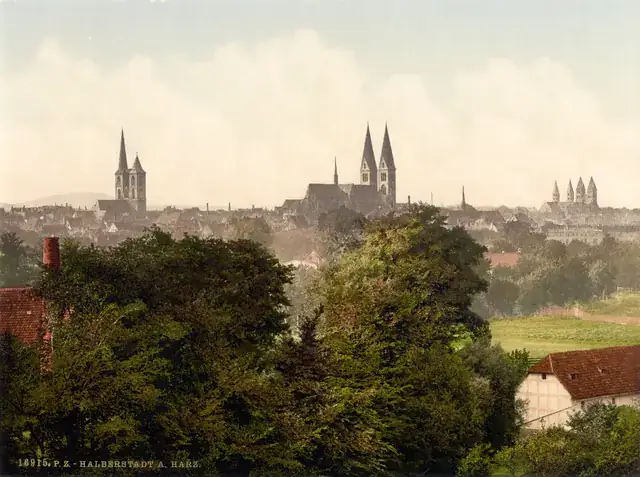 Document / objectHalberstadt filled the horizon in this 1905 viewThis photochrom records Halberstadt’s dense cityscape while the Reichenbach firm was already established there. A commercial image maker colored and published the view for circulation. It shows the city around the family, but not a legible Reichenbach shopfront.
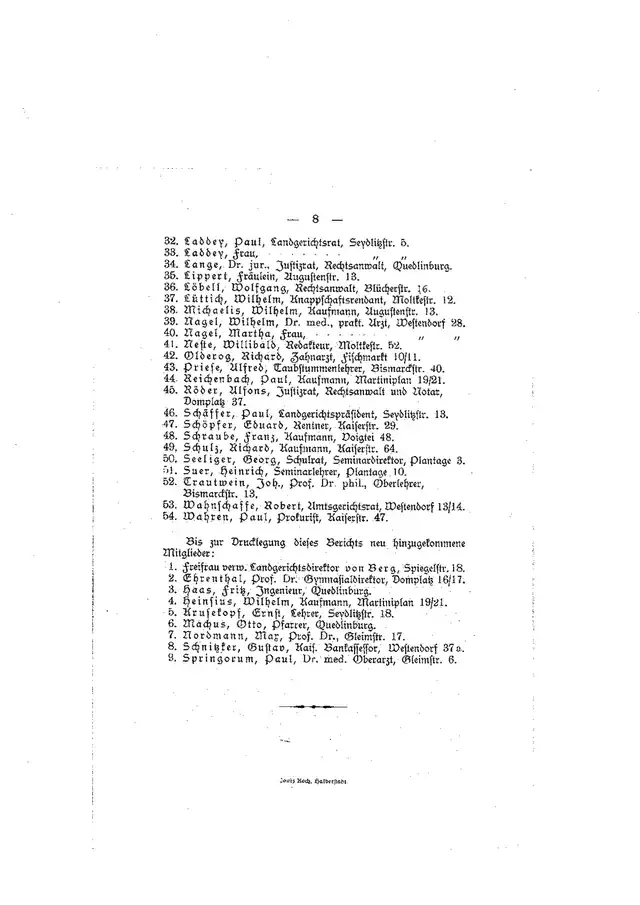 Document / objectPaul in the Halberstadt Alpine Club’s first reportIn the section’s founding-year report, “P. Reichenbach, Kaufmann” appears at Martiniplan 19/21 among Halberstadt’s merchants, officials, teachers, doctors and lawyers.
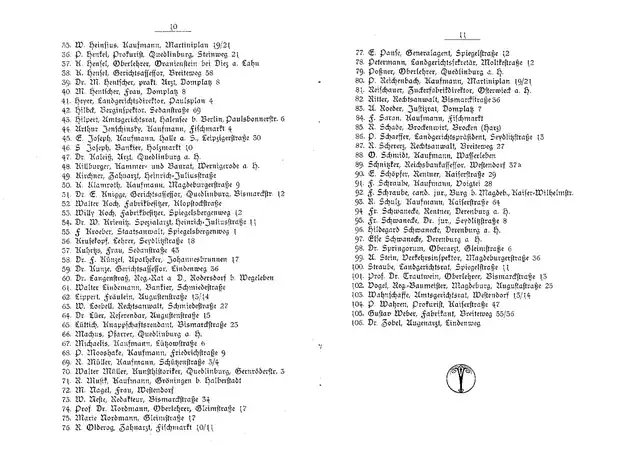 Document / objectPaul appears on the Alpine Club’s 1912 membership rollThis printed roll lists P. Reichenbach, merchant, at Martiniplan 19/21 as member 80. The section’s record keepers entered him among the Halberstadt members. It confirms membership and address for 1912, not how often he climbed.
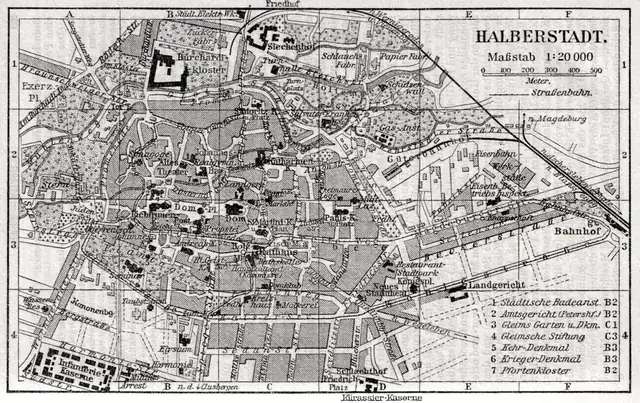 Document / objectThis 1912 plan places the Reichenbach addresses in HalberstadtThis city plan shows the streets around Paul Reichenbach’s documented homes and business addresses. The archive added numbered markers so visitors can follow those places across the city. The map locates street corridors, not the exact footprints of buildings altered by renumbering, war and rebuilding.
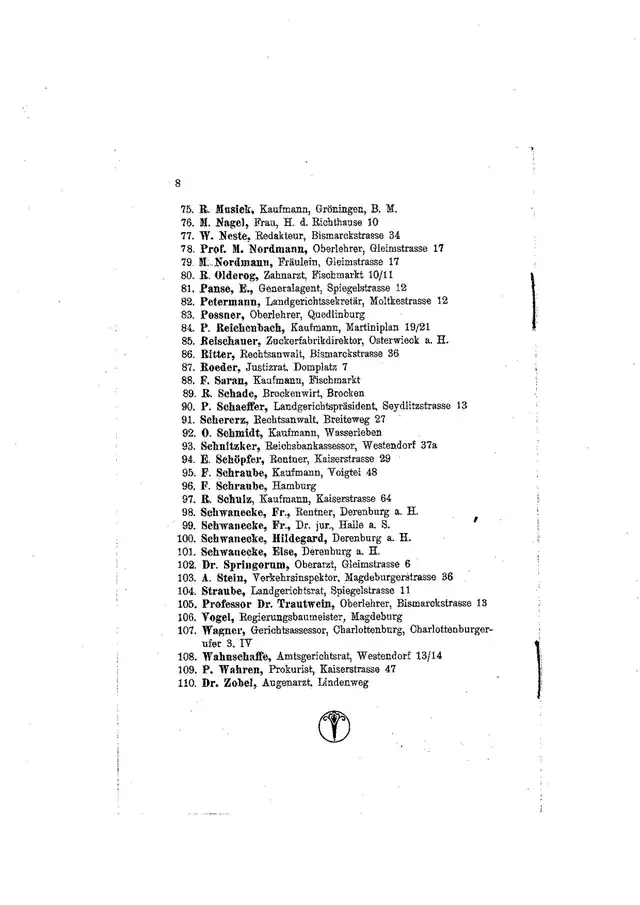 Document / objectPaul remained on the Alpine Club roll in 1913This printed roll again lists P. Reichenbach, merchant, at Martiniplan 19/21, now as member 84. The entry shows his continued place in the Halberstadt section. It does not tell us which outings he joined that year.
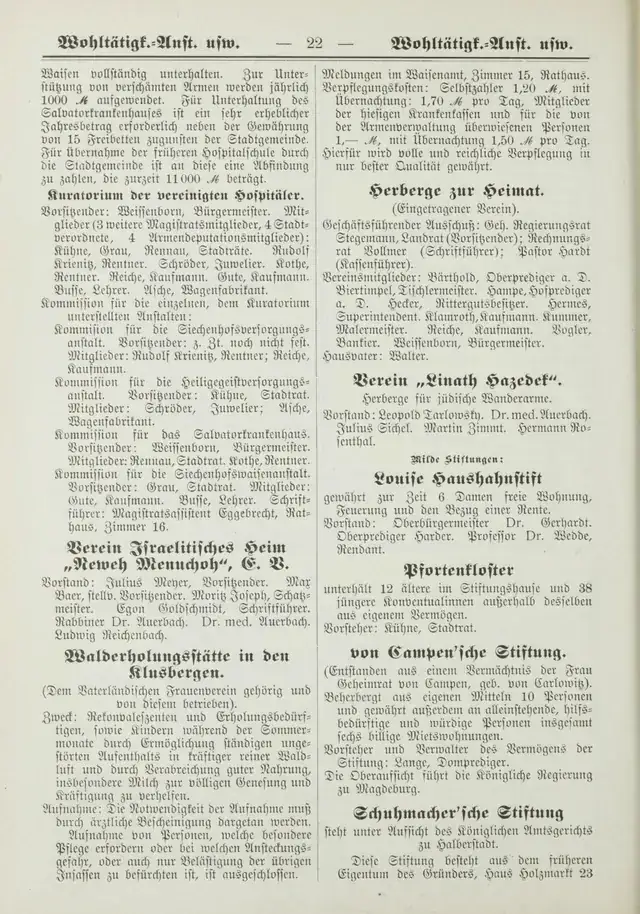 Document / objectLudwig Reichenbach on the Neweh Menuchoh boardThe 1914 directory names Ludwig Reichenbach among the board members of Verein Israelitisches Heim ‘Neweh Menuchoh.’ The entry lets us name Ludwig’s board service, but it does not describe his complete religious practice or views.
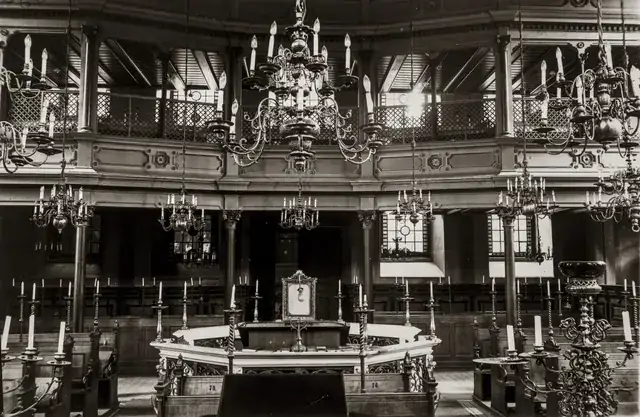 Document / objectChandeliers and galleries filled Halberstadt’s synagogueThis museum scan records the sanctuary, its galleries, chandeliers and octagonal bimah before 1938. An unidentified photographer stood inside the room and preserved its arrangement. The photograph shows the architecture, but it does not identify the worshippers who used it.
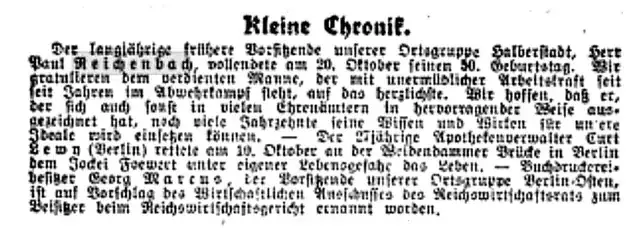 Document / objectPaul Reichenbach at fiftyThe Central-Verein-Zeitung congratulated Paul on his fiftieth birthday and recalled his leadership, honorary offices and years of work against antisemitism. The notice lets us hear how a Jewish civic organization described him in 1926; it is a public tribute, not a complete account of his life.
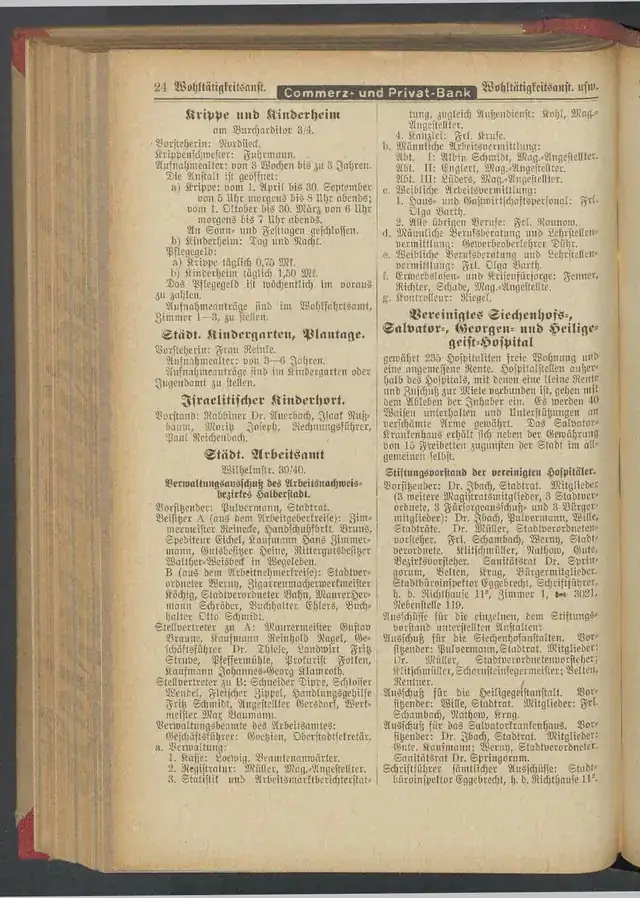 Document / objectPaul Reichenbach among the Israelitischer Kinderhort board membersThe 1928 directory names Paul Reichenbach among the board members of the Israelitischer Kinderhort. The page lets us say that Paul served on the board. Its punctuation most likely assigns the office of treasurer to Moritz Joseph, not to Paul.
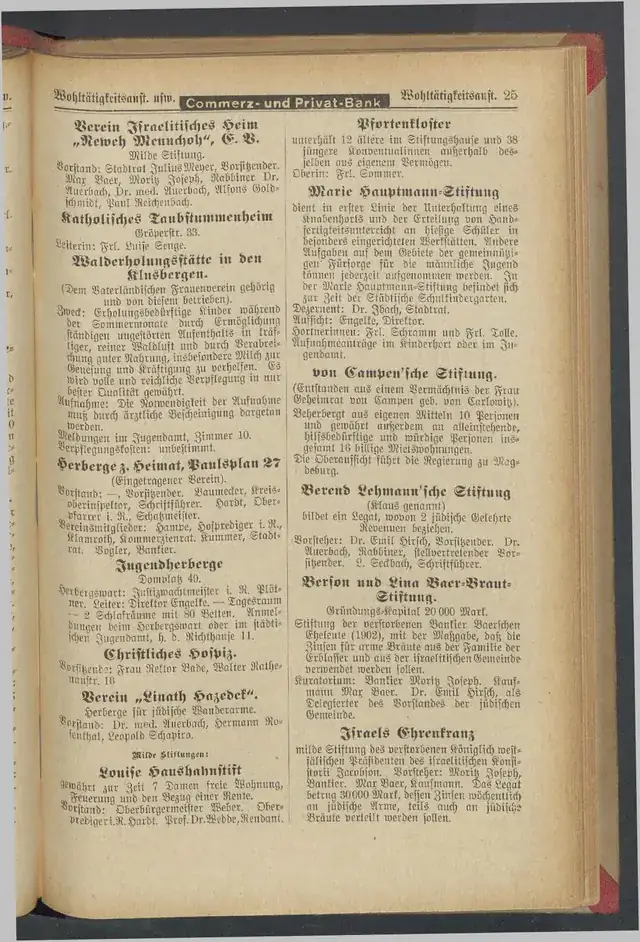 Document / objectPaul Reichenbach on the Neweh Menuchoh boardThe 1928 directory names Paul Reichenbach among the board members of Verein Israelitisches Heim ‘Neweh Menuchoh.’ The entry lets us name Paul’s board service, but it does not describe his complete religious practice or views.
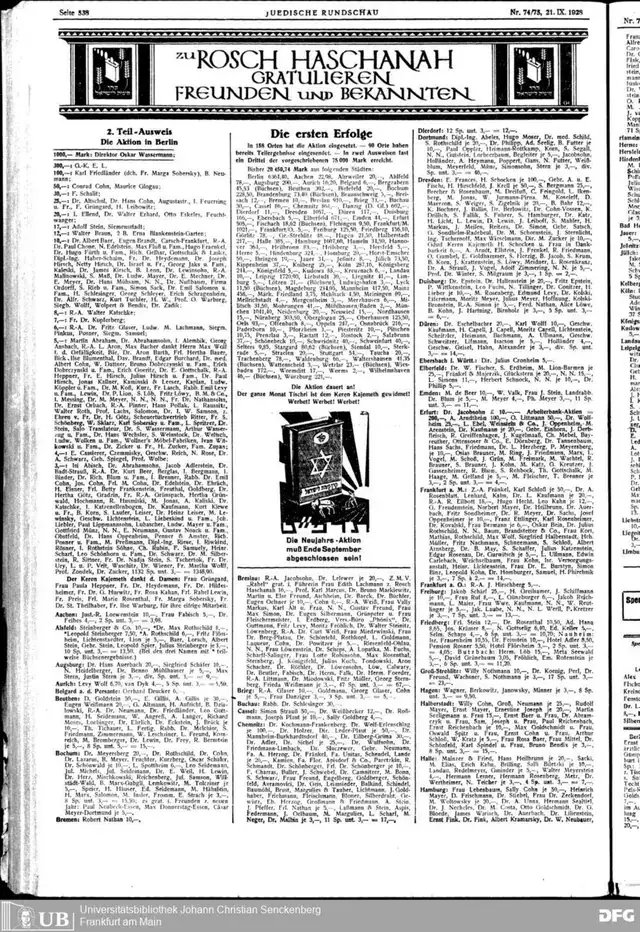 Document / objectKeren Kajemeth donations by Paul and Ernst ReichenbachUnder Halberstadt, this Keren Kajemeth New Year fundraising list records Paul Reichenbach and Ernst Reichenbach as each giving 10 Goldmarks. The list documents those two donations to this campaign. It does not establish either man’s complete affiliations or political position.
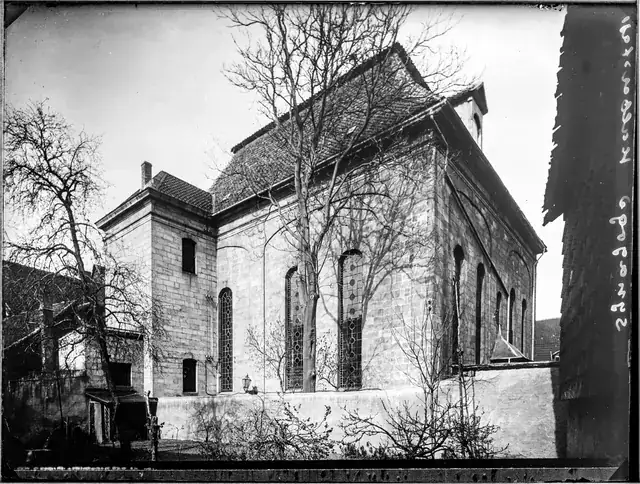 Document / objectHalberstadt’s synagogue still stood when this photograph was madeThis museum scan shows Halberstadt’s Baroque synagogue before the November 1938 pogrom and the demolition that followed. An unidentified photographer recorded the building within its residential block. The image preserves its outward form, but it does not show the congregation gathered inside.
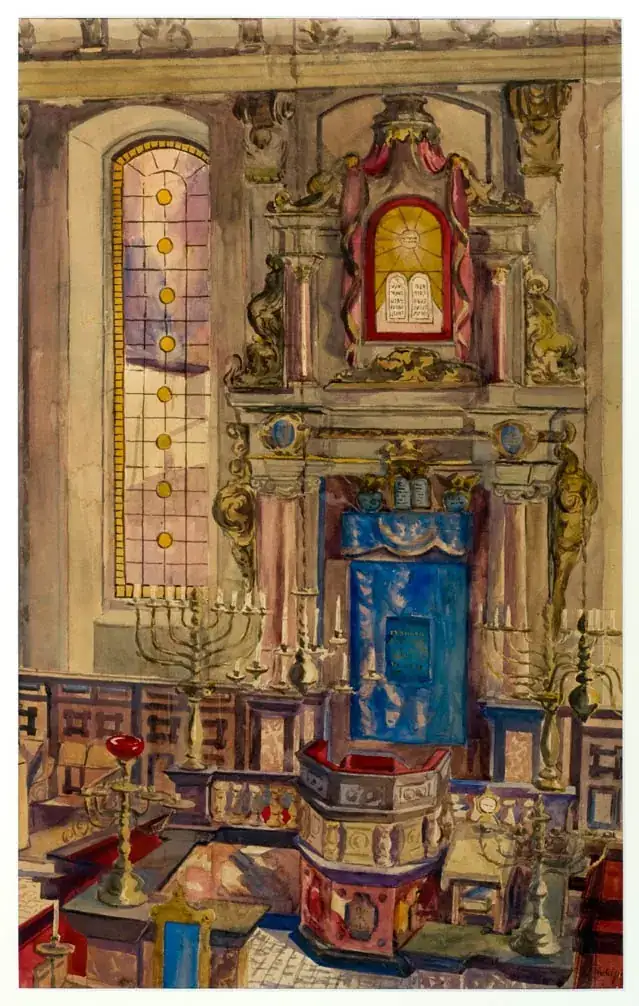 Document / objectKäthe Lipke remembered the synagogue in colorKäthe Lipke’s 1930 watercolor shows the sanctuary’s blue curtain and octagonal bimah. Her hand preserved the only known color record of the interior before its destruction. The painting records one artist’s view and cannot reproduce every color or detail exactly.
- Document / objectThe Baroque synagogue stood inside a residential blockThis museum scan shows the synagogue’s masonry, windows and roof within the narrow block around it. An unidentified photographer recorded the building before 1938. The image preserves its exterior setting, but not the people at prayer inside.
 Document / objectPaul appears in the Alpine Club’s 1931–32 rollThis printed roll lists Paul Reichenbach as a merchant at Moltkestraße 46 in the Halberstadt section. Club officers compiled the entry while Paul remained a member. It places him in the association that year, but it does not describe every climb he made.
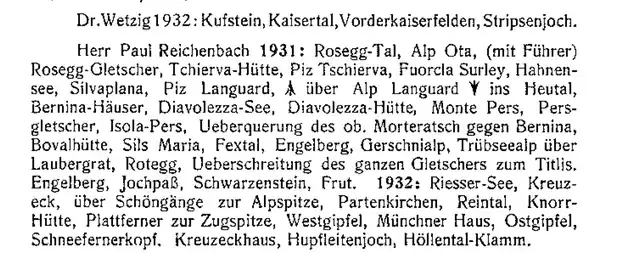 Document / objectThe Alpine routes recorded under Paul’s nameThe 1931/32 section report records Paul’s routes through the Engadine and around the Zugspitze in the same matter-of-fact format used for every other member. The report places Paul among the members who submitted routes, but it cannot tell us how often he climbed beyond these entries.
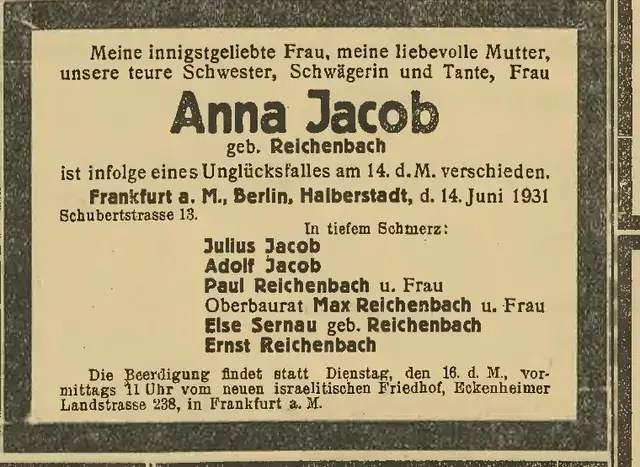 Document / objectAnna Jacob’s death notice gathers the family around her nameThis 1931 newspaper notice names Anna’s husband Julius, their son Adolf, and Paul, Max, Else and Ernst Reichenbach among the mourners. The family placed the notice after Anna’s death following an accident. It establishes a close household and family circle, but it does not assign every stated relationship or name Anna’s parents.
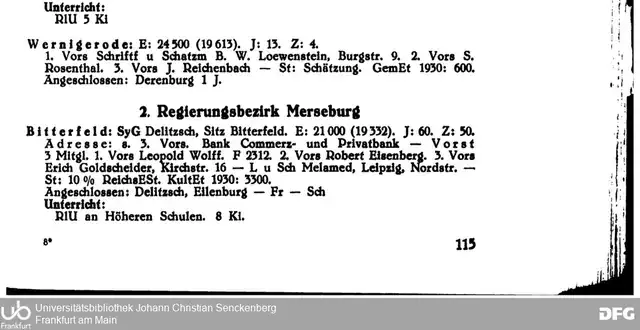 Document / objectJ. Reichenbach is named on Wernigerode’s Jewish community boardThe 1932–33 directory of Jewish communal administration names “J. Reichenbach” as third chair of the Wernigerode community board. In this setting J. Reichenbach is the house name used by the clothing shop at Breite Straße 7. Fritz was then running the store, but this line alone does not prove that the officer was Fritz personally.
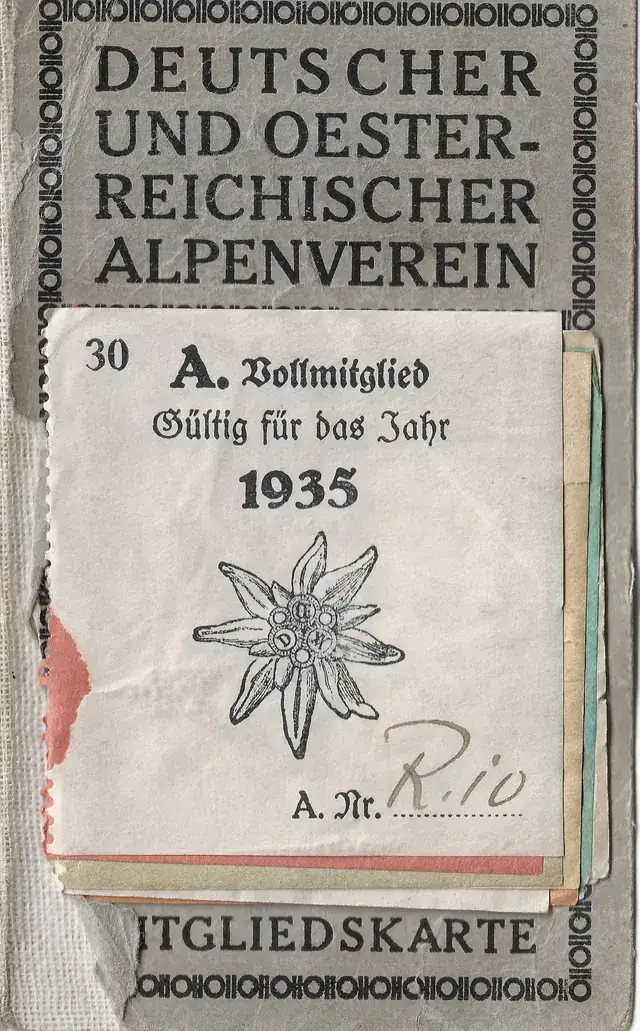 Document / objectAnnual slips accumulated on the back of Paul’s Alpine Club cardThis reverse view shows validation slips kept one above another on Paul’s membership card. Club officers added them across several years, and the top slip confirms full A-membership for 1935. The layers show continued membership, but not the date or meaning of every partly hidden slip.
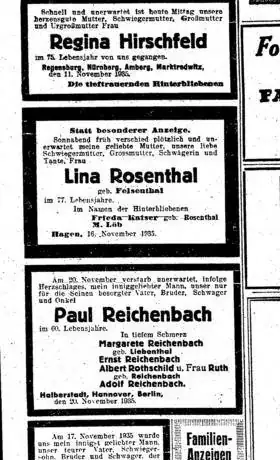 Document / objectPaul Reichenbach’s family announces his deathTwo days after Paul’s sudden death, his family placed this notice in the Central-Verein-Zeitung. It names Margarete née Liebenthal, Ernst, Albert Rothschild and Ruth née Reichenbach, and Adolf. This is a paid family Todesanzeige, distinct from the family-held Trauer-Album; it does not list Paul’s offices.
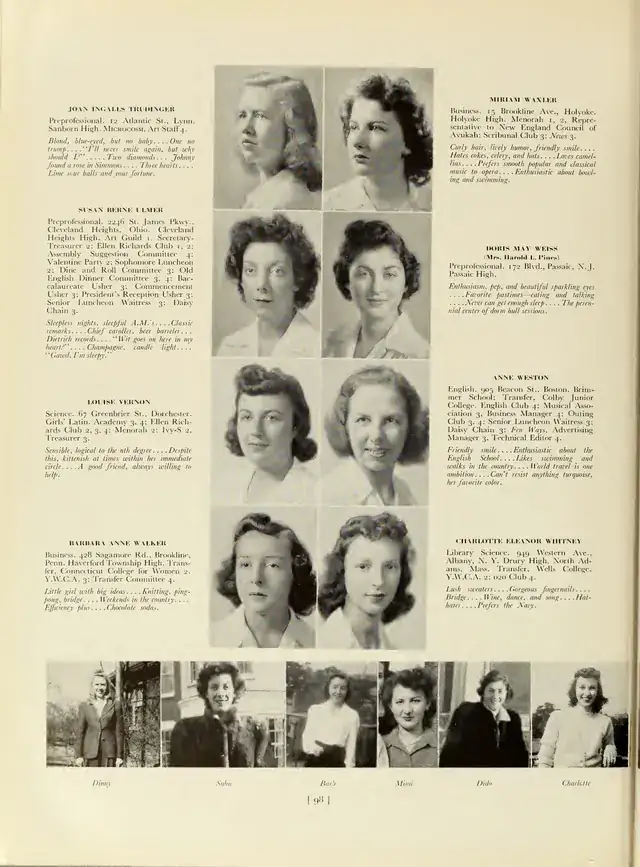 Document / objectClassmates already called her SubieIn the 1943 Simmons College yearbook, Susan Berne Ulmer is a senior in Preprofessional Studies. The sketch gives Cleveland Heights High, home at 2246 St. James Parkway, Cleveland Heights, and the nickname the family still uses. A candid on the same page is captioned “Subie.”
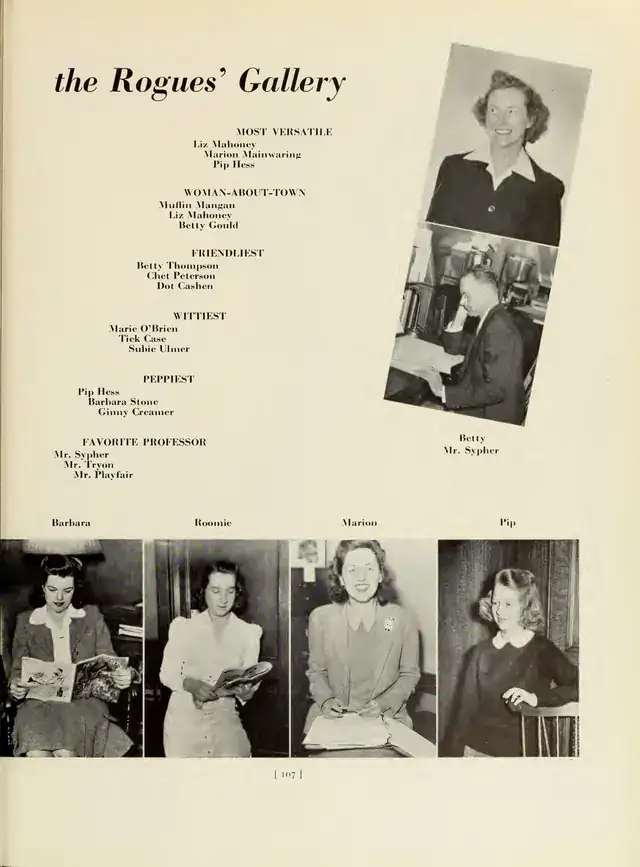 Document / objectThey voted Subie among the wittiestThe 1943 Microcosm Rogues’ Gallery lists Subie Ulmer among the three students voted Wittiest, with Marie O’Brien and Tick Case. She is named, not pictured, on that page.
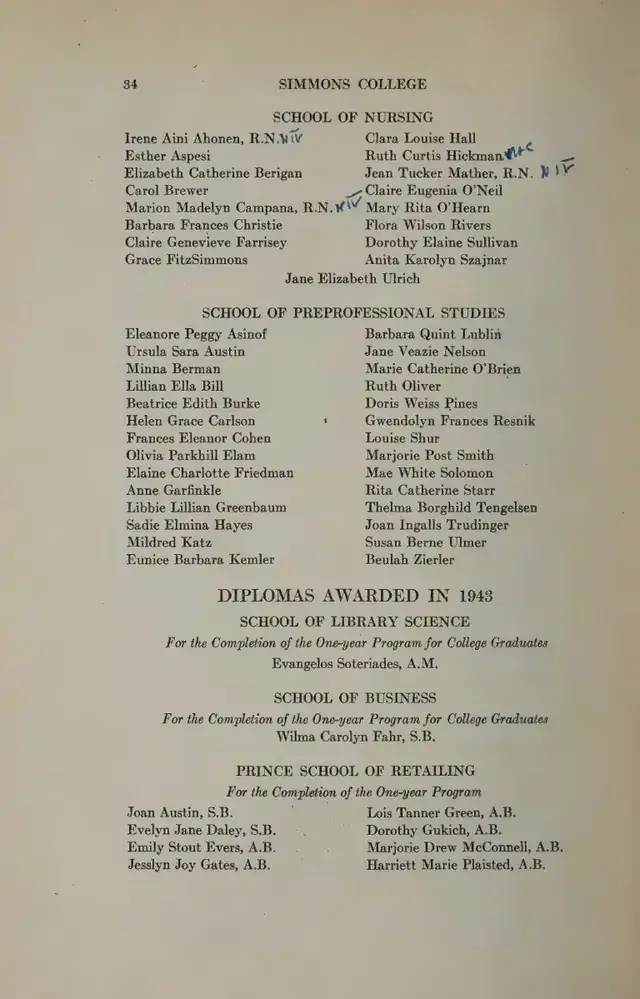 Document / objectSimmons conferred her Bachelor of Science in 1943The 1943–44 catalog lists degrees conferred in 1943. Under Bachelor of Science, School of Preprofessional Studies, it names Susan Berne Ulmer. She is not on the School of Science bachelor list on the previous page.
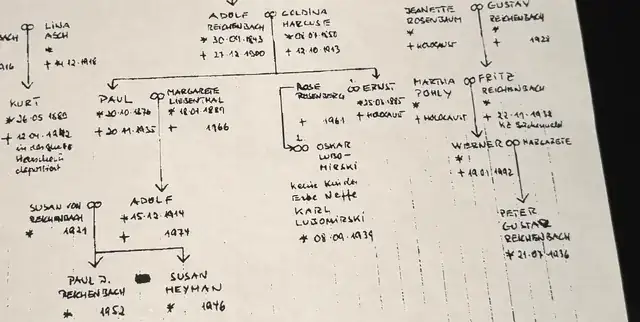 Document / objectHand-drawn Reichenbach descent chartA 1997 descent chart links Jacob and Helene to later Halberstadt, Wernigerode and American generations. It records family knowledge, including points under comparison with civil records.
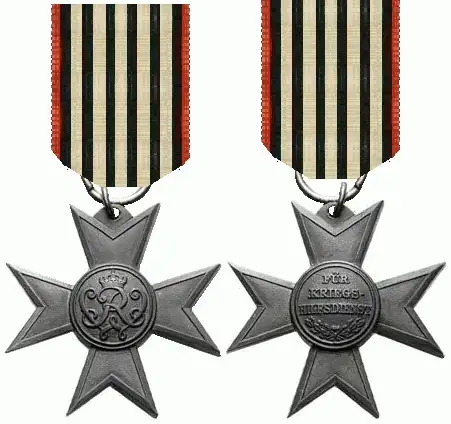 Document / objectA Prussian Merit Cross like the one awarded to PaulA general example of the decoration named in Paul’s notice—not Paul’s personal cross, whose present location is unknown. The example shows the kind of award named in the notice, but it cannot be presented as the cross Paul received.
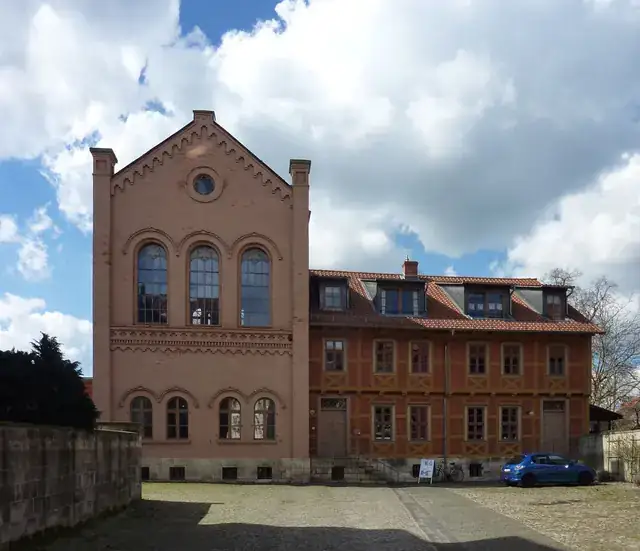 Document / objectThe Klaussynagoge still carries Berend Lehmann’s foundationThis photograph shows the Klaussynagoge at Rosenwinkel 18, founded as a synagogue and house of study by Berend Lehmann. Visitors and teachers now encounter it as part of the Moses Mendelssohn Academy. The building gives context for Jewish life in Halberstadt, but it is not a Reichenbach family property.
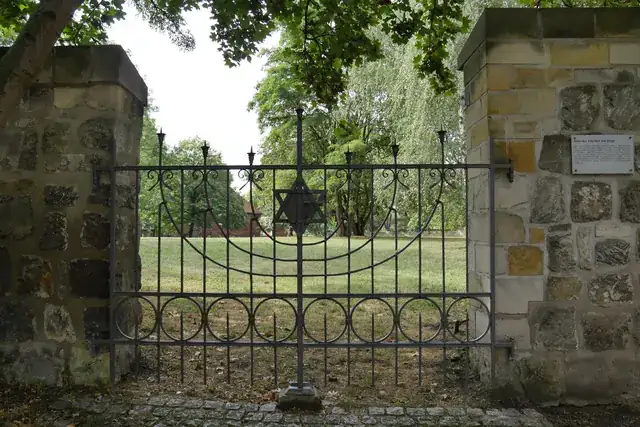 Document / objectThe old Jewish cemetery holds generations of Halberstadt familiesThis photograph looks through the gate at Westendorf into Halberstadt’s old Jewish cemetery. Mourners and burial societies carried generations of the town’s Jews through this entrance. The view establishes the place, but individual Reichenbach graves cannot be identified from it.
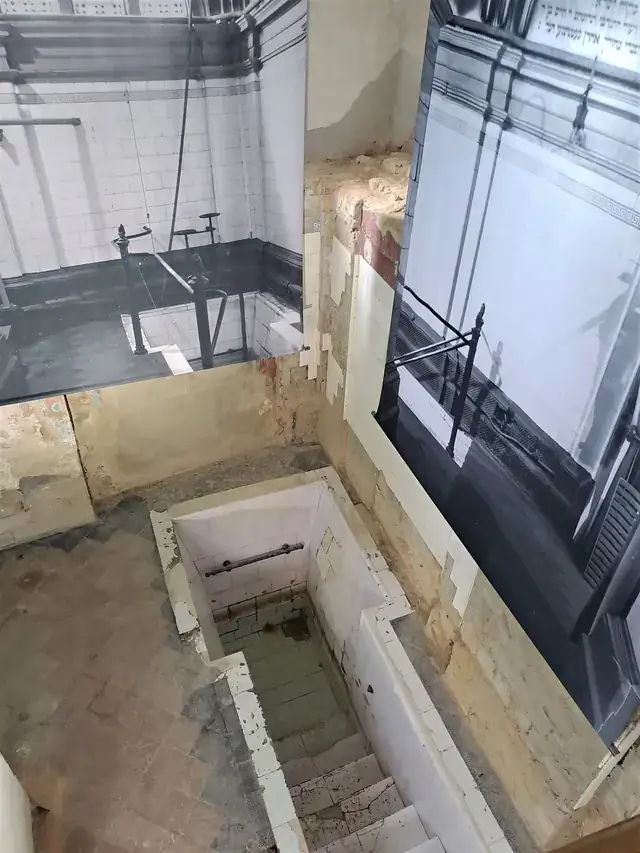 Document / objectThe restored mikveh house now anchors the museumThis photograph shows the restored ritual-bath house at Judenstraße 26. The Berend Lehmann Museum now uses the building as the material center of its permanent exhibition. It locates Jewish communal life in the town, but it does not document a Reichenbach visit.
 Document / objectA damaged genealogy sheet preserves names missing elsewhereThis fragile manuscript view belongs to the family’s ancestry papers. A family compiler wrote names and dates that are not equally legible in every surviving copy. The damage makes the sheet valuable for comparison, but it cannot settle entries that remain unclear.
 Document / objectThis cover belongs with Ernst Reichenbach’s compiled ancestry chartThis institutional access image shows the cover kept with Ernst Reichenbach’s pedigree. An earlier genealogist assembled the chart, and the Leo Baeck Institute now holds the record. The cover joins the file but does not itself prove any family relationship.
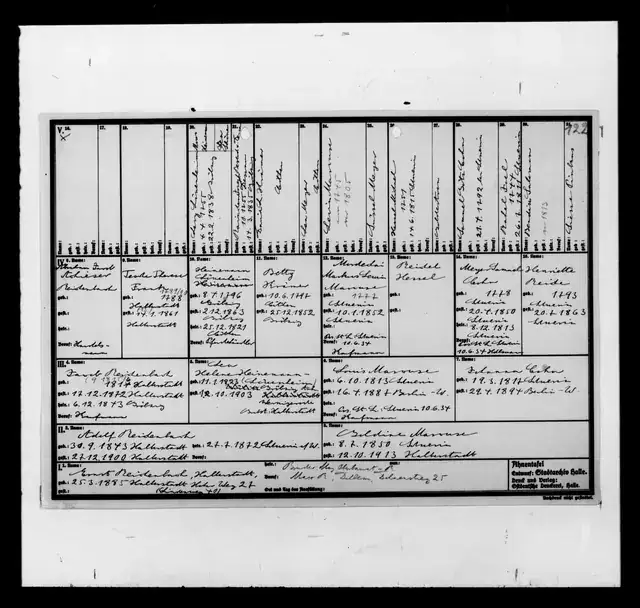 Document / objectErnst Reichenbach’s chart reaches into earlier family generationsThis compiled pedigree names Ernst, his parents Adolf and Goldine, and earlier Reichenbach, Heinemann and Marcuse ancestors. A genealogist made the chart, and the family names passed through that hand before reaching the institutional collection. It guides research, but each relationship still requires support from civil, communal or cemetery records.
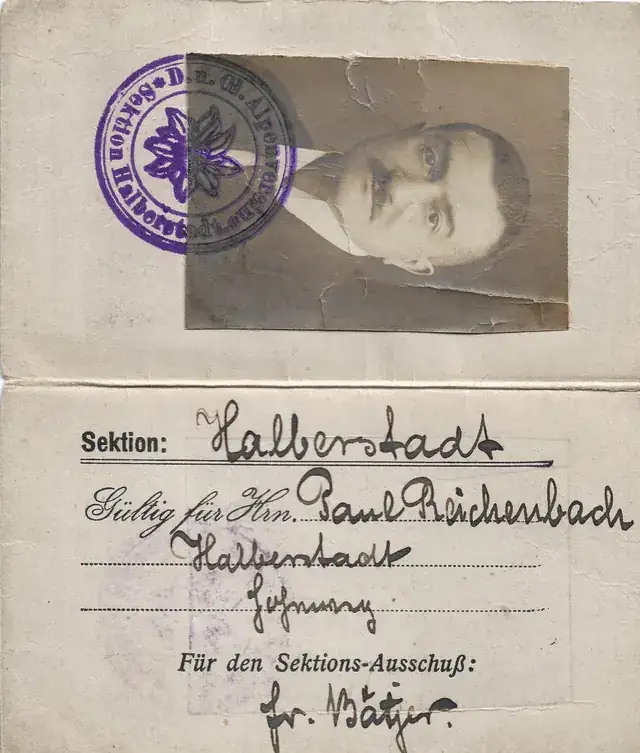 Document / objectPaul carried this Alpine Club membership cardThis surviving card places Paul Reichenbach in the Halberstadt section of the German and Austrian Alpine Association. Paul’s portrait, the section seal and the card he carried join a face to the membership record. It proves his membership, but it does not list every route or meeting he attended.
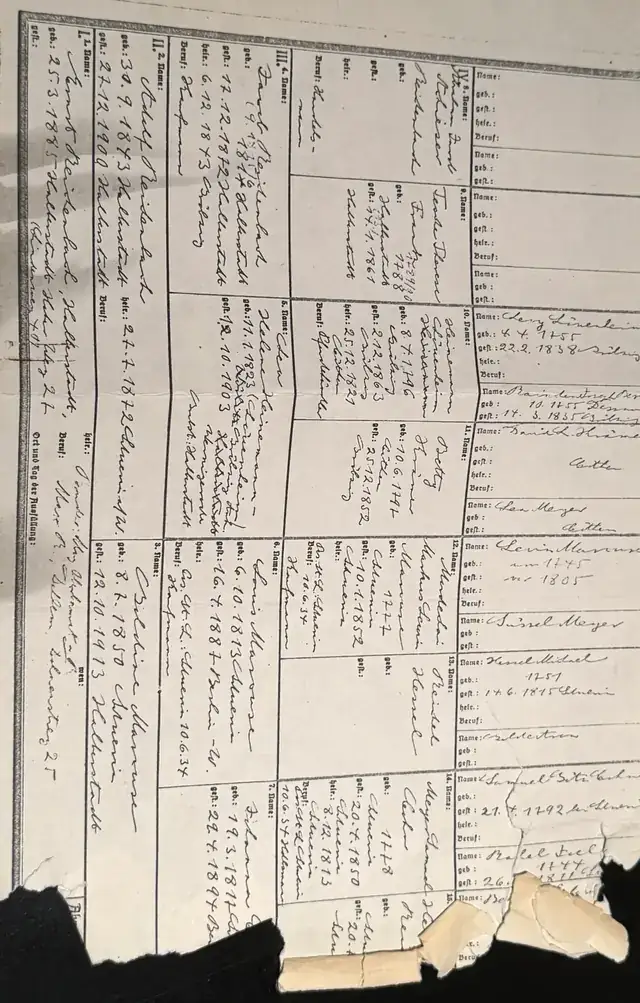 Document / objectThe family filled this ancestry chart by handThis original pedigree names Adolf and Goldine, Jacob and Helene, and earlier Marcuse, Cohn, Heinemann and Krömer ancestors. A family compiler wrote the names into the printed form and passed it down with the papers. It preserves remembered genealogy, but each relationship still needs independent confirmation.
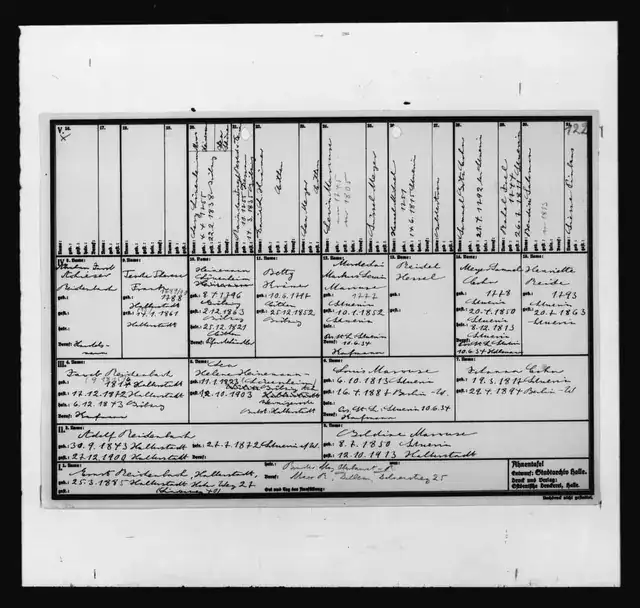 Document / objectThe family’s ancestry chart for Ernst ReichenbachA six-generation pedigree completed for Ernst Reichenbach. It preserves names and dates that have guided research, but it is a family-compiled source rather than proof of every entry.
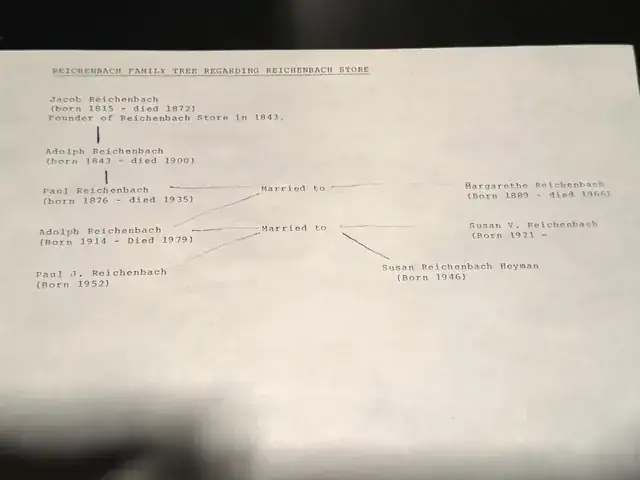 Document / objectThe family’s genealogy papers disagree about the store’s first yearThis group brings handwritten charts, typed research and a family-compiled store history together. Family researchers handled the papers across generations and recorded 1841 for the firm’s founding. The firm’s own later advertisement and architectural research support 1843, so the earlier date remains a conflict rather than a correction.