Browse one archival series
Persecution and memorial records
Deportation records, memorials and contextual evidence of persecution and destruction.
32 · 1934–2022
Arrangement: historical records follow their date; conventional viewing copies stay with their source, while new interpretations use their creation date. Related pages and views stay together; undated records follow.
Filter record results by archival series
Documents and objects Showing 1–32 of 32
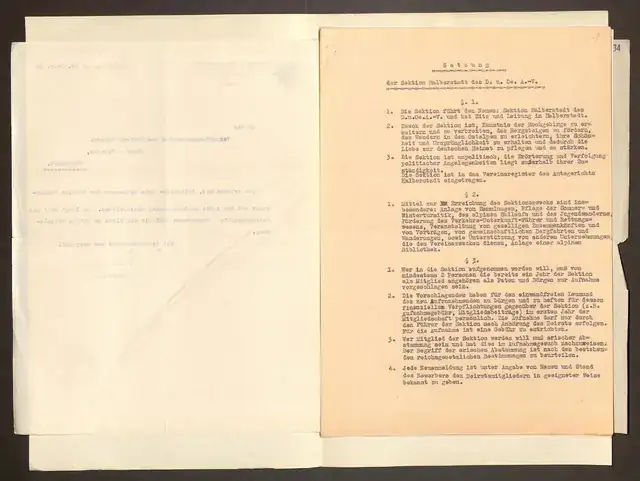 Document / objectThe Alpine Club wrote racial exclusion into its Halberstadt rulesThis 1934 statute requires applicants to prove what the section called Aryan descent. The Halberstadt section adopted the rule after Paul’s documented years of membership. It shows formal exclusion becoming club policy, but it does not record the moment Paul was personally removed.
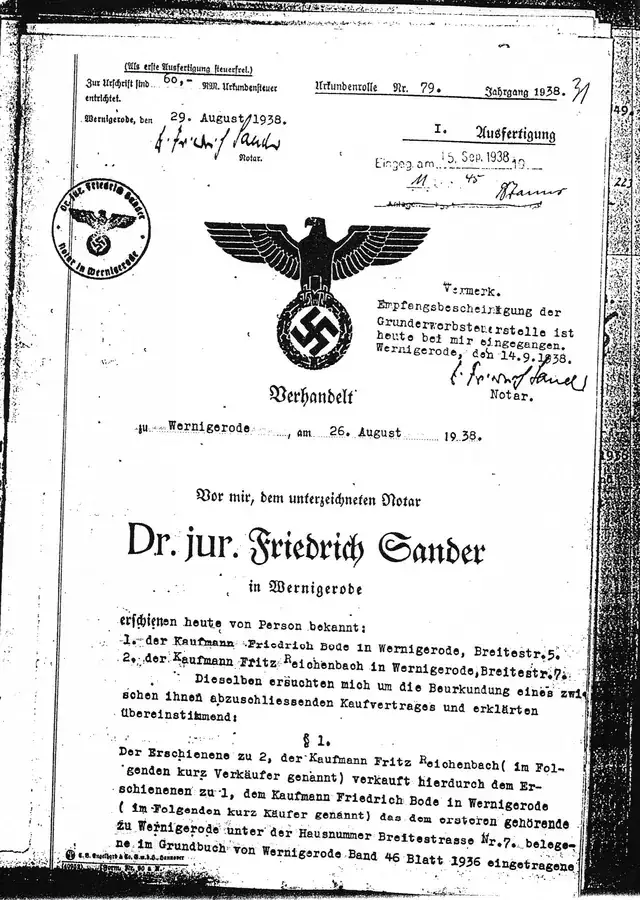 Document / objectFritz appears as the seller of Breite Straße 7The first page of the 1938 deed names Fritz Reichenbach as vendor of the Wernigerode property at Breite Straße 7. Fritz and the notarial parties entered the transfer into a legal record while antisemitic law constrained the sale. The page identifies property and parties, but the racial clause appears later in the deed.
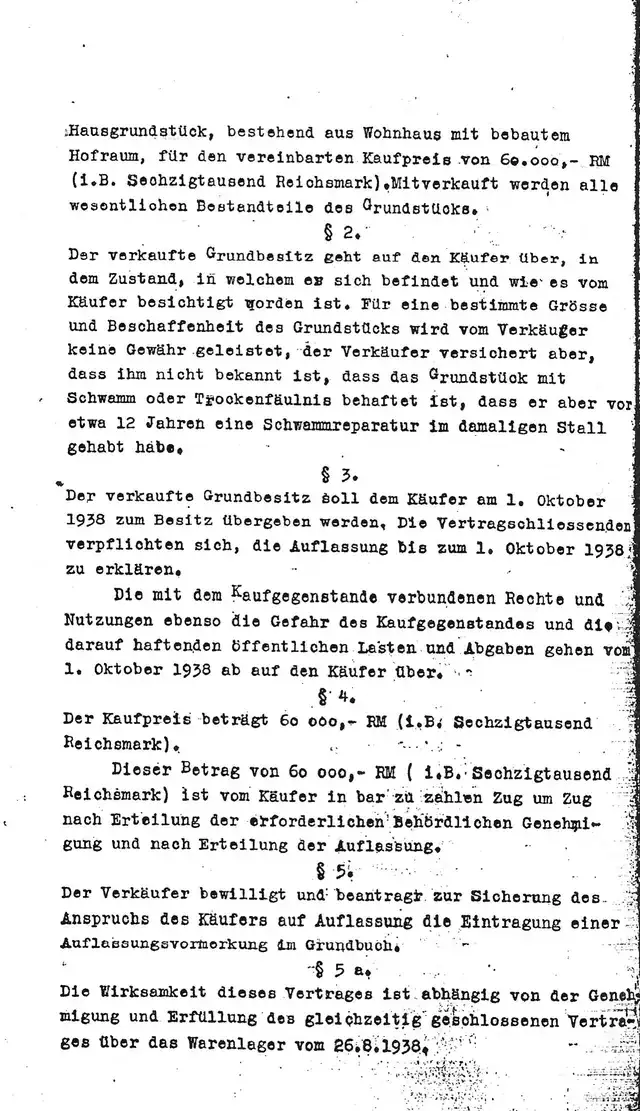 Document / objectThe deed continues the terms imposed on the Wernigerode propertyThis second page continues the conditions governing the transfer of Breite Straße 7. Fritz and the other parties remained bound inside the same notarial transaction. The page belongs to the forced-sale record, but it cannot be read apart from the identifying first page and racial-law clause.
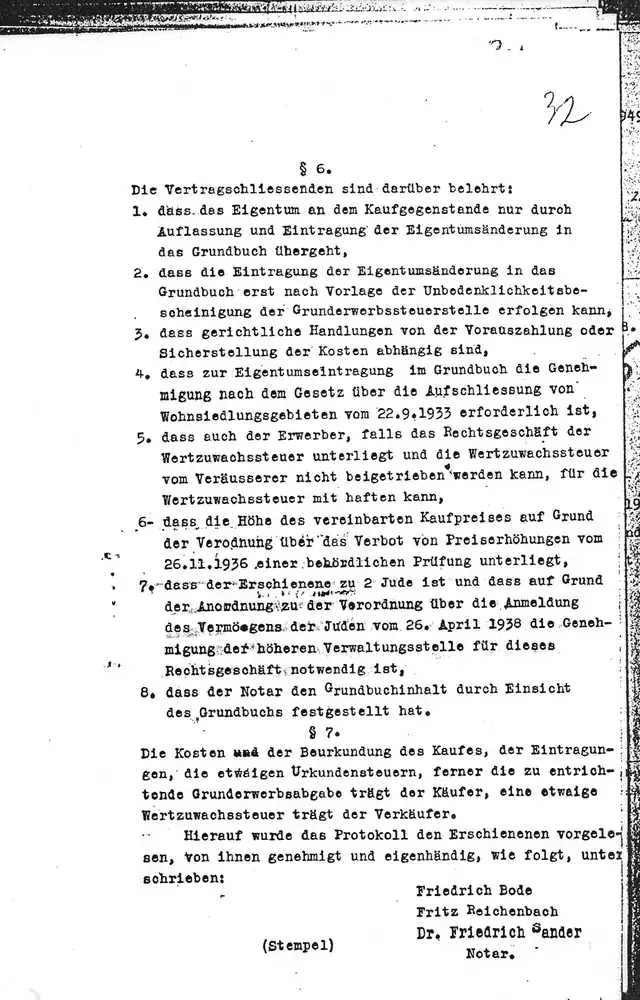 Document / objectThe deed says official approval was required because Fritz was a JewClause 7 states that the vendor “ist Jude” and invokes the 1938 regulation on Jewish property. The notary’s page makes racial coercion explicit inside the sale of Fritz Reichenbach’s house. It proves the legal condition imposed on the transaction, but it does not disclose a free market bargain.
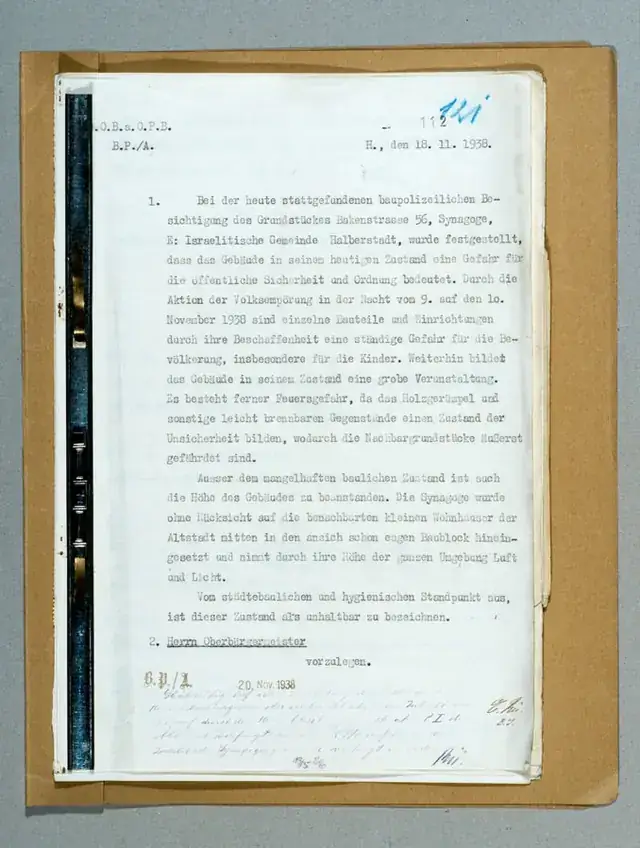 Document / objectThe city ordered Halberstadt’s desecrated synagogue demolishedThis building-police file records the order issued on 18 November 1938 for the synagogue at Bakenstraße 56. City officials turned the damage inflicted during the pogrom into administrative language about safety and order. The file documents the demolition process, not an accidental ruin.
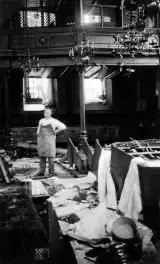 Document / objectA man stands amid the looted Halberstadt synagogueThis low-resolution research copy shows an unidentified man among debris inside the desecrated sanctuary. An unidentified photographer recorded the physical result of the November pogrom. The image shows destruction, but its date, holder, inventory number and the man’s identity remain unresolved.
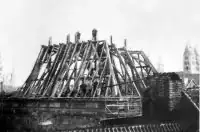 Document / objectWorkers dismantle the synagogue roof after the city’s orderThis historical photograph shows workers taking apart the exposed roof after Halberstadt ordered the synagogue demolished. Their labor makes the administrative destruction physically visible. The image does not identify the workers or the exact day, and its original holder remains unverified.
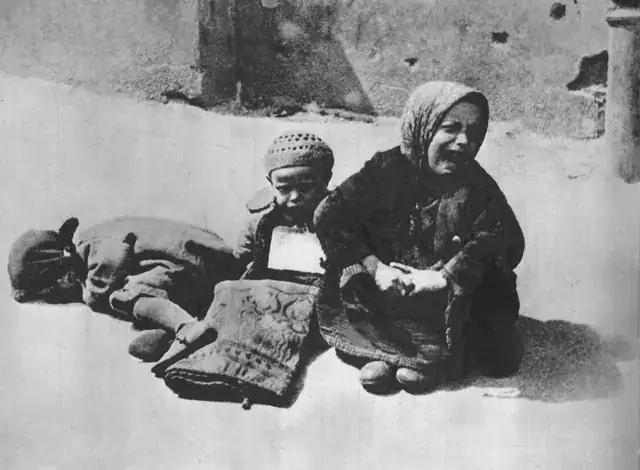 Document / objectChildren without homes in the Warsaw ghettoHistorical context photograph of homeless children in the Warsaw ghetto, 1941. The photograph predates the Halberstadt transport and does not show Kurt Reichenbach, Paula Wollenberg or Hans Wollenberg.
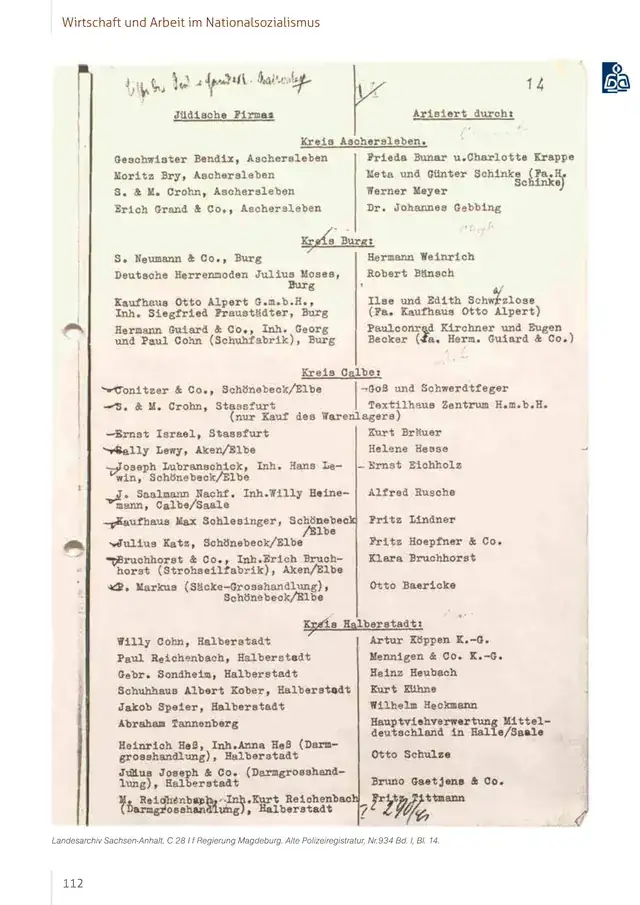 Document / objectThe state list naming Mennigen & Co. after Paul Reichenbach’s firmUnder ‘Kreis Halberstadt,’ the official list places ‘Paul Reichenbach, Halberstadt’ opposite ‘Mennigen & Co. K.-G.’ beneath the headings ‘Jüdische Firma’ and ‘Arisiert durch.’ This is direct administrative evidence that Mennigen & Co. was recorded as the Aryanization successor to Paul Reichenbach’s business. It is not the purchase contract.
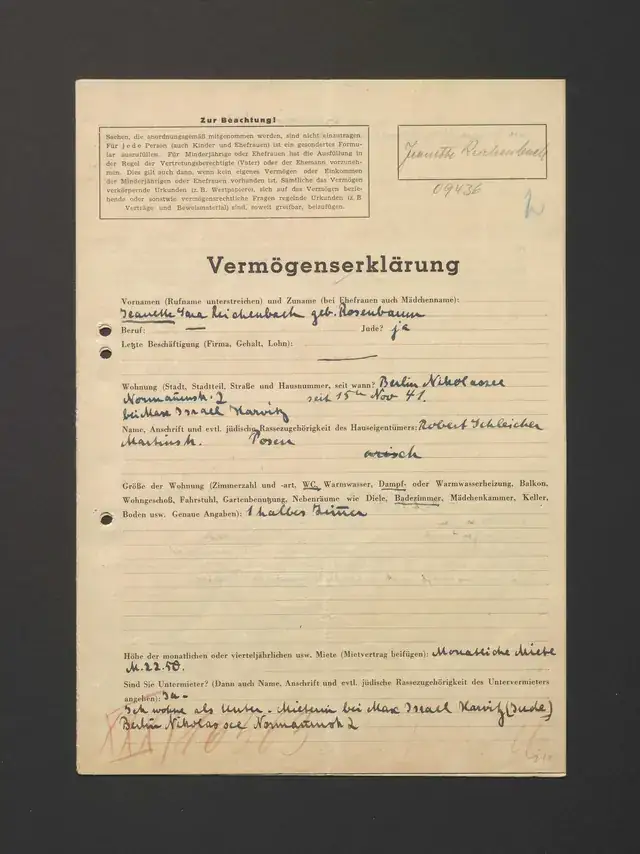 Document / objectJeanette Reichenbach’s asset declaration at Normannenstraße 2Jeanette’s asset declaration records that she had rented half a room in Max Israel Harrwitz’s house from 15 November 1941 for 22.50 RM a month. It also notes that her grandson was already in Brazil with his wife and child.
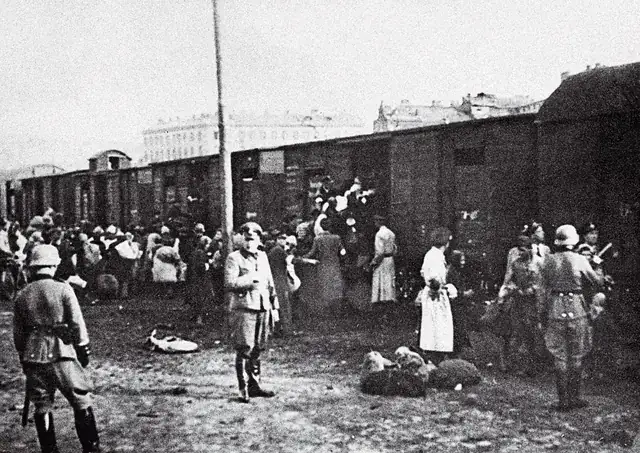 Document / objectPeople loading belongings at the Warsaw UmschlagplatzContext photograph of Jews loading belongings onto trains at the Warsaw Umschlagplatz during the German occupation, dated by the source between 1942 and 1943. It is Warsaw context, not a photograph of the Halberstadt train or of Kurt, Paula or Hans.
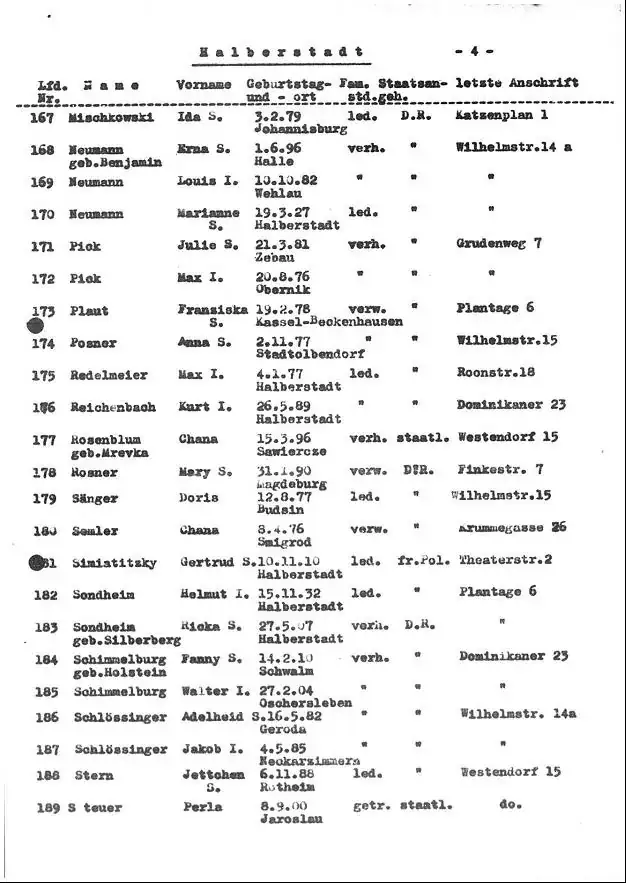 Document / objectKurt Reichenbach on the transport listPage 14 records Kurt Reichenbach at entry 176, with Dominikanerstraße 23 as his Halberstadt address. The list places Kurt on the transport to Warsaw. It gives no later fate.
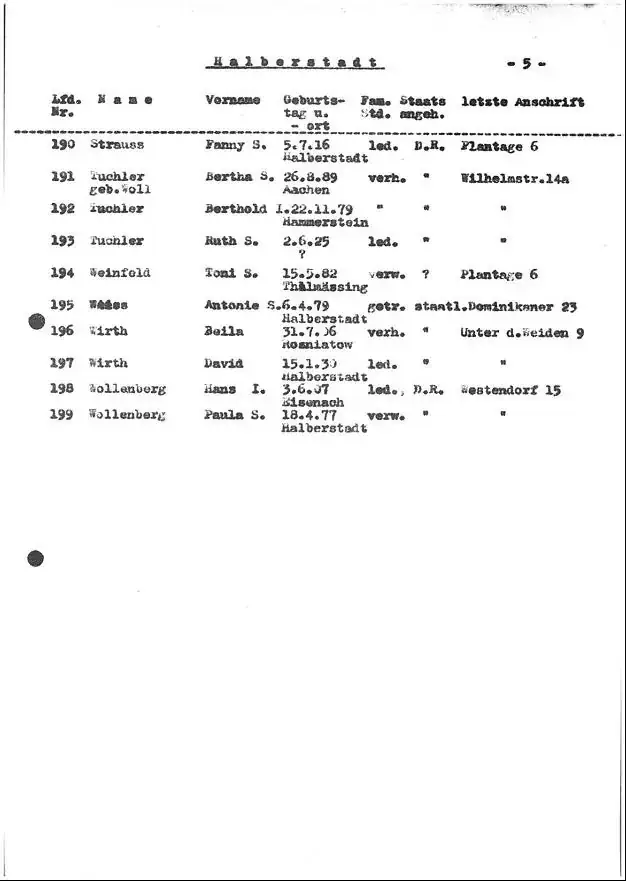 Document / objectHans and Paula Wollenberg on the transport listPage 15 records Hans Wollenberg at entry 198 and Paula Wollenberg at entry 199, both at Westendorf 15. The list places mother and son on the transport to Warsaw. It gives no later fate for either of them.
 Document / objectA second list naming Kurt, Paula and HansYad Vashem frame 2 records Kurt Reichenbach at Dominikanerstraße 23 and Paula and Hans Wollenberg together at Westendorf 15, corroborating their names, birth dates and forced addresses in the original transport evidence. The list corroborates their birth dates and forced addresses before Warsaw. It gives no later death date or place for any of the three.
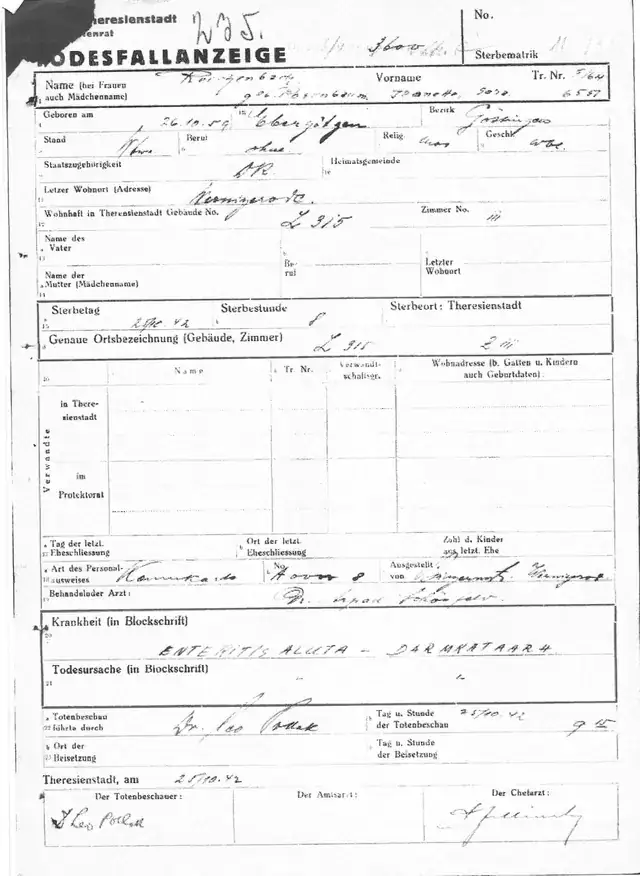 Document / objectThe Theresienstadt administration recorded Jeanette’s deathThis ghetto death notice records Jeanette Reichenbach née Rosenbaum’s death on 25 October 1942, six weeks after deportation. Camp officials entered “Enteritis acuta — Darmkatarrh” as the cause. The notice fixes the administrative date and wording, but it is not an independent medical account of death under starvation, overcrowding and neglect.
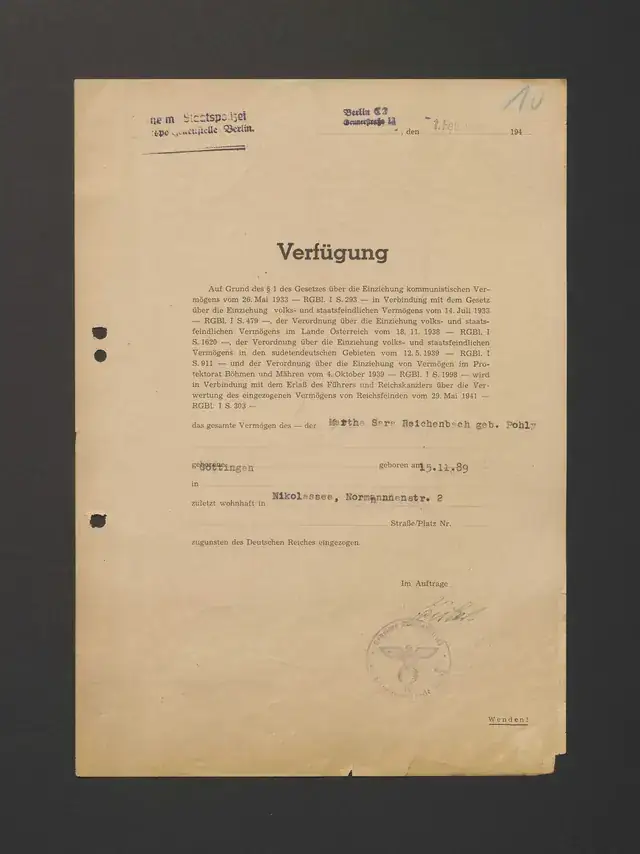 Document / objectThe Gestapo order taking Martha Reichenbach’s propertyThe Gestapo order names Martha Sara Reichenbach née Pohly, born in Göttingen on 15 November 1889, and gives her last address as Normannenstraße 2 in Nikolassee. It confiscates her entire property for the German Reich.
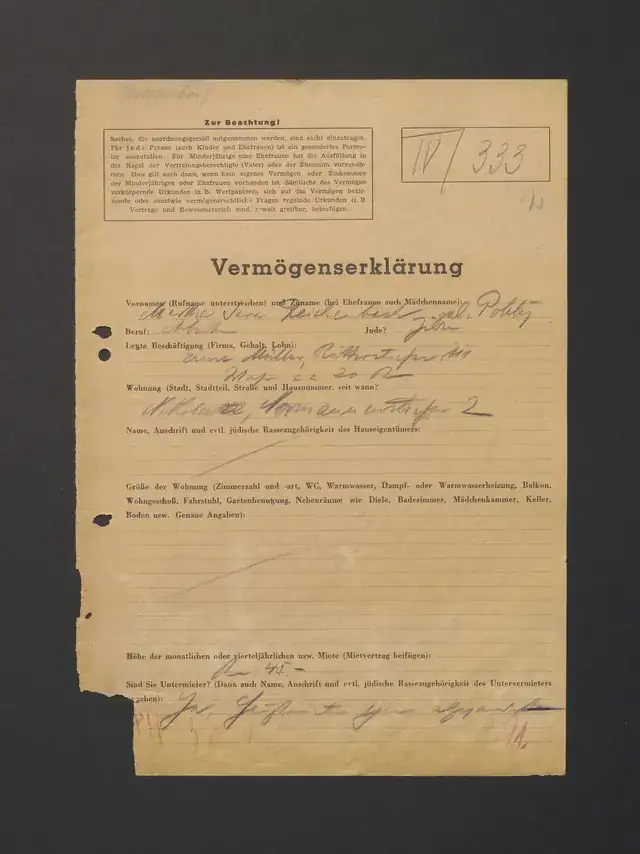 Document / objectMartha Reichenbach’s asset declaration from Normannenstraße 2Martha’s declaration lists her as a Jewish worker and subtenant at Normannenstraße 2, paying 45 RM in rent. It names Erna Müller as her last employer.
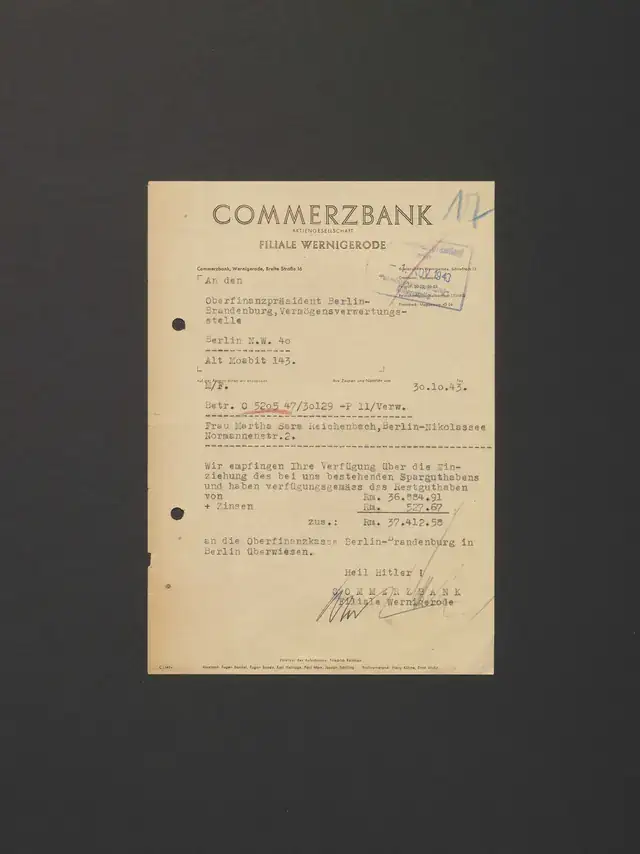 Document / objectThe bank transfer that took Martha’s savingsCommerzbank Wernigerode transferred Martha’s savings of 36,884.91 RM and 527.67 RM in interest, 37,412.58 RM in all, to the Oberfinanzkasse. The transfer came almost eight months after the transport to Auschwitz; it records the Reich collecting her property, not Martha’s presence in Berlin.
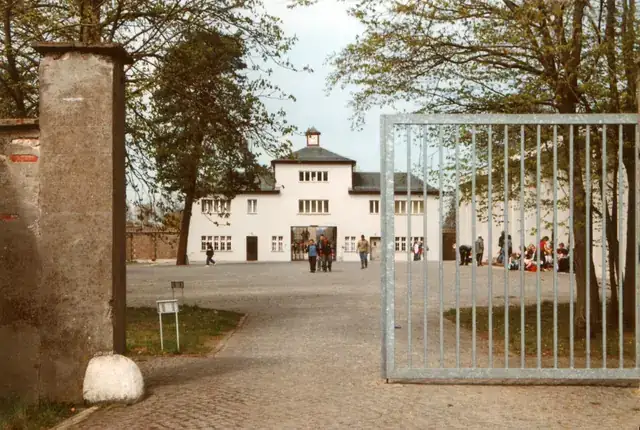 Document / objectSachsenhausen memorial at Turm AMemorial view of Turm A, Sachsenhausen, April 2004. MandyM, CC BY-SA 3.0. Context, not a picture of Max Reichenbach.
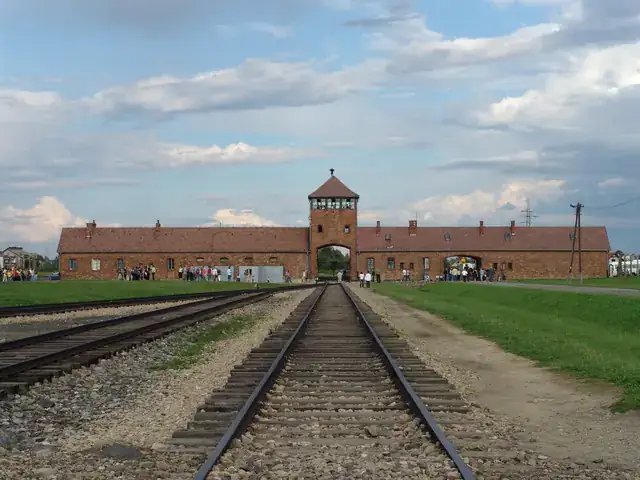 Document / objectAuschwitz II-Birkenau memorial gateMemorial view of Auschwitz II-Birkenau, August 2006. Michel Zacharz, CC BY-SA 2.5. The gatehouse dates from 1943. Martha Reichenbach is not in this picture, and this archive has no intake photograph of her.
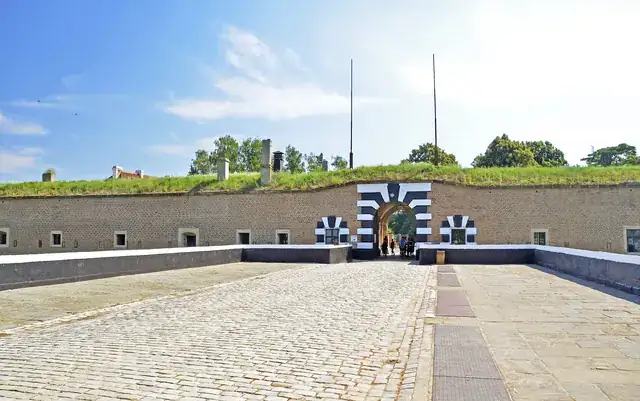 Document / objectTerezín fortress memorial gateMemorial view of the Terezín fortress gate, 28 July 2013. Guido Radig, CC BY 3.0. Context, not a picture of Jeanette Reichenbach.
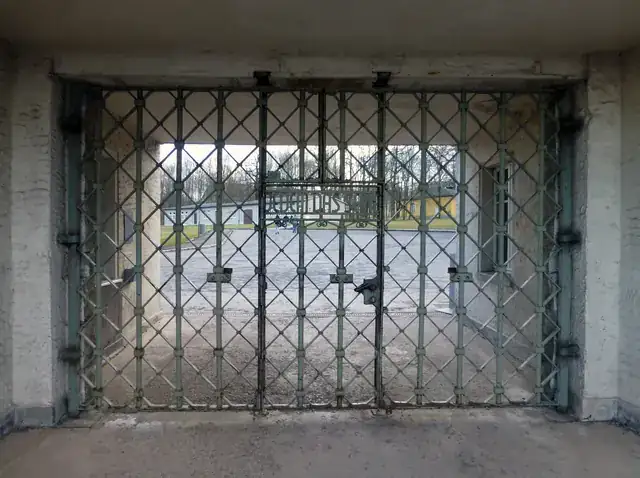 Document / objectBuchenwald memorial gateMemorial view of the Buchenwald gate, 27 December 2013. © 1971markus, CC BY-SA 4.0. Context, not a picture of Fritz, Kurt or Werner Reichenbach.
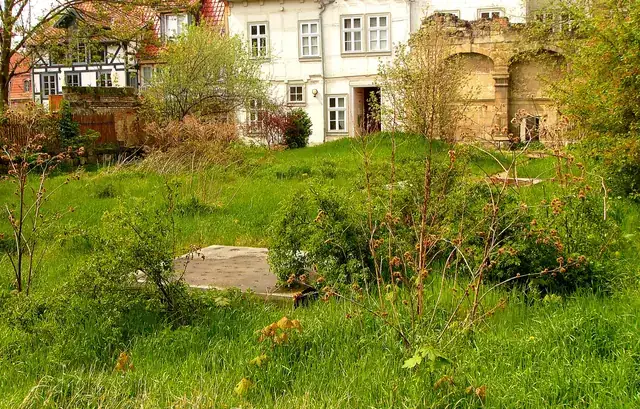 Document / objectThe memorial follows the footprint of Halberstadt’s destroyed synagogueOlaf Wegewitz’s installation marks the ground once occupied by the synagogue. Visitors walk the outline left in the city after the November pogrom and demolition. It is a modern memorial, not a surviving fragment of the sanctuary.
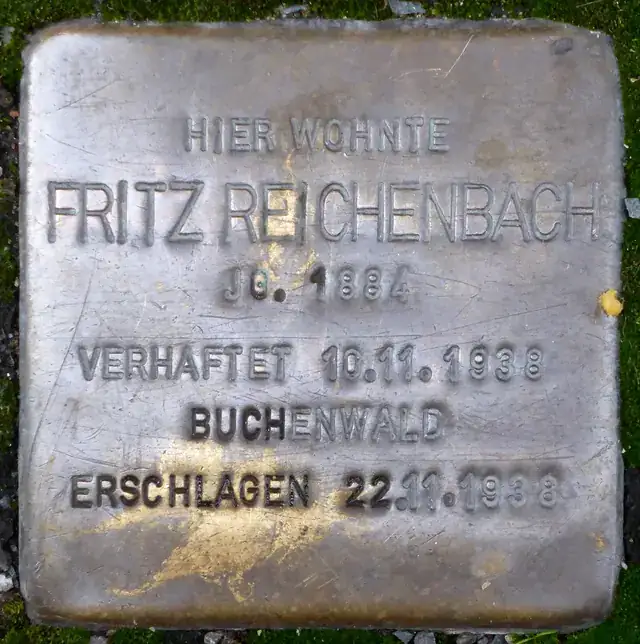 Document / objectStolperstein for Fritz ReichenbachThe stone records Fritz Reichenbach’s arrest, imprisonment in Buchenwald and death there on 22 November 1938. The stone was laid outside the Wernigerode house where Fritz had lived and kept the shop. It is a public memorial, not the camp file that records the details of his imprisonment and death.
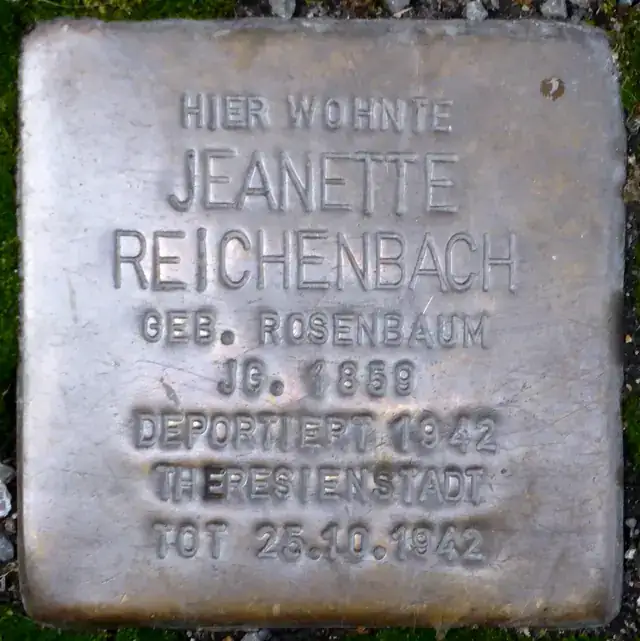 Document / objectStolperstein for Jeanette ReichenbachThe stone records Jeanette Reichenbach’s deportation to Theresienstadt and her death there on 25 October 1942. The stone lies outside the Wernigerode house where Jeanette kept the shop. It names her deportation and death, but it does not preserve the half-room and rent recorded in her Berlin papers.
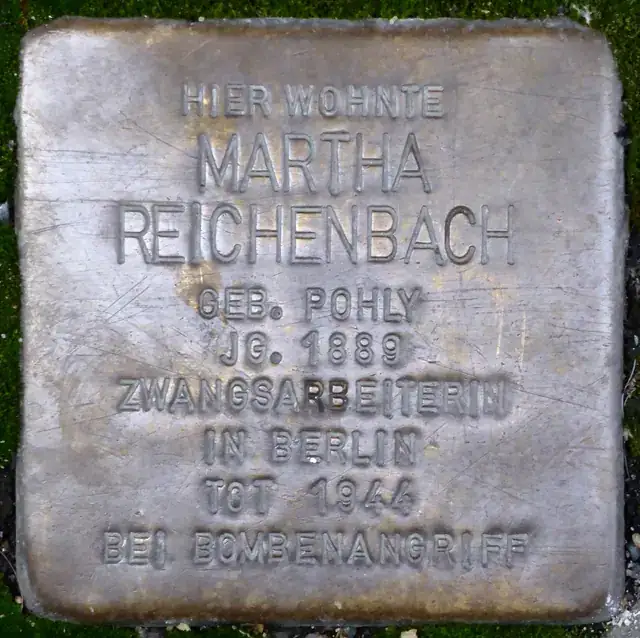 Document / objectThe Wernigerode stone gives Martha a disputed 1944 endingThis photograph shows the Stolperstein laid for Martha Reichenbach at Breite Straße 7 on 14 April 2009. Its inscription reads “tot 1944 bei Bombenangriff.” The Gestapo and Berlin deportation file instead places her in the 33rd Osttransport of 3 March 1943, classed for Auschwitz; the stone is a local memorial inscription, not evidence of her last hour or registration on arrival.
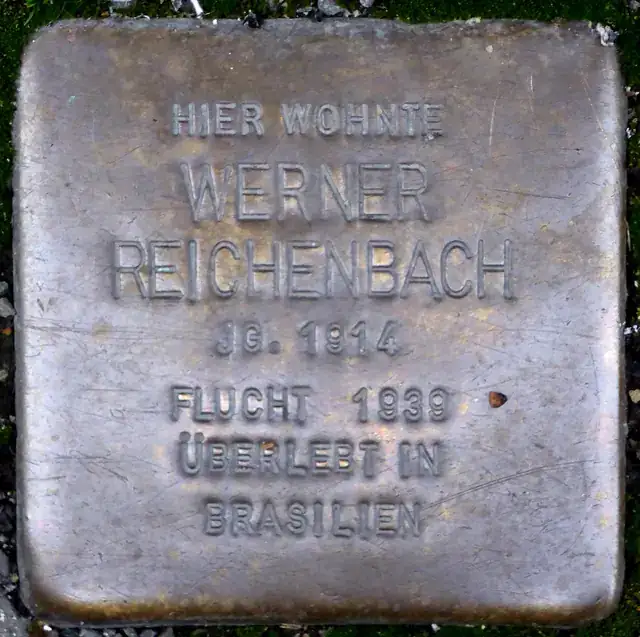 Document / objectWerner’s Stolperstein records his escape to BrazilThis modern memorial stone lies outside the Wernigerode home of Werner Reichenbach’s family. The inscription names his flight in 1939 and survival in Brazil. It marks those facts in public space, but it does not tell the later life he built there.
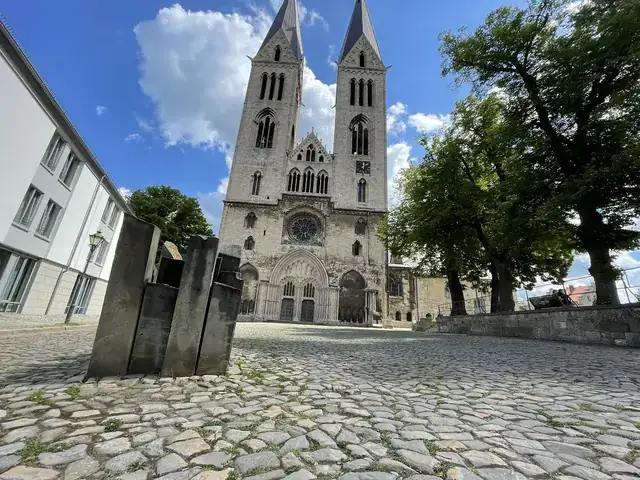 Document / objectStones of Remembrance at Halberstadt CathedralThe Stones of Remembrance beside Halberstadt Cathedral. The memorial names the Jews taken from the city, among them Kurt Reichenbach, Paula Wollenberg and Hans Wollenberg. It does not record what happened to them after Warsaw.
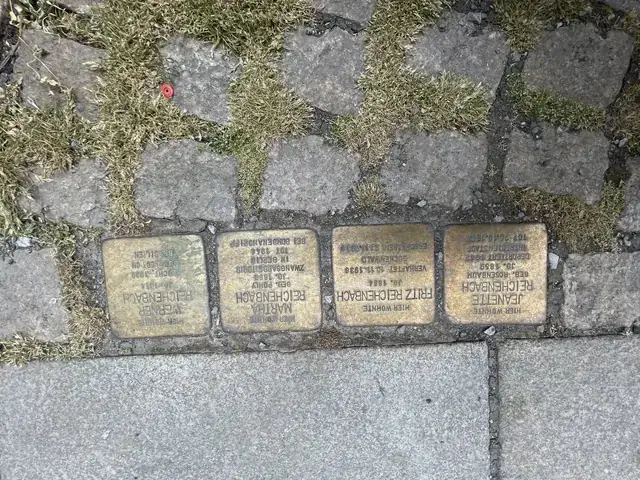 Document / objectFour Stolpersteine name the household at Breite Straße 7These four memorial stones name Fritz, Jeanette, Martha and Werner Reichenbach outside their Wernigerode home. The inscriptions bring the household together at the address where they lived and worked. They are modern memorial texts and do not replace the separate records for each life.
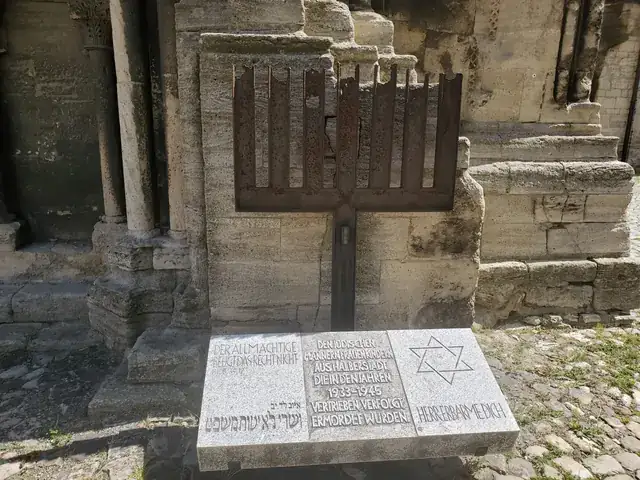 Document / objectHalberstadt placed a memorial beside the cathedralThis modern memorial stands beside Halberstadt Cathedral for the town’s persecuted and murdered Jews. Residents and visitors encounter the names in the center of the city. The photograph records the memorial in place, but not every inscription closely enough to read.
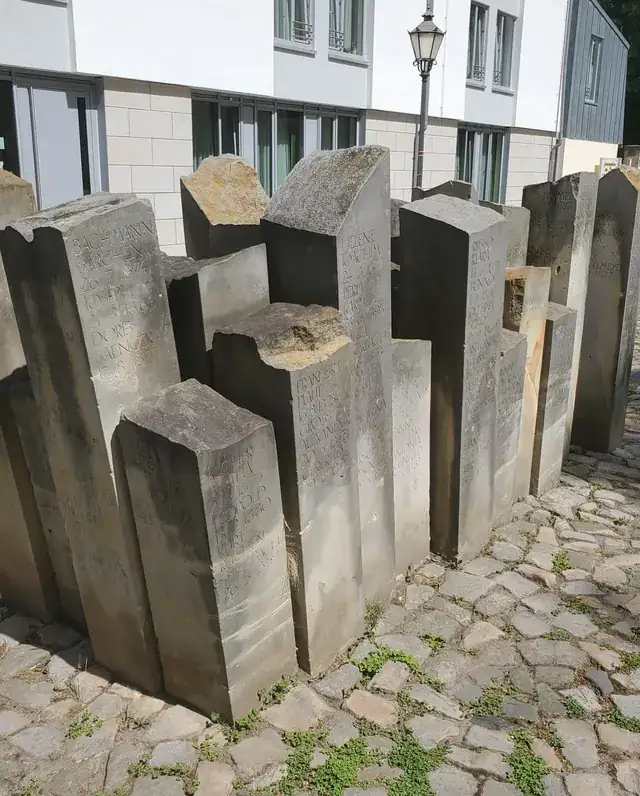 Document / objectKurt Reichenbach among the Domplatz memorial namesKurt Reichenbach among Halberstadt’s memorial names. Daniel photographed the name during the family’s return to Halberstadt. The stone marks Kurt’s removal from the city; it does not add a fate after Warsaw.
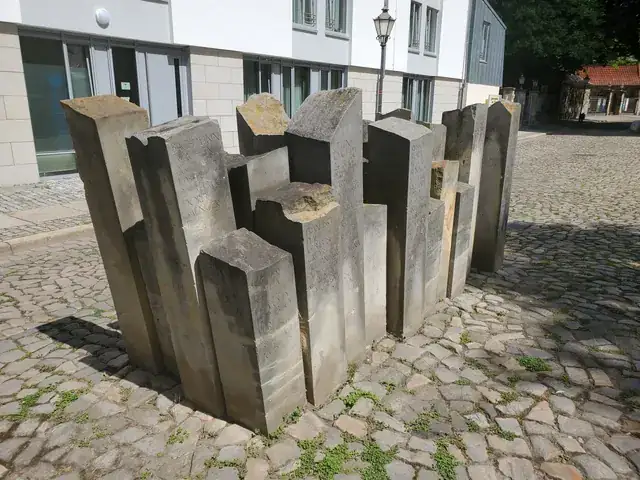 Document / objectThe Stones of Remembrance carry names through the cityThis photograph shows names and life dates cut into Halberstadt’s Stones of Remembrance. The artist and city placed individual people back into public view. The frame records the installation, but it is not a complete legible inventory of every stone.