Browse one archival series
Correspondence and manuscripts
Letters, manuscript texts, family songs and related reading copies.
26 · 1887–1938
Arrangement: historical records follow their date; conventional viewing copies stay with their source, while new interpretations use their creation date. Related pages and views stay together; undated records follow.
Filter record results by archival series
Documents and objects Showing 1–26 of 26
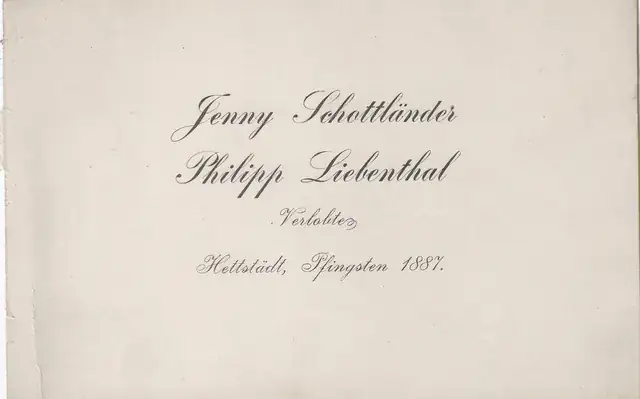 Document / objectJenny Schottländer and Philipp Liebenthal announced their engagementThis printed card records the couple’s engagement at Pentecost 1887. Jenny and Philipp, or their families, issued it from Hettstedt and Halle and named Jenny’s parents. It establishes the engagement and households, but it does not give the later wedding date.
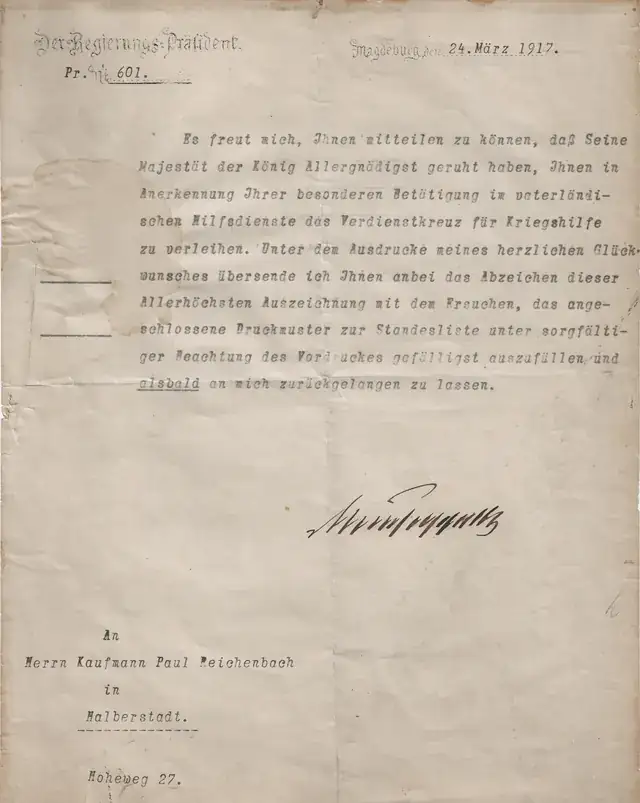 Document / objectThe notice awarding Paul the Merit Cross for War AidThe Prussian notification naming Paul Reichenbach, merchant, at Hoheweg 27 as a recipient of the War Aid Merit Cross. The notice proves the award and gives Paul’s business address. It does not say that he served in combat or identify a specific act that prompted the honor.
 Document / objectThe reverse preserves the folds in Paul’s award noticeThis image shows the blank reverse and physical condition of the same folded sheet that carries Paul’s War Aid Merit Cross notice. The family kept the paper after the award was announced. It records folds and wear, but it is not a separate wrapper or second document.
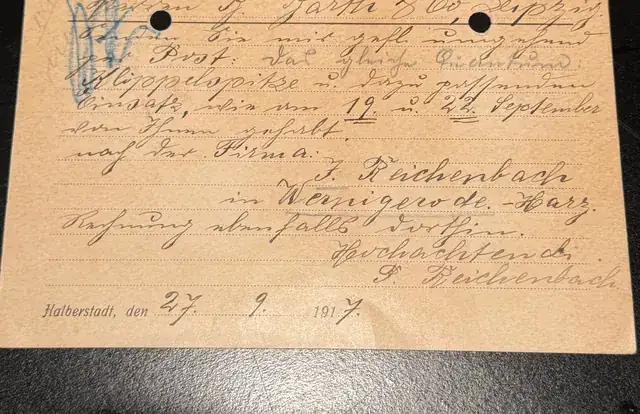 Document / objectPaul’s business ordered goods for J. Reichenbach in WernigerodeThis message side, dated 27 September 1917, places an order with a Leipzig supplier and asks for goods and invoice to go to J. Reichenbach in Wernigerode. Someone in Paul’s business wrote the card, and postal hands carried it to the supplier. It connects the Halberstadt and Wernigerode firms in this transaction, but the writer’s signature and some wording remain a preliminary reading.
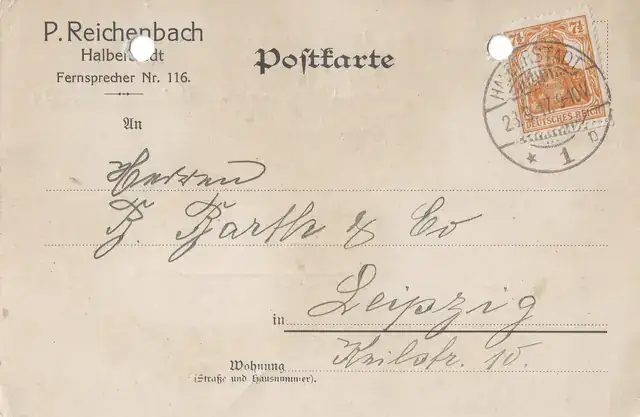 Document / objectPaul’s 1917 business postcard carries its route on the address sideThis address side bears the P. Reichenbach business heading, telephone number 116, a Leipzig destination and a 1917 postmark. Postal workers and the recipient handled the family-held card as it crossed from Halberstadt. It establishes the business correspondence and route, but not the goods ordered on the other side.
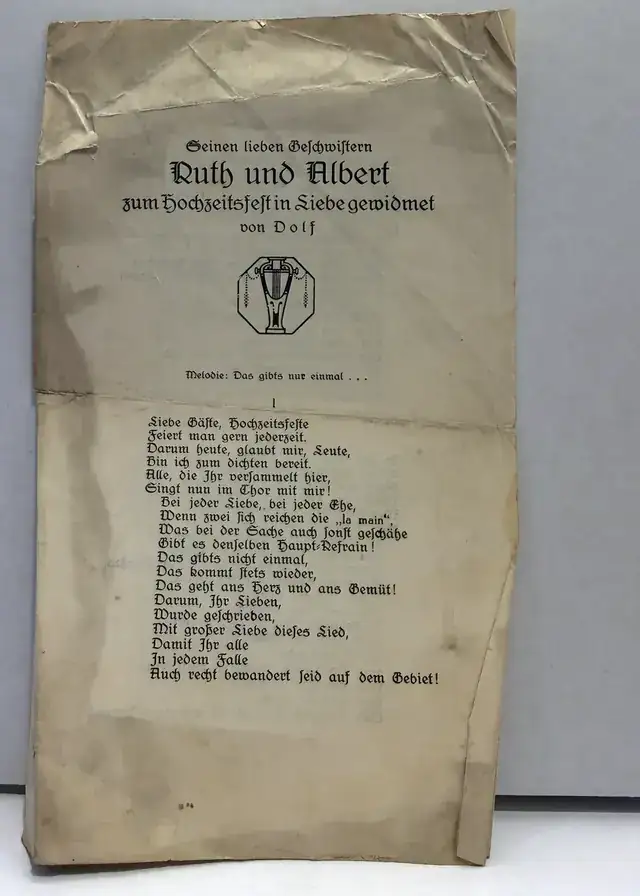 Document / objectDolf’s dedication and first wedding-song verse for Ruth and AlbertDolf dedicated this humorous song to his sister Ruth and Albert Rothschild for their Halberstadt wedding on 3 August 1933. The booklet lets us hear a brother address the couple at their wedding. It is a family performance, not a neutral account of Ruth’s earlier life.
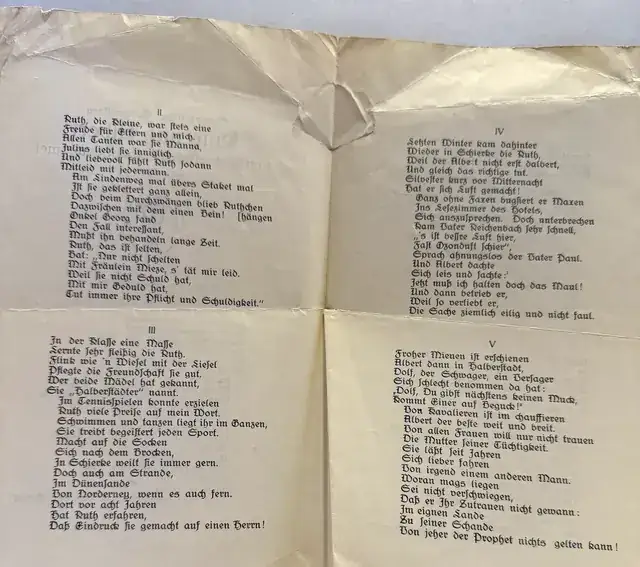 Document / objectFour verses from Ruth and Albert’s wedding songFour comic verses move from Ruth’s childhood and athletic life to the courtship in Schierke and Albert’s arrival in Halberstadt. Dolf wrote the song for a family celebration. Its jokes preserve family knowledge, but they do not establish every date or place they mention.
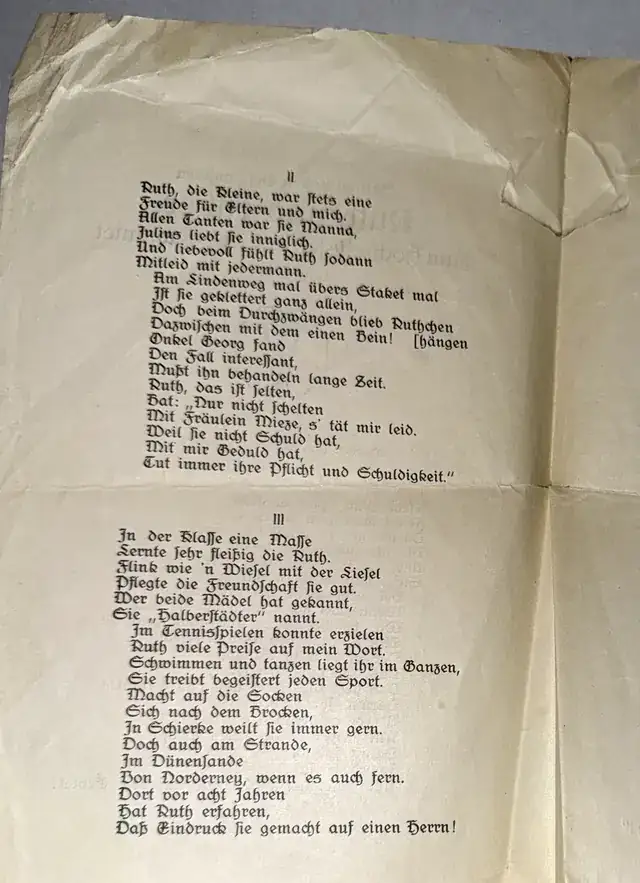 Document / objectRuth’s childhood in a closer view of the wedding songA closer overlapping view preserves the booklet’s account of Ruth’s childhood, sport and travel. The overlap helps read damaged or faint lines in the same booklet. It is another view of the same pages, not a separate version of the song.
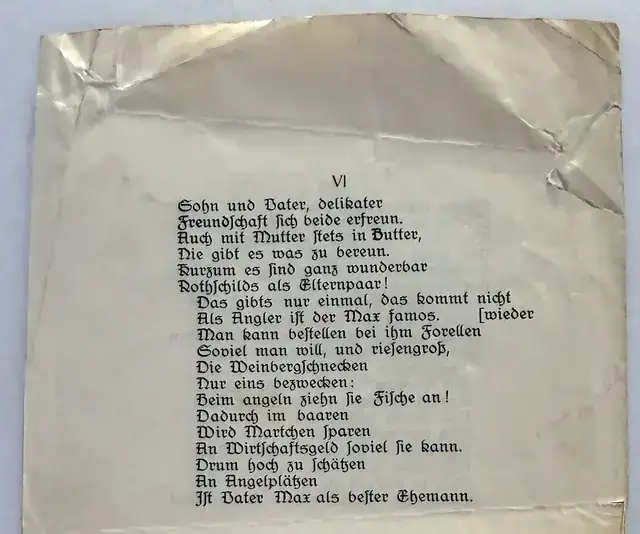 Document / objectThe sixth verse of Ruth and Albert’s wedding songThe sixth verse welcomes Albert’s parents into the comic family portrait and jokes about Max Rothschild’s fishing. Dolf wrote the joke for the wedding gathering. The verse tells us how the family spoke to one another, not whether every comic detail was literal.
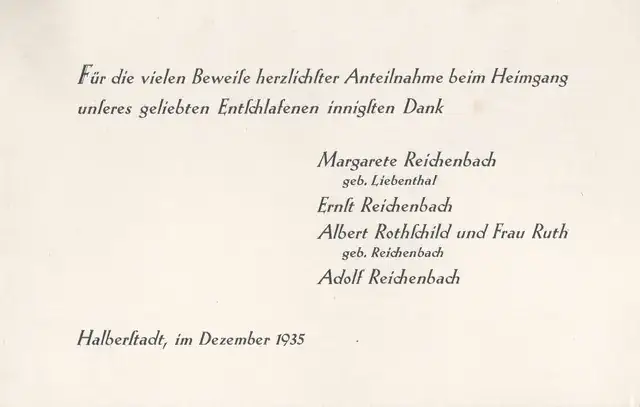 Document / objectThe family thanked mourners after Paul’s deathThis printed card acknowledges the condolences received after Paul Reichenbach died. Margarete and the family sent or kept it as part of the public rituals of mourning. It records their thanks, but it does not name every person who wrote or visited.
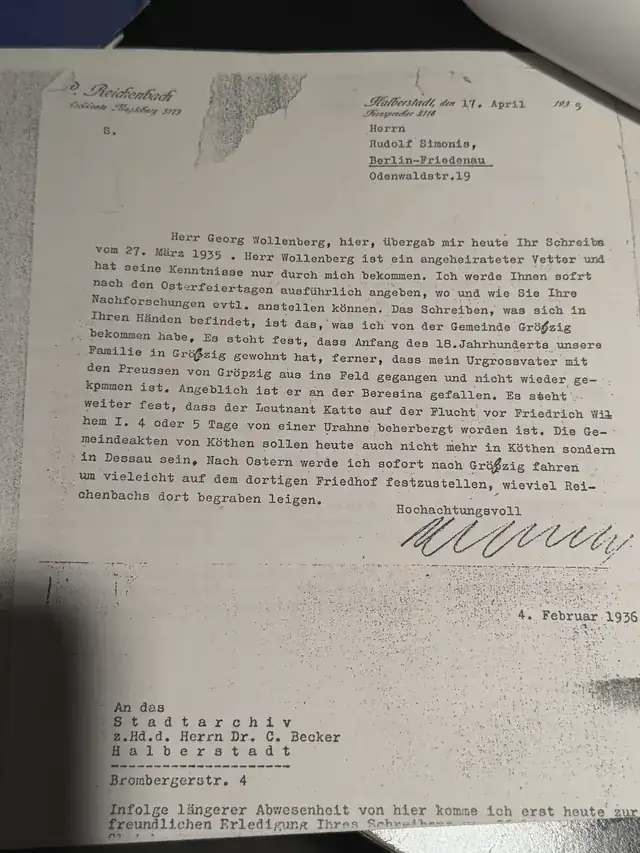 Document / objectPaul Reichenbach to Rudolf SimonisPaul reports what he had learned about the family in Gröbzig and planned to inspect the cemetery after Easter. The same signed letter survives in Rudolf Jakob Simonis’s professional genealogy collection. Paul’s Berezina and Lieutenant Katte accounts are inherited traditions reported in the letter, not independently proved by it.
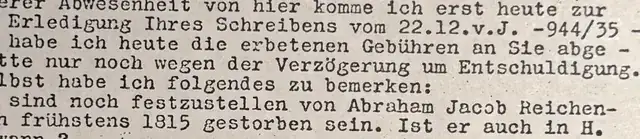 Document / objectAn unsigned page continues the search Paul beganThis archival query asks about Abraham Jacob Reichenbach and Therese Frank and cites a Halberstadt file. It sits in Rudolf Jakob Simonis’s genealogy papers immediately after Paul’s signed 1935 letter and postdates Paul’s death. The placement strongly suggests Simonis continued the inquiry, but the unsigned page does not prove authorship.
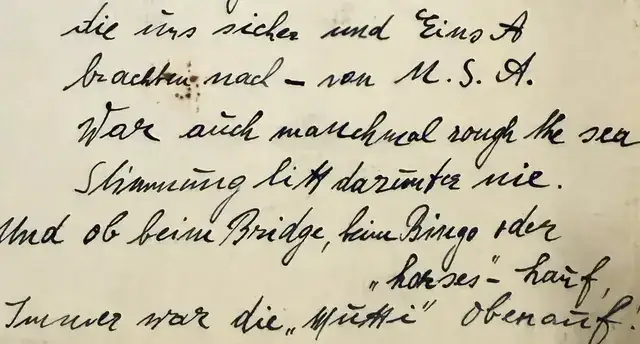 Document / objectFred begins a shipboard verse for Mutti ReichenbachA friend named Fred wrote this playful first leaf to Margarete aboard the S.S. Manhattan. He remembers bridge, bingo and the crossings she had already made, calling her an artist of life. The verse preserves friendship and shipboard humor, but not the full circumstances of the voyage.
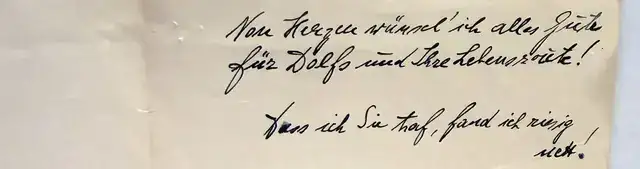 Document / objectFred closes his shipboard verse with wishes for Margarete and DolfThis second leaf ends the verse written to Margarete aboard the S.S. Manhattan and signs it “Ihrem Fred, Le Havre.” Fred wishes her well for Dolf and the course of her life. The page documents the 1937 crossing, but the writer’s full identity remains unknown.
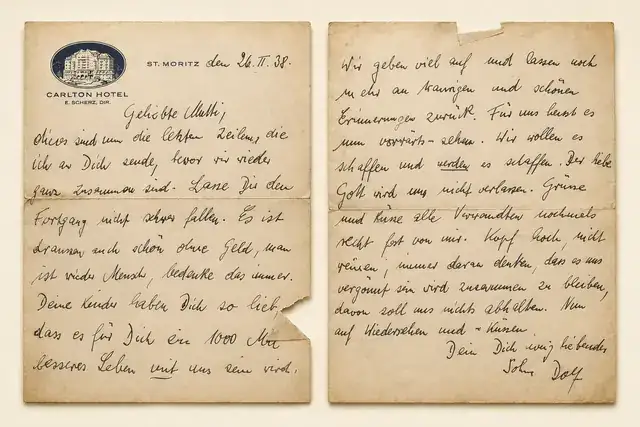 Document / objectDolf’s letter from St. Moritz to MuttiDolf Reichenbach to his mother Margarete, St. Moritz, 26 November 1938.
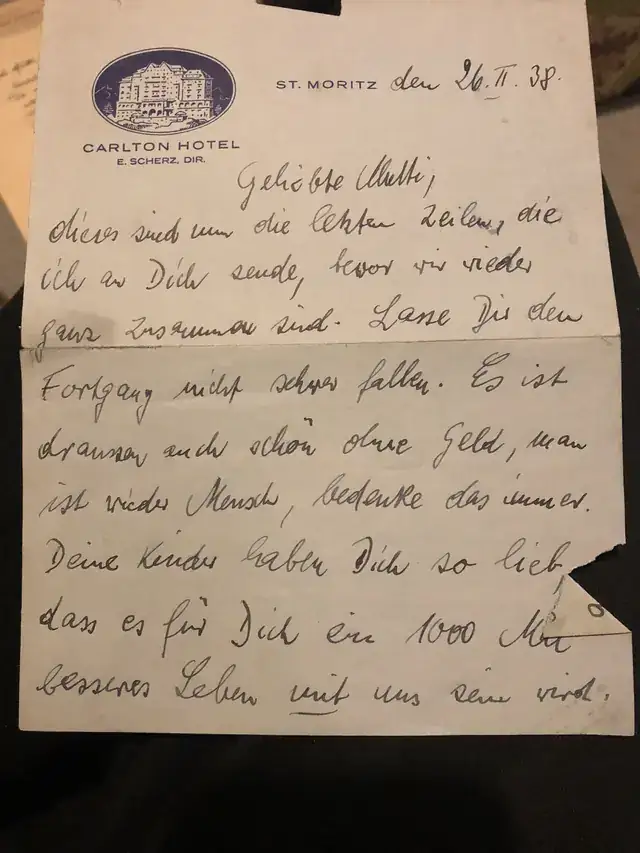 Document / objectThe first surviving sheet of Dolf’s letterFirst surviving sheet, photographed directly. Dolf wrote these lines to his mother, Margarete, on 26 November 1938. This is only the first half of the letter; the second sheet completes his message.
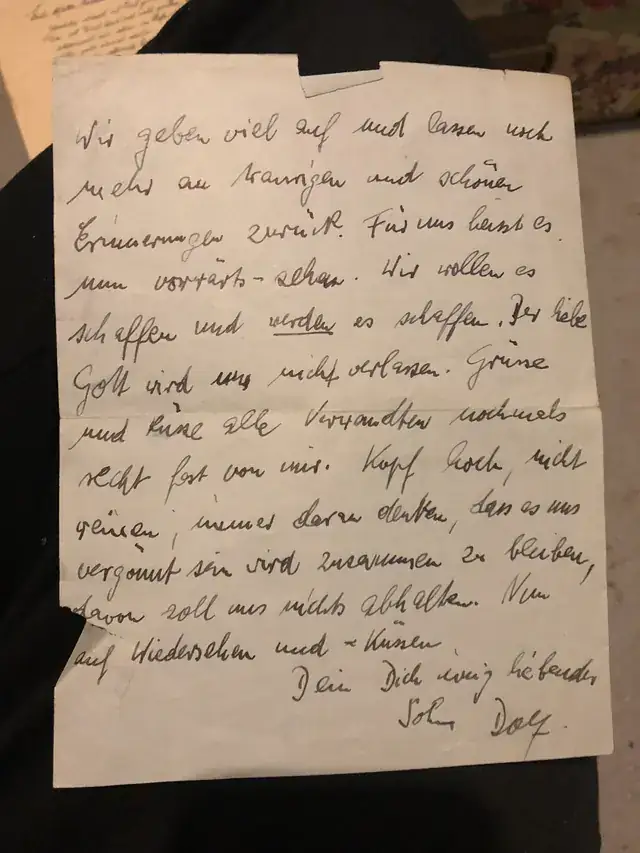 Document / objectThe second surviving sheet of Dolf’s letterSecond surviving sheet, photographed directly. Dolf closes the letter to his mother with the words preserved in Rabbi Dr. Esther Jilovsky’s English translation. This sheet should be read after the first surviving page.
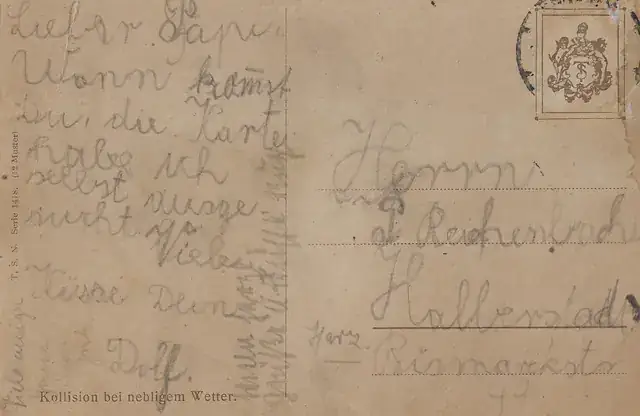 Document / object“Dear Papa” — a postcard signed DolfA child writes to Papa: “I chose the card myself.” Signed Dolf; undated.
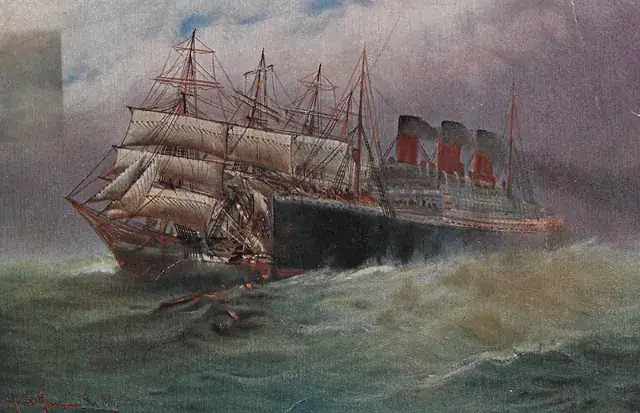 Document / objectCollision in Foggy Weather — postcard pictureThe dramatic ship picture on the postcard signed Dolf.
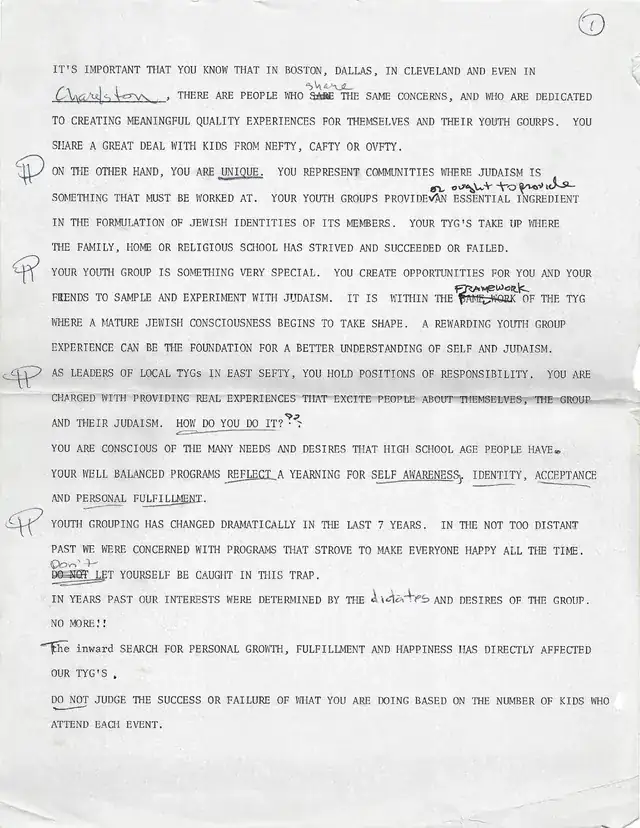 Document / objectPaul J. revised the opening of his youth-group addressThe first page begins in typescript and fills with Paul J. Reichenbach’s handwritten revisions. He tells the young people before him that their concerns connect them with peers across NFTY. The page preserves his working voice, but no title page or date survives.
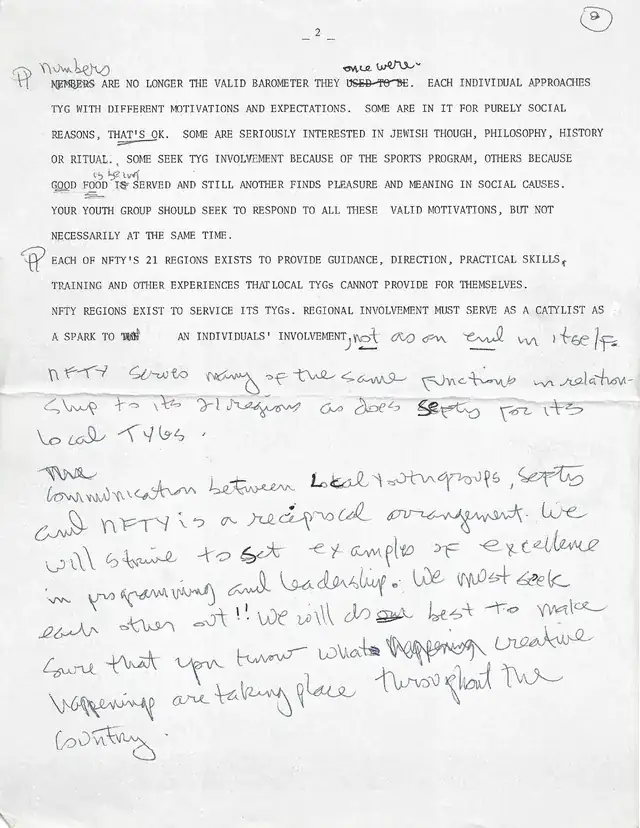 Document / objectPaul J. moves from local groups to the wider youth movementThe second page shifts from typed paragraphs into Paul’s handwriting as he links local groups, SETY and NFTY. His revisions show him shaping the address for the room in front of him. The internal clues point to Savannah, but they do not supply a date.
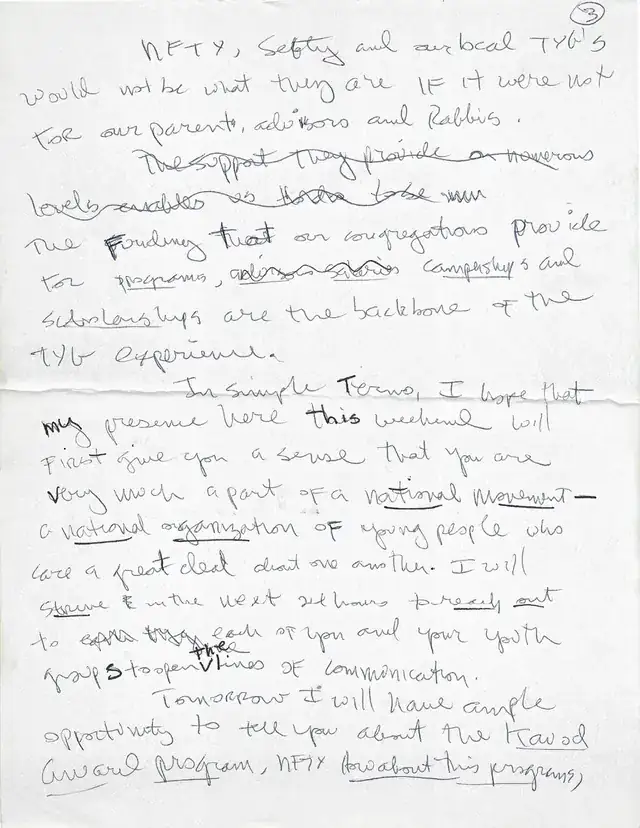 Document / objectPaul J. names the programs that joined young people across NFTYOn this handwritten page Paul names Kutz, Torah Corps, awards, travel and programs in Israel. He asks the group to see itself as part of a national movement. The page records his argument, but it is not the separate 1969 Temple Israel sermon.
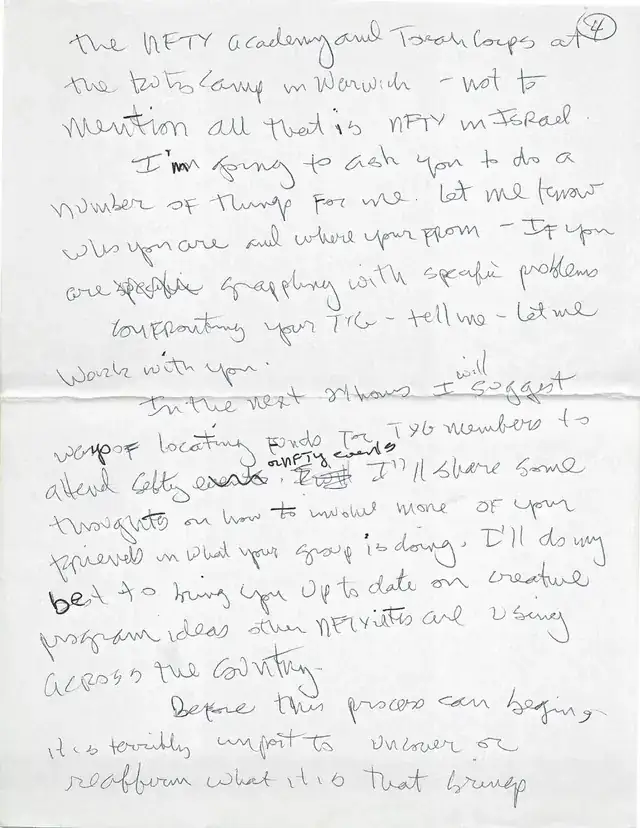 Document / objectPaul J. asks the group to bring other young people inPaul turns from national programs to the work of finding young people not yet involved. He also thanks the Savannah hosts who made the gathering possible. Those clues locate the address, but they do not identify its exact date.
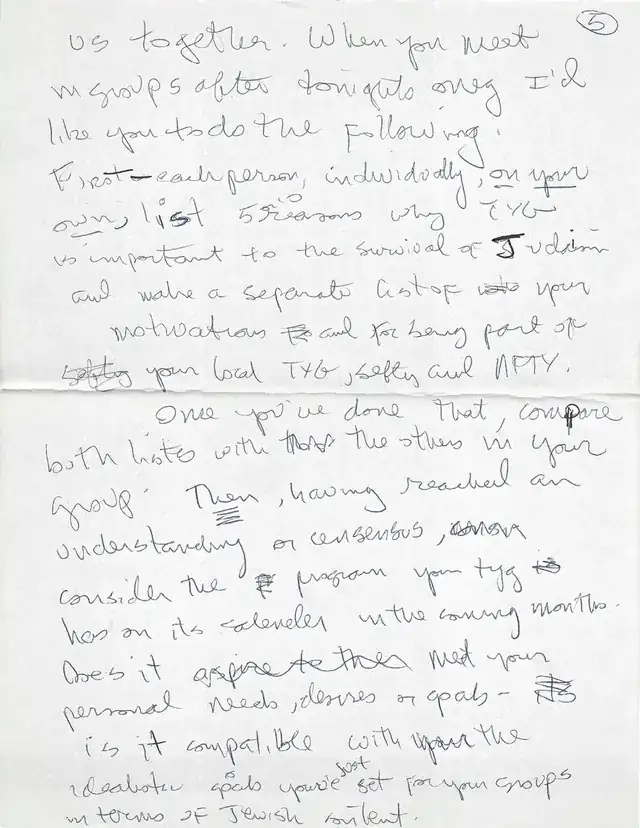 Document / objectPaul J. asks the group to plan person by personThis handwritten page moves from individual outreach to the goals the youth group will pursue together. Paul asks the participants to compare names, motivations and plans. It records a working method, not the outcome of the discussion.
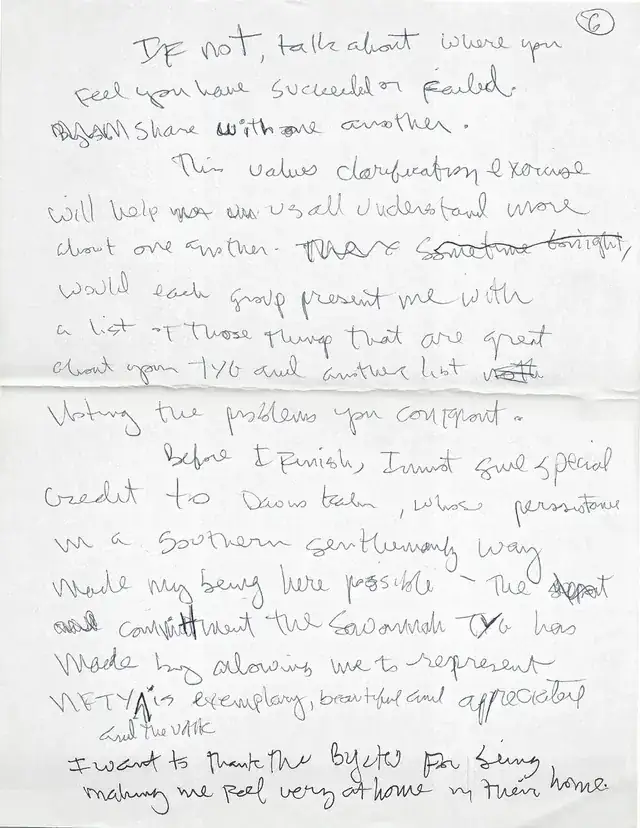 Document / objectPaul J. asks the group to name both strengths and failuresThis page turns the address into an honest working session about values, success and failure. Paul asks the participants to identify what is strong and what needs work. The manuscript keeps his questions, but not the answers spoken in the room.
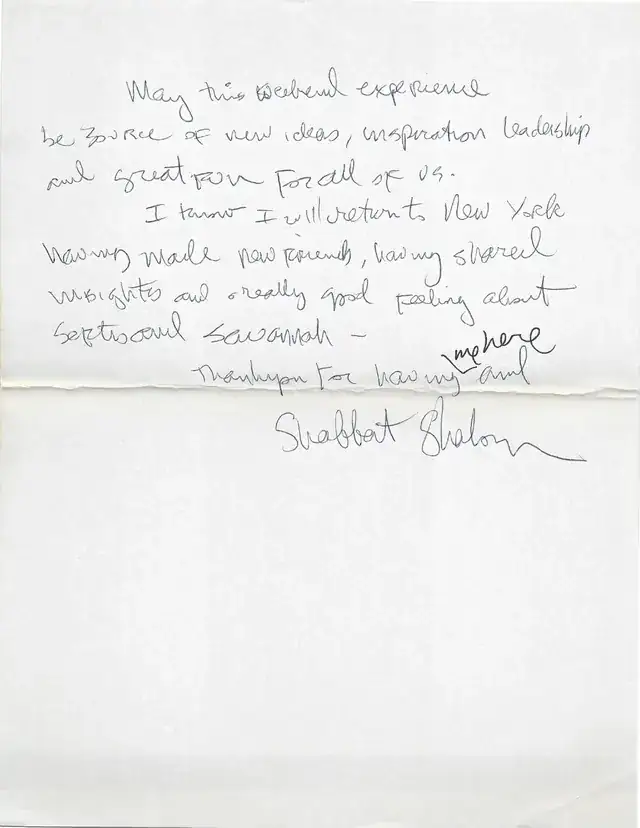 Document / objectPaul J. closes with thanks and Shabbat ShalomThe final handwritten page hopes for new ideas, inspiration, leadership and joy. Paul thanks the gathering and the friends he made in SETY and Savannah before writing “Shabbat Shalom.” The closing helps identify the setting, but the manuscript still carries no date.