Browse one archival series
Family-held objects and volumes
Material objects, the mourning volume, paintings and other family-held artifacts.
61 · 1907–1945
Arrangement: historical records follow their date; conventional viewing copies stay with their source, while new interpretations use their creation date. Related pages and views stay together; undated records follow.
Filter record results by archival series
Documents and objects Showing 1–48 of 61
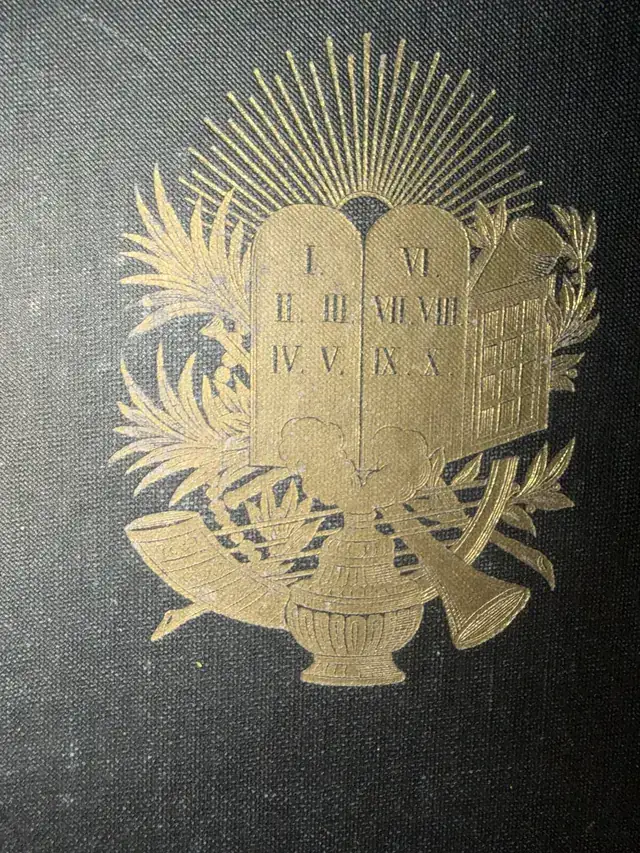 Document / objectPaul’s Yom Kippur prayer book opens under a gilt cloth coverThis gilt cover surrounds the Yom Kippur machzor that Paul Reichenbach later marked with his name. Paul and the family kept the book even within a modern, acculturated household. Its survival shows attachment to inherited prayer, but not how often Paul used it.
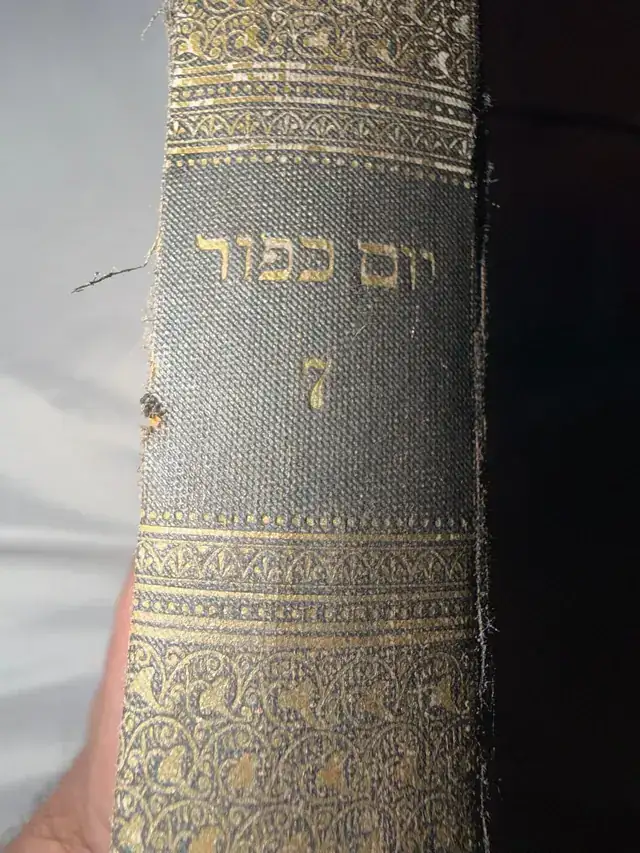 Document / objectWear has softened the gilt spine of Paul’s machzorThis view shows the Hebrew title and ornamental bands still visible on the worn spine. Paul and later family hands handled and kept the volume. The wear records use, but it cannot identify each reader or occasion.
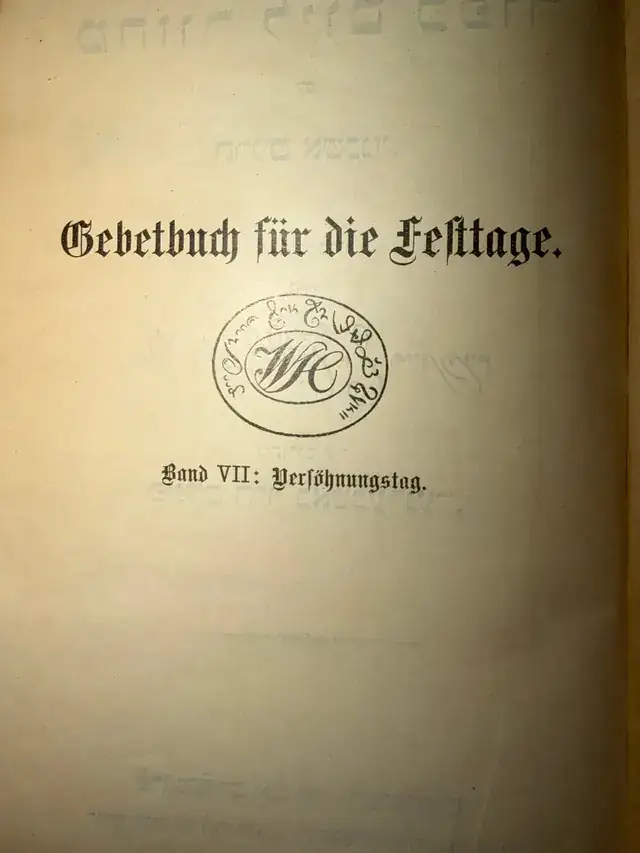 Document / objectThe series leaf identifies the Day of Atonement volumeThis printed leaf names the book as volume VII of Gebetbuch für die Festtage, the volume for Yom Kippur. The publisher placed it within a larger festival-prayer series that Paul later owned. It identifies the volume, but the photographed leaf carries no publication date.
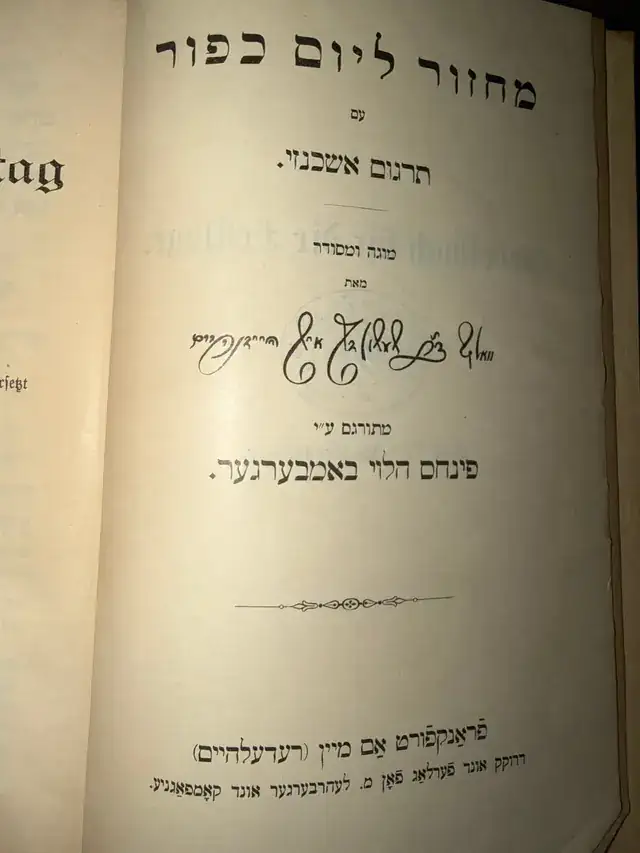 Document / objectThe Hebrew title names a Yom Kippur machzor with German translationThis title page identifies the Yom Kippur liturgy edited by Wolf Heidenheim with German translation by Selig Bamberger. Paul owned this bilingual volume and wrote his name elsewhere inside it. The page identifies the edition’s form, but not its date by itself.
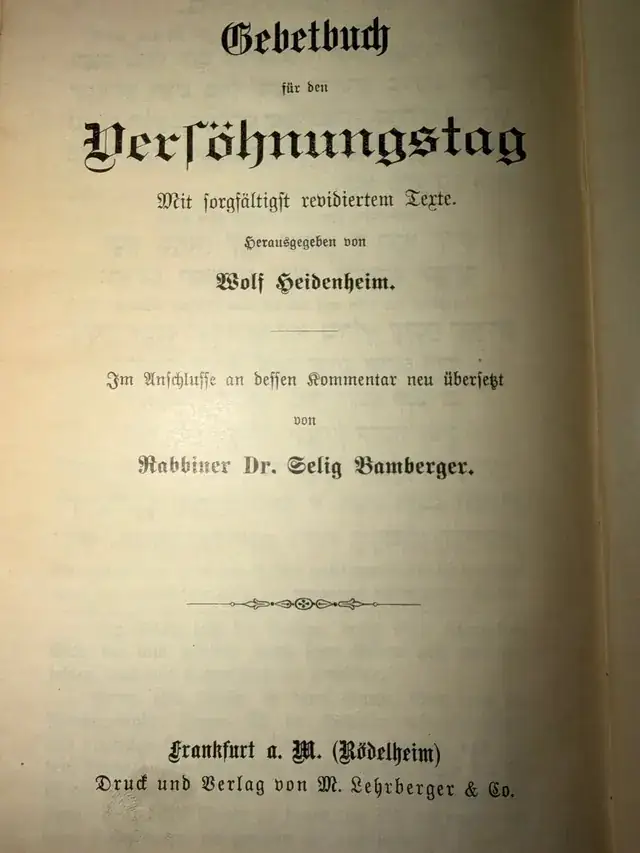 Document / objectThe German title page names the Rödelheim publisherThis title page names Wolf Heidenheim, Rabbi Dr. Selig Bamberger and M. Lehrberger & Co. in Rödelheim. The imprint allows the family copy to be matched to the 1907 library record. The photographed page itself does not print the year.
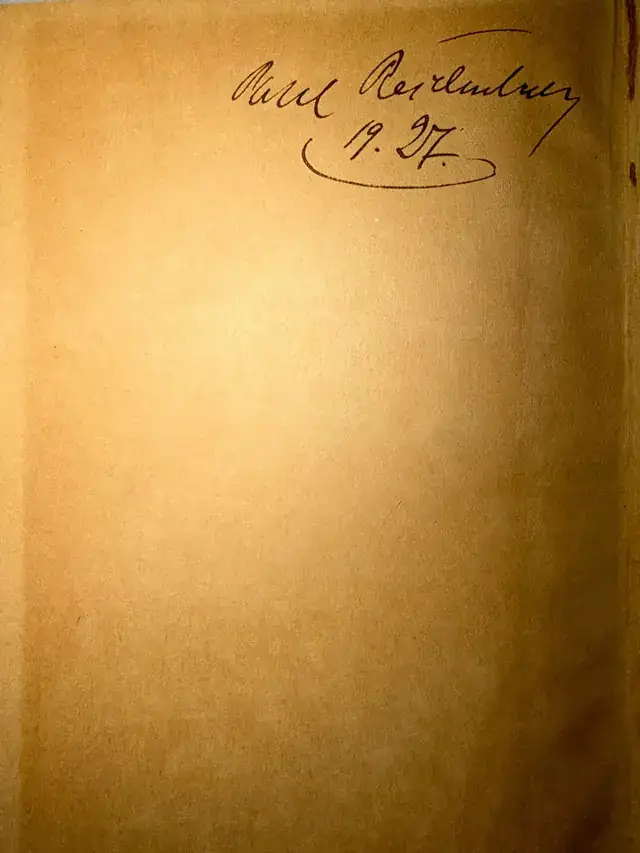 Document / objectPaul wrote his name and 1927 inside the machzorThis page bears the handwritten ownership inscription “Paul Reichenbach” and the date 1927. Paul’s hand ties the printed prayer book directly to him. The inscription records ownership that year, but not when he acquired the book or how often he prayed from it.
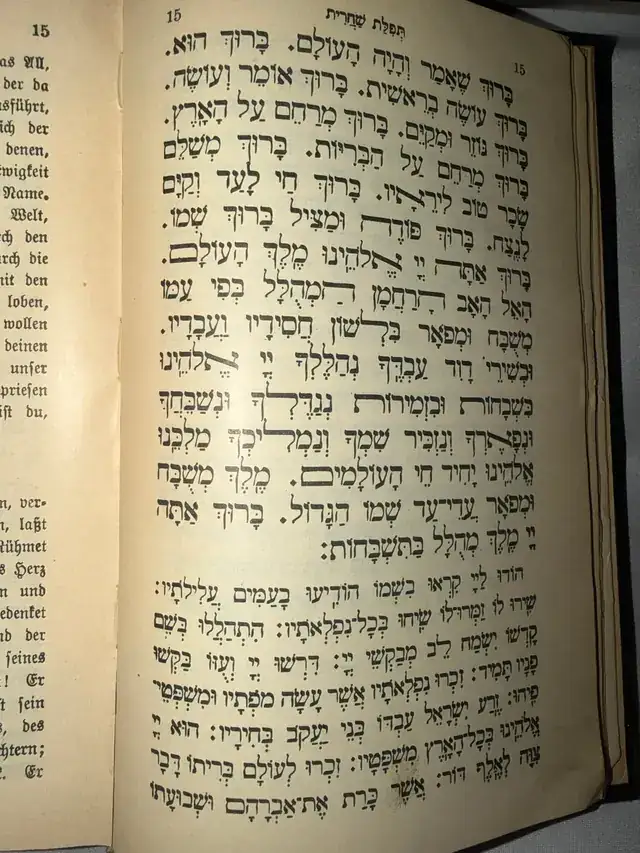 Document / objectLarge Hebrew type carries the Yom Kippur morning prayerThis page shows the vocalized Hebrew used in the morning service of Paul’s machzor. Paul and later family readers could follow the traditional text in this volume. The page preserves the liturgy, but it does not mark which passages Paul read.
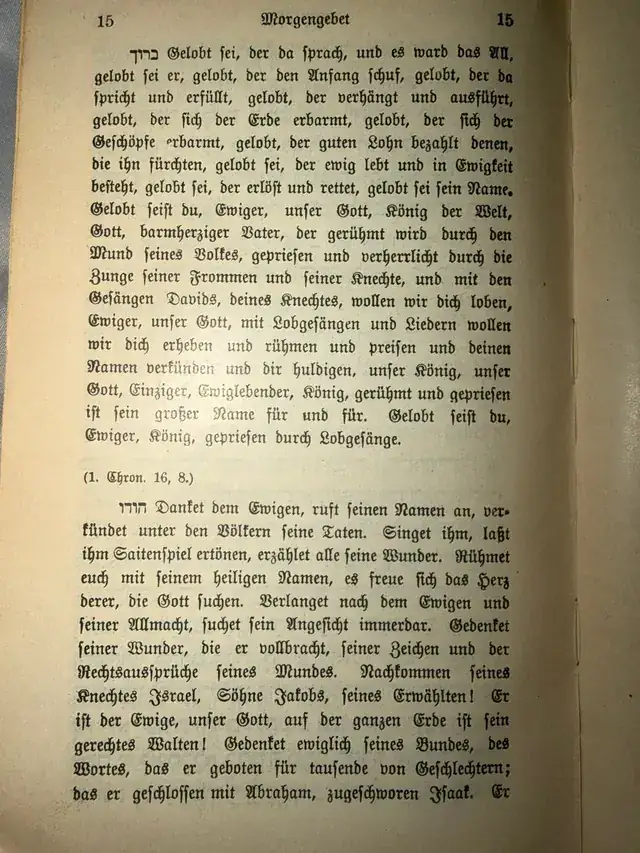 Document / objectThe facing German page opens the prayer to German-speaking readersThis page gives the German translation beside the Hebrew morning service in Paul’s machzor. The bilingual design made inherited liturgy accessible within a German-speaking household. It shows what the book offered, but not how Paul balanced the two languages in prayer.
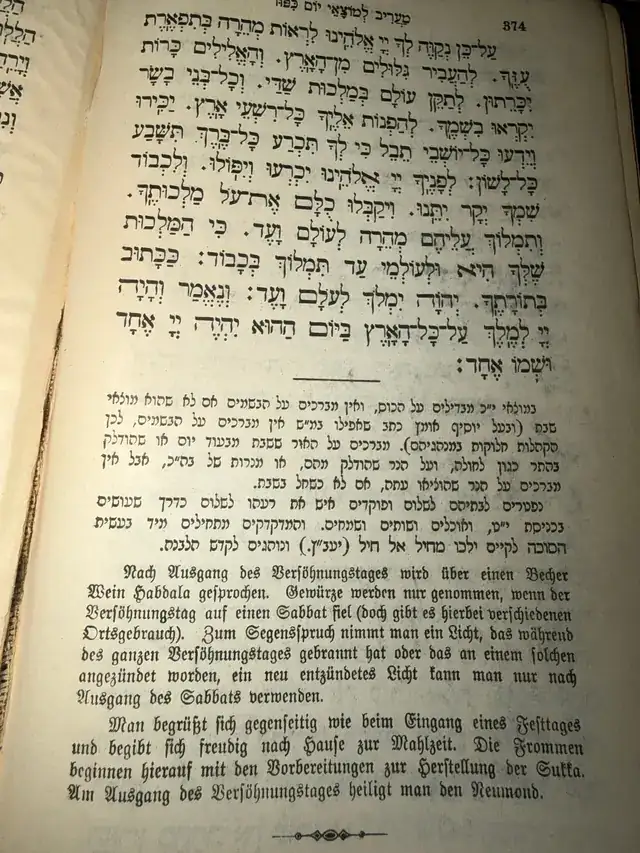 Document / objectThe closing pages explain Yom Kippur prayers and customsPage 374 preserves closing liturgy together with German explanations of Yom Kippur customs. Paul’s family kept this practical and devotional guide inside the same volume. It documents the printed instruction, but not which customs the household observed.
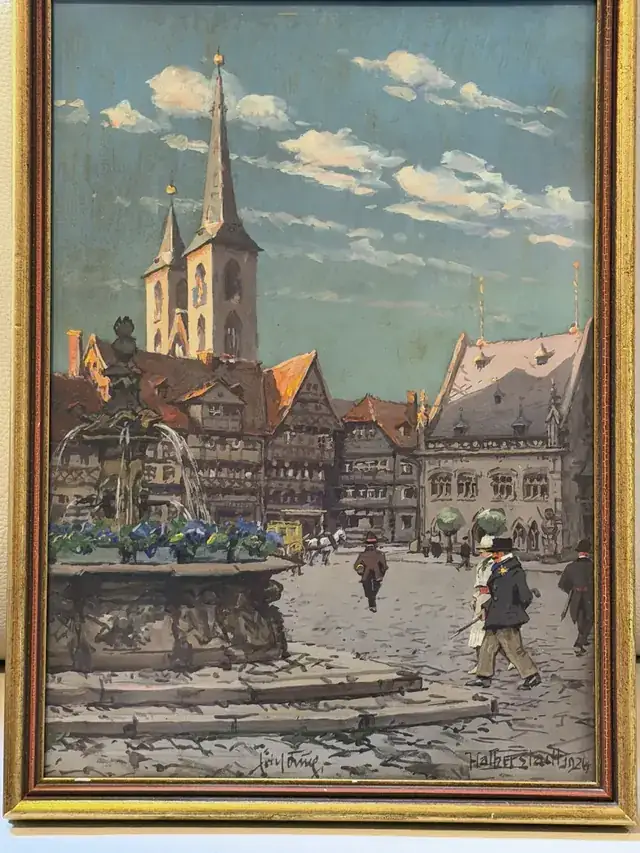 Document / objectWalter Gemm painted Halberstadt’s marketplace in 1926This family-held painting shows Halberstadt’s civic center with the Rathaus, Martinikirche, fountain and Roland. Walter Gemm signed and dated the work, and the family kept it framed. The image identifies the artist and place, but the medium, support and path into the family remain unexamined.
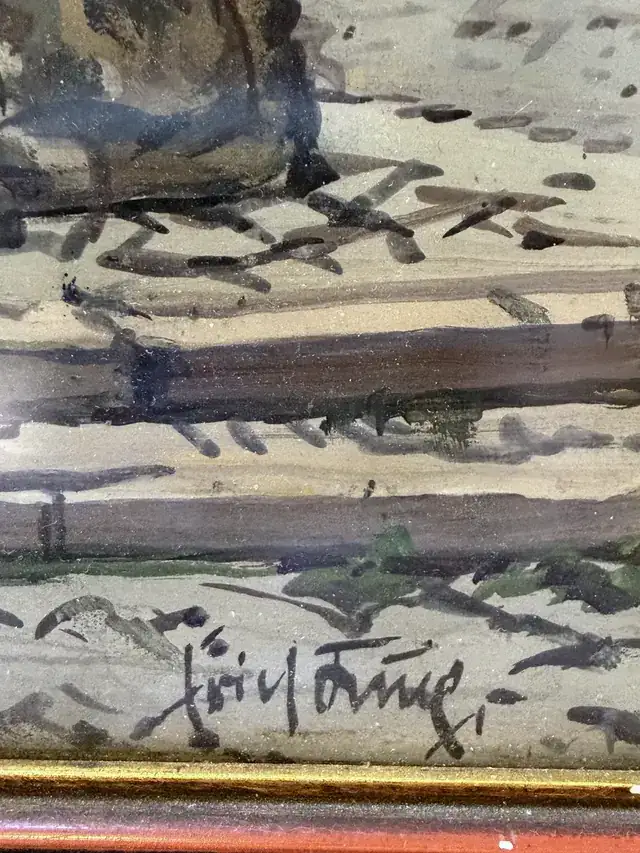 Document / objectWalter Gemm signed the marketplace paintingThis close view records Walter Gemm’s painted signature on the family-held marketplace scene. The artist’s hand identifies the maker of the work. The signature does not reveal when or how the family acquired it.
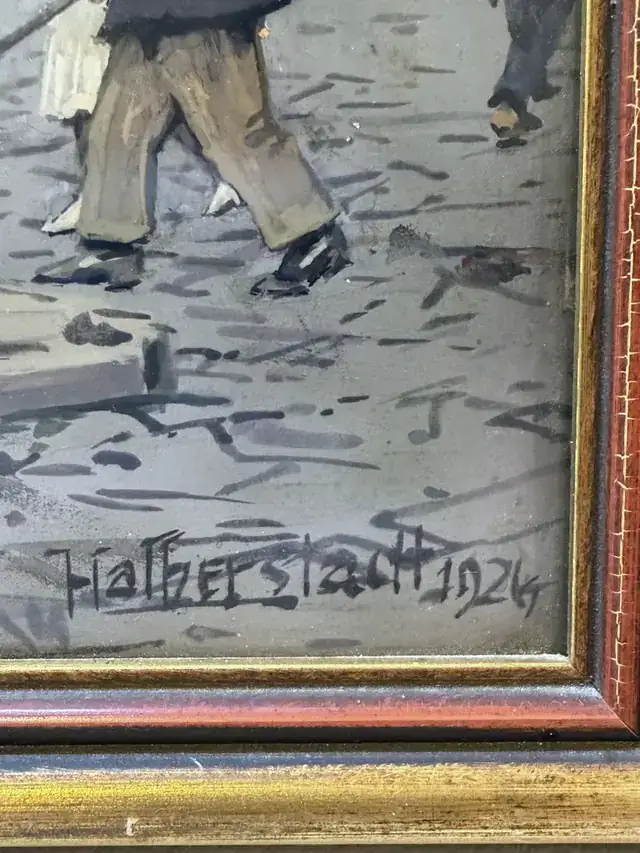 Document / objectThe painting itself says Halberstadt, 1926This close view records the painted inscription “Halberstadt 1926” in the corner of Walter Gemm’s marketplace scene. Gemm’s hand fixes the place and year on the object. The inscription does not identify the buyer or occasion.
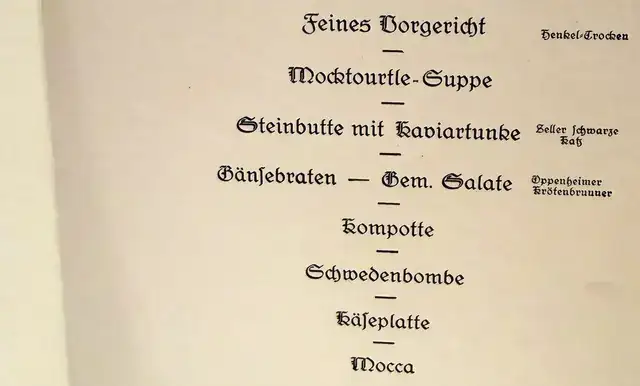 Document / objectThe menu from Ruth and Albert’s wedding mealThe printed menu from Ruth Reichenbach and Albert Rothschild’s wedding meal in Halberstadt on 3 August 1933: appetizer, mock-turtle soup, turbot with caviar sauce, roast goose, compotes, Swedish bombe, cheese and mocha. The menu lets us reconstruct what the guests were served. It does not name the cook, caterer or venue.
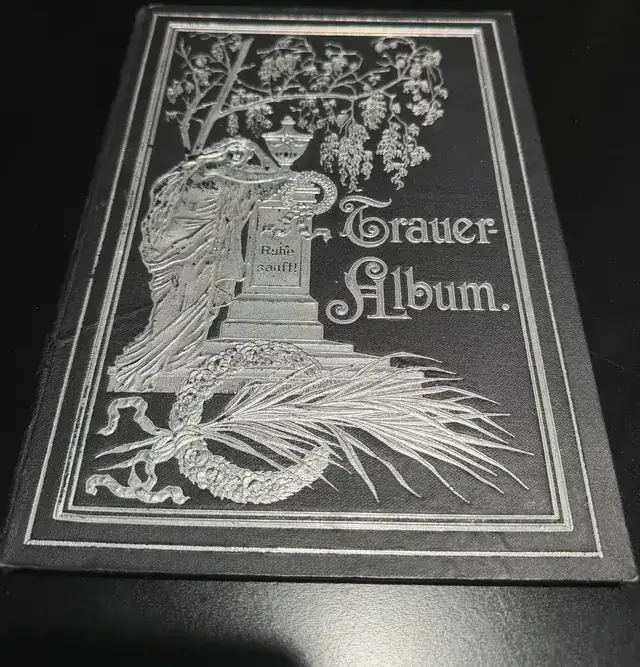 Document / objectThe mourning album opens under a tooled silver coverThis page of the family’s mourning album shows the silvered arabesques, palm fronds and title on the cover. The volume was completed for Paul Reichenbach and kept by his family. The wear shows that the book was handled, but it does not identify its maker or first purchaser.
 Document / objectBlank endpapers open Paul’s mourning albumThis page of the family’s mourning album shows the volume’s undecorated endpapers. The volume was completed for Paul Reichenbach and kept by his family. They preserve the book’s physical sequence, but they carry no names or notes.
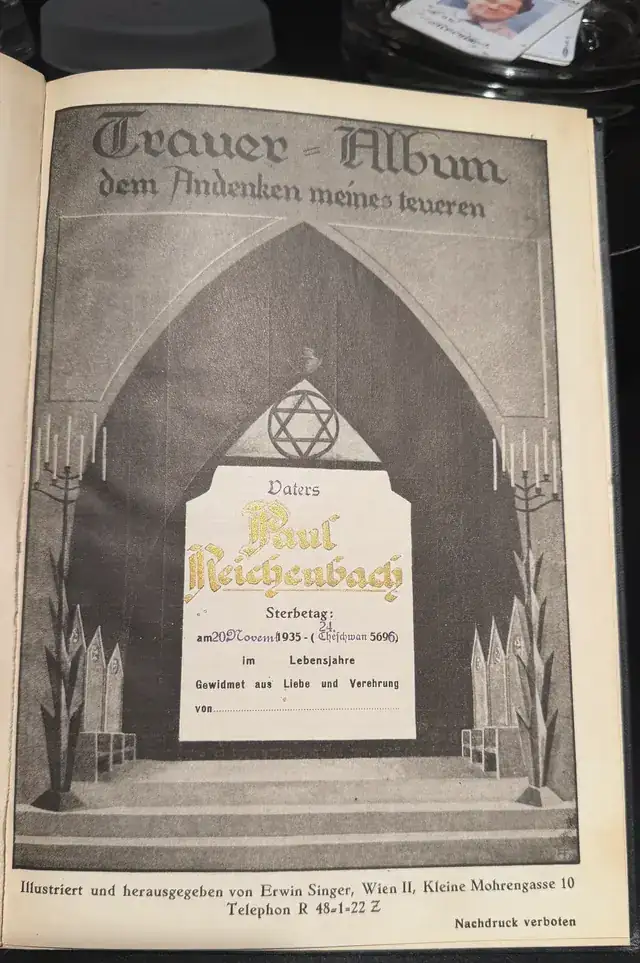 Document / objectThe title page dedicates the mourning album to PaulThis page of the family’s mourning album shows the printed title and dedication completed in memory of Paul Reichenbach. The volume was completed for Paul Reichenbach and kept by his family. It names the man being mourned, but the surviving blanks do not identify every person who filled or kept the book.
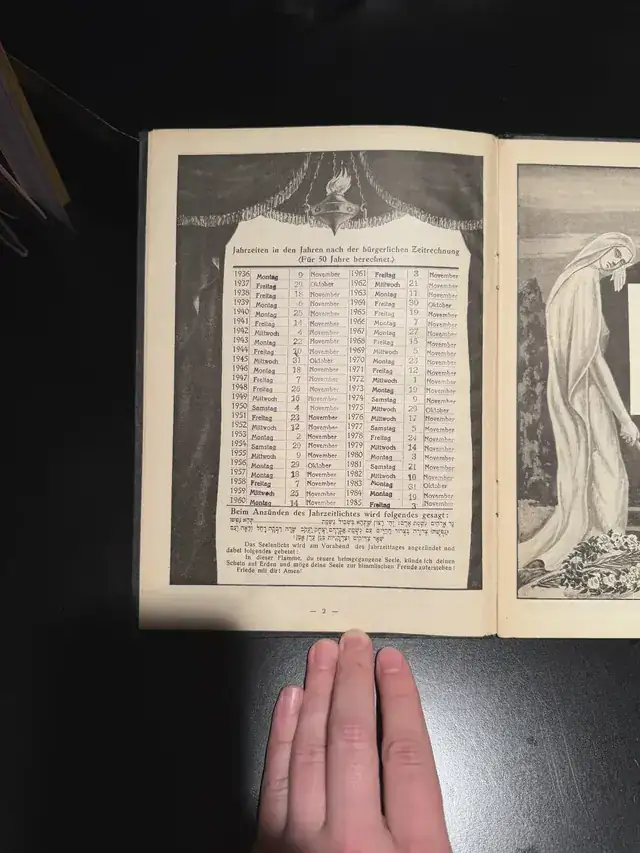 Document / objectThe mourning album turns Hebrew anniversaries into civil datesThis page of the family’s mourning album shows the printed tables that align Hebrew and civil memorial dates. The volume was completed for Paul Reichenbach and kept by his family. The tables guided later observance, but they do not record which anniversaries the family actually marked.
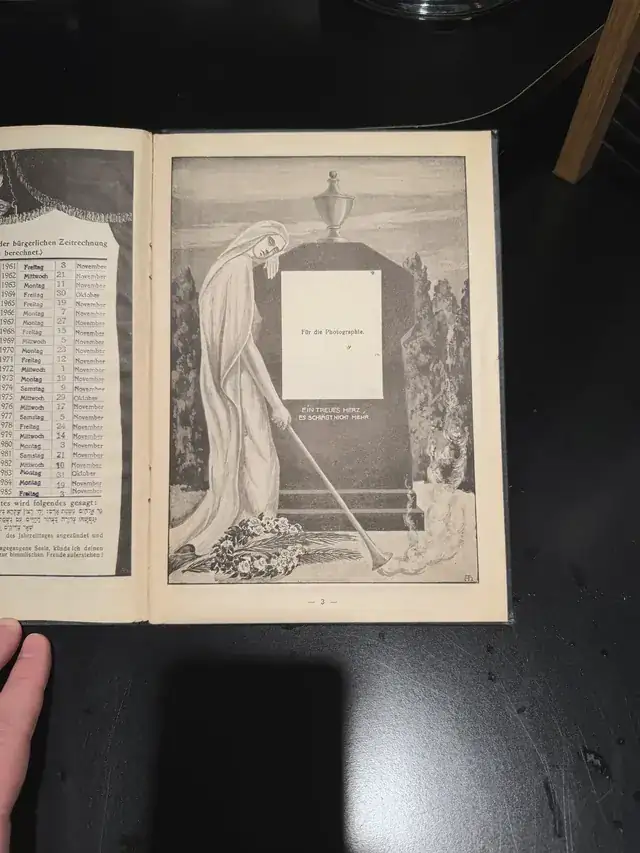 Document / objectA draped figure stands beside the album’s memorial panelThis page of the family’s mourning album shows an illustrated plate with a mourning figure, urn and empty commemoration panel. The volume was completed for Paul Reichenbach and kept by his family. The image frames grief, but the empty panel adds no biographical fact about Paul.
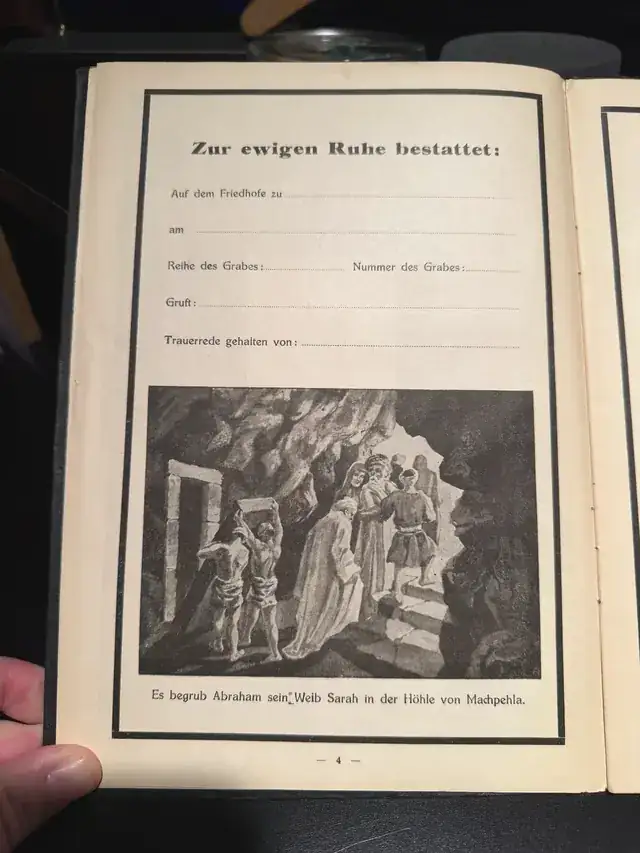 Document / objectThe album leaves a form for recording the burialThis page of the family’s mourning album shows the printed burial form above an engraving of the Cave of Machpelah. The volume was completed for Paul Reichenbach and kept by his family. The page shows how the book expected a burial to be recorded, but its blanks do not supply Paul’s grave details.
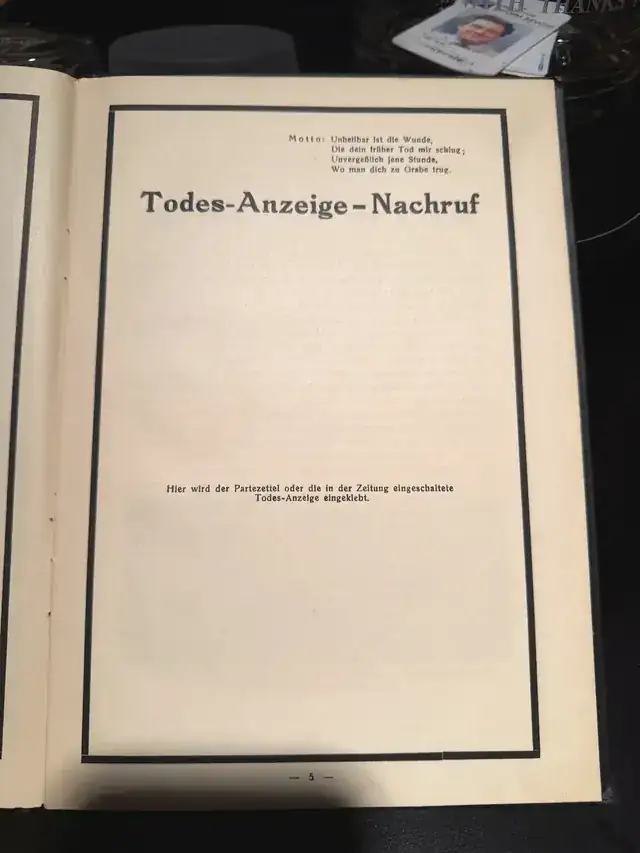 Document / objectThe album leaves room for a death notice and obituaryThis page of the family’s mourning album shows the framed page headed for a death notice and obituary. The volume was completed for Paul Reichenbach and kept by his family. The frame shows where a clipping could be kept, but no inserted notice survives in this image.
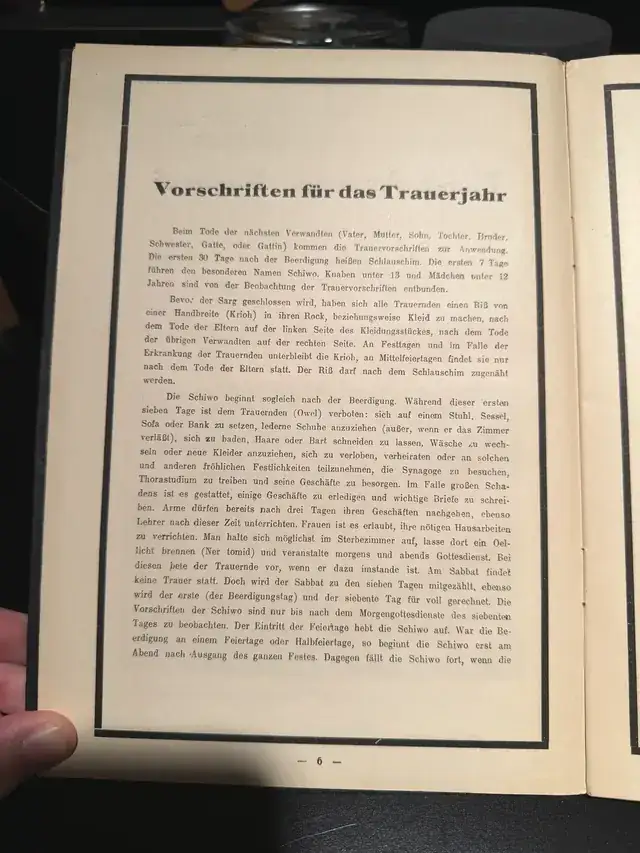 Document / objectThe album prints rules for the year of mourningThis page of the family’s mourning album shows the German instructions for shiva, shloshim and the mourning year. The volume was completed for Paul Reichenbach and kept by his family. The text shows what the book taught, but it does not prove how closely Paul’s family followed each rule.
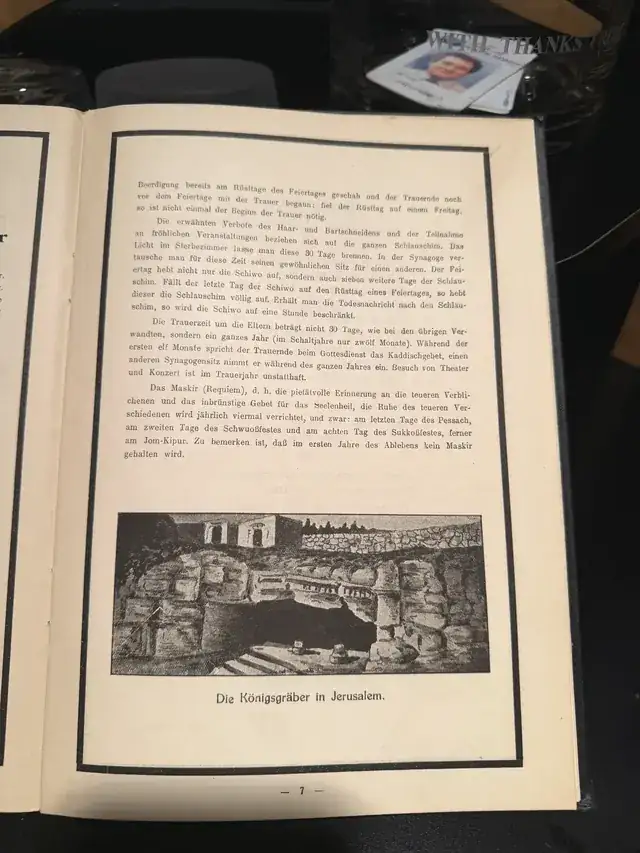 Document / objectThe mourning text faces an engraving of Jerusalem’s Kings’ TombsThis page of the family’s mourning album shows a printed page of mourning instruction beside the tomb engraving. The volume was completed for Paul Reichenbach and kept by his family. The illustration places mourning within a sacred geography, but it does not document a family visit to Jerusalem.
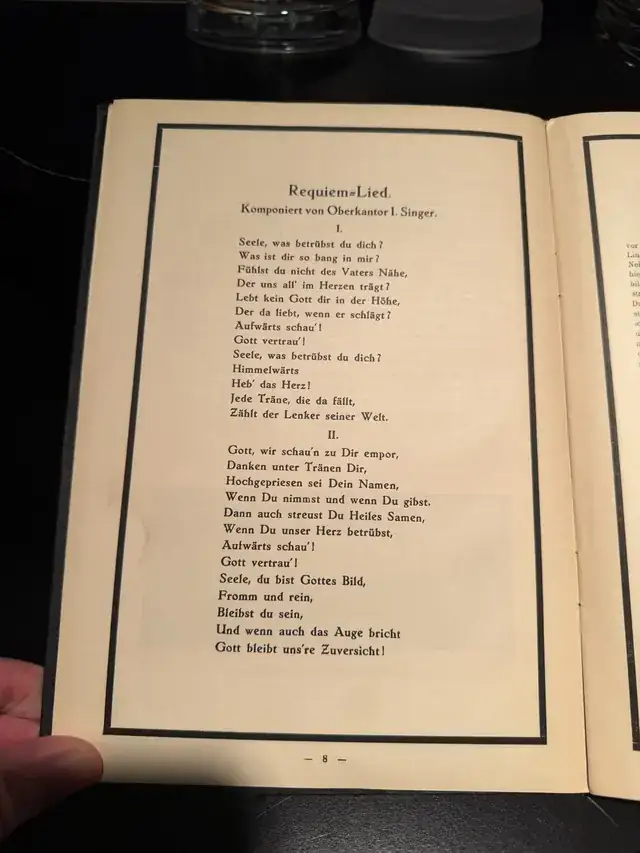 Document / objectOnly the edge of this mourning-album page survives in viewThis page of the family’s mourning album shows a narrow page edge and printed rule. The volume was completed for Paul Reichenbach and kept by his family. The image does not show the text once catalogued as a requiem song, so that identification is not used.
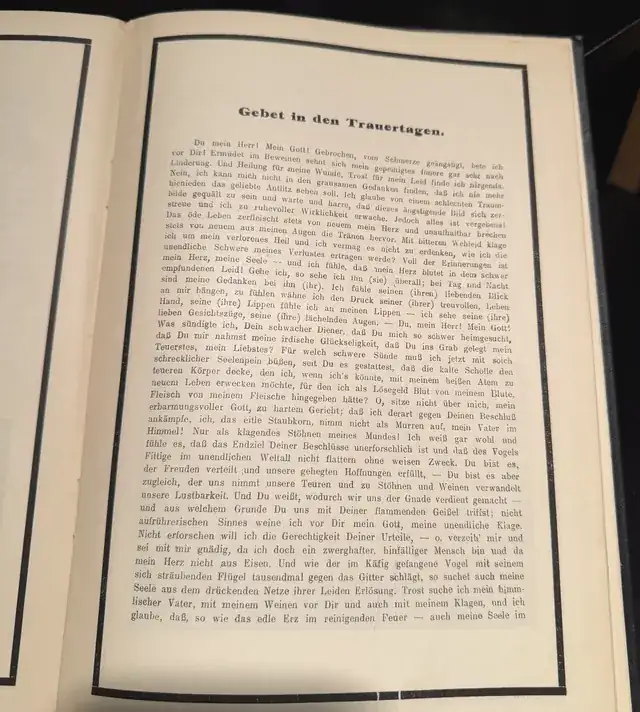 Document / objectThe album gives words for the days of mourningThis page of the family’s mourning album shows the prayer headed “Gebet in den Trauertagen”. The volume was completed for Paul Reichenbach and kept by his family. The printed prayer offered language for grief, but the page cannot tell us who read it aloud.
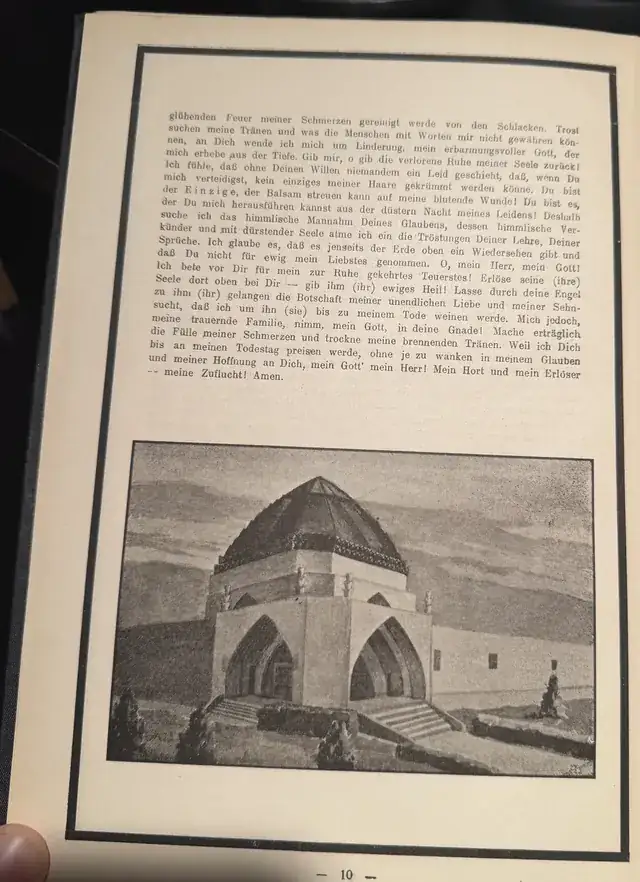 Document / objectA tomb engraving accompanies the mourning textThis page of the family’s mourning album shows a printed text page with an image in the Rachel’s Tomb tradition. The volume was completed for Paul Reichenbach and kept by his family. The illustration belongs to the volume’s devotional language, not to a photographed family grave.
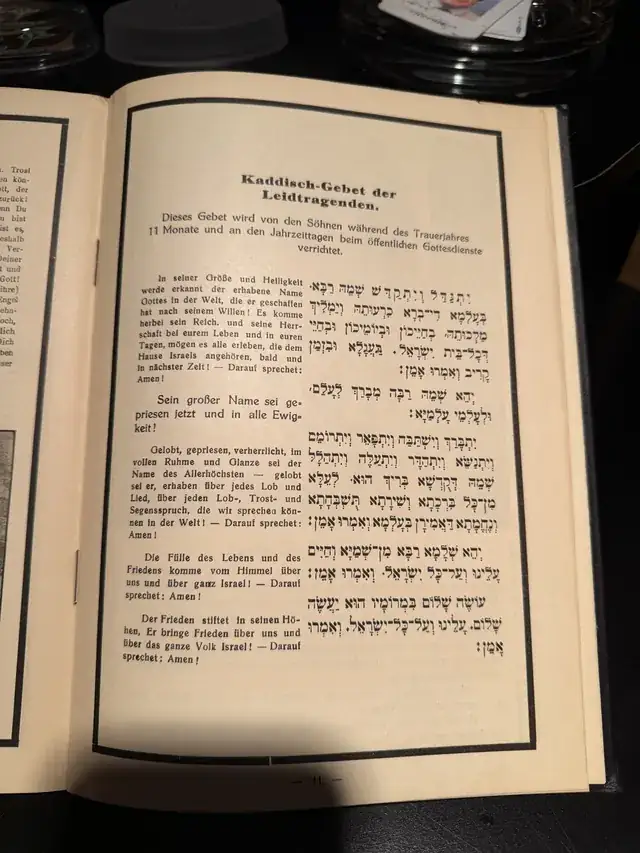 Document / objectThe album prints the mourners’ Kaddish in HebrewThis page of the family’s mourning album shows the Hebrew Kaddish under its German heading. The volume was completed for Paul Reichenbach and kept by his family. The page preserves the prayer available to the family, but it does not record a particular service.
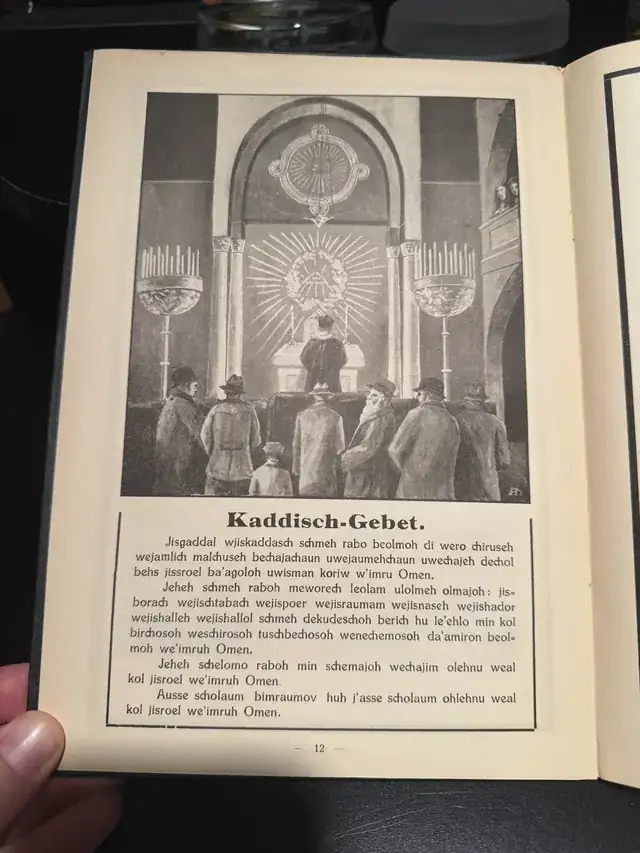 Document / objectMourners stand before the ark above a transliterated KaddishThis page of the family’s mourning album shows an illustrated plate of worshippers with the prayer printed below. The volume was completed for Paul Reichenbach and kept by his family. The scene explains the ritual setting, but the figures are printed types rather than portraits of Paul’s mourners.
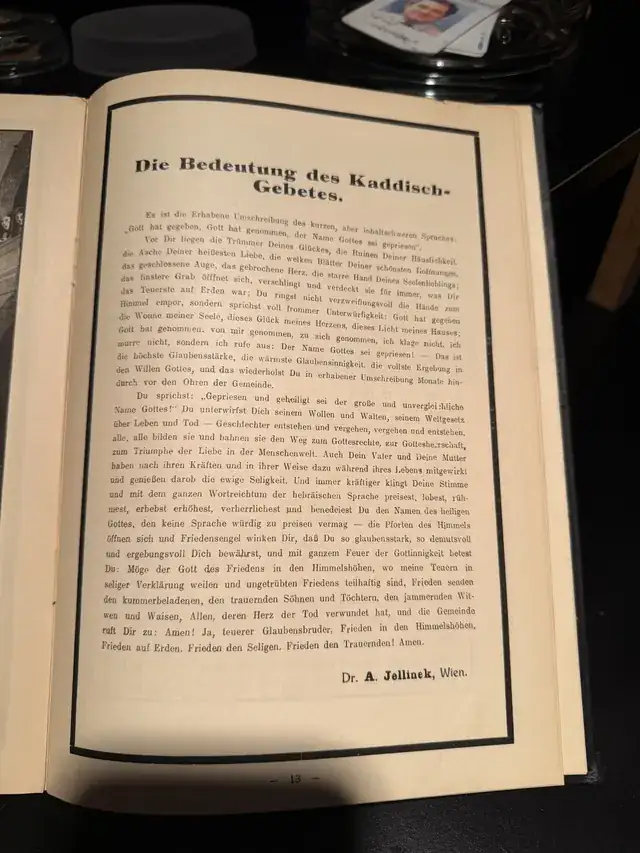 Document / objectDr. A. Jellinek explains the meaning of KaddishThis page of the family’s mourning album shows the German essay signed by Dr. A. Jellinek of Vienna. The volume was completed for Paul Reichenbach and kept by his family. The page preserves the published interpretation in the family’s book, but it does not tell us how they understood every line.
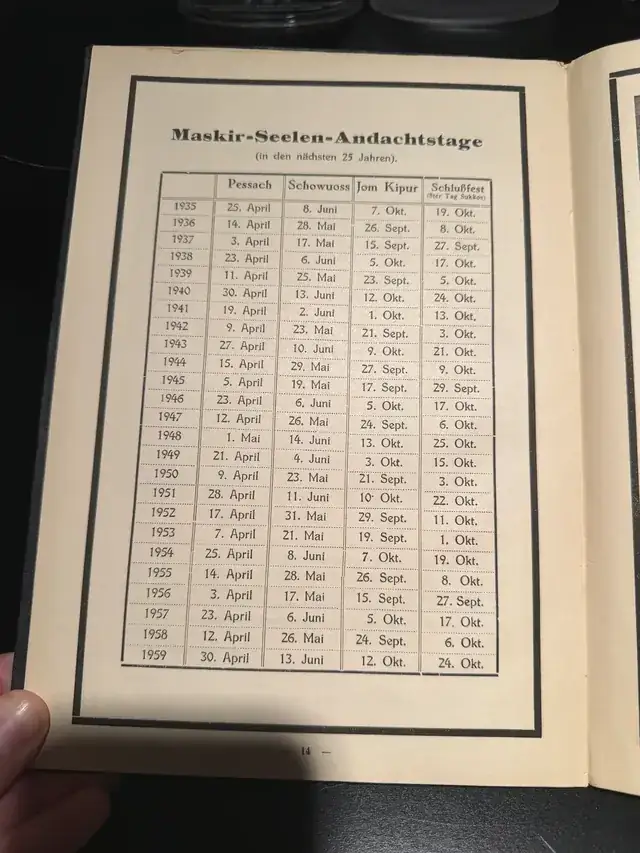 Document / objectThe album tabulates memorial days across future yearsThis page of the family’s mourning album shows the printed Maskir table for 1933 through 1960. The volume was completed for Paul Reichenbach and kept by his family. The table helped convert observance into dates, but it does not mark which entries the family used.
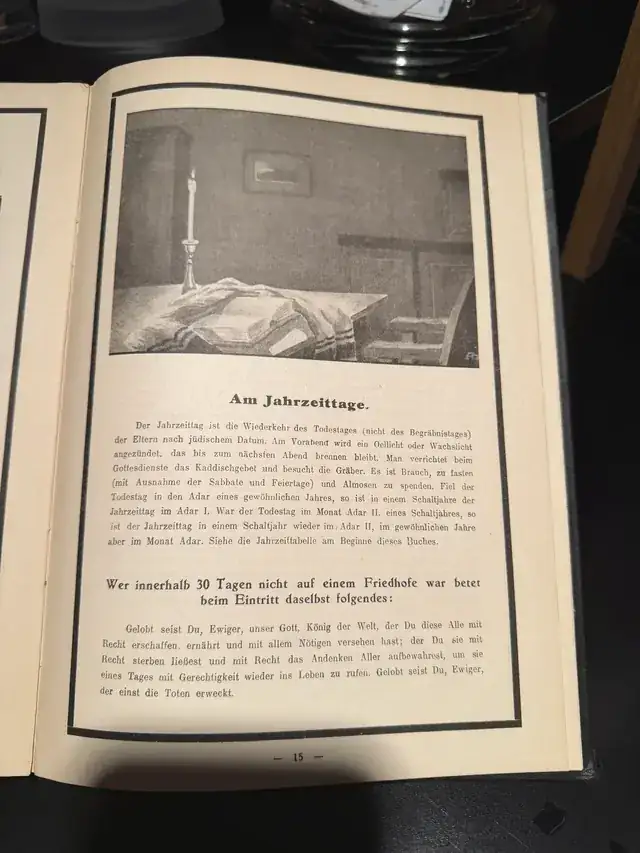 Document / objectA deathbed engraving introduces the page on the JahrzeitThis page of the family’s mourning album shows the illustrated page about the anniversary of a death and the memorial candle. The volume was completed for Paul Reichenbach and kept by his family. The page teaches the custom, but it is not a picture of Paul’s last hours.
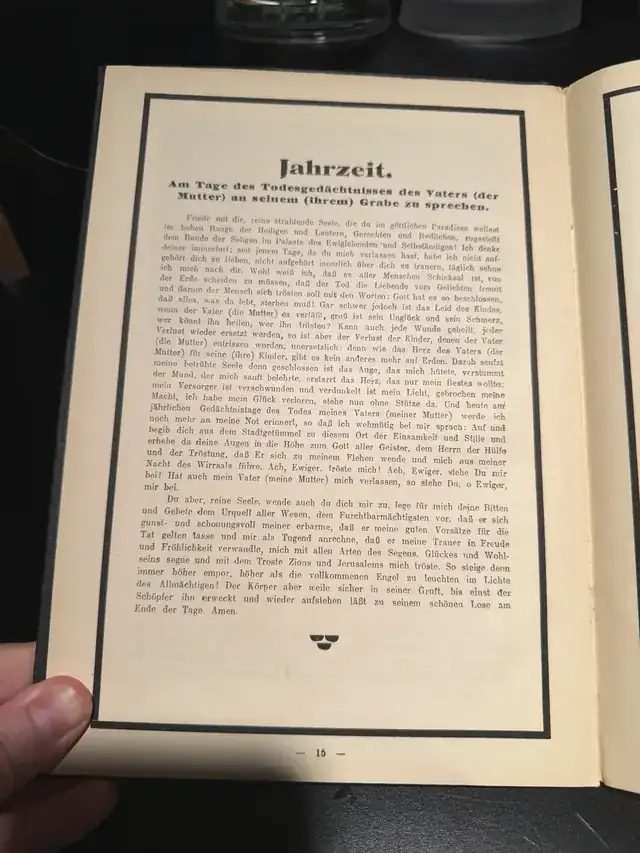 Document / objectThe album explains how to observe a JahrzeitThis page of the family’s mourning album shows the German text on visiting the grave, lighting a candle and saying Kaddish. The volume was completed for Paul Reichenbach and kept by his family. The instructions show the book’s practice, but they do not document each act performed by the family.
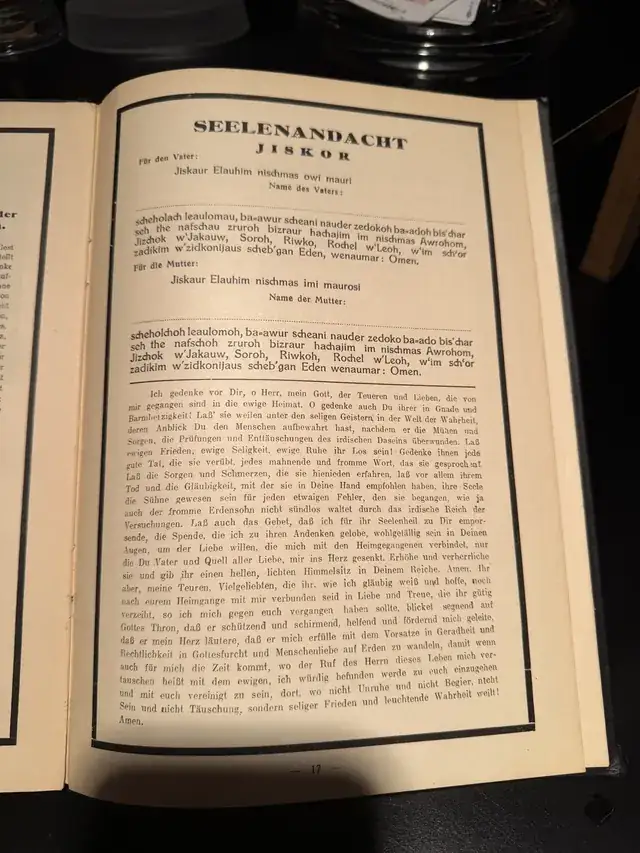 Document / objectThe mourning album opens a Yizkor prayerThis page of the family’s mourning album shows the memorial-prayer page headed “Seelenandacht — Jiskor”. The volume was completed for Paul Reichenbach and kept by his family. The printed page offered words for communal remembrance, but it records no individual service.
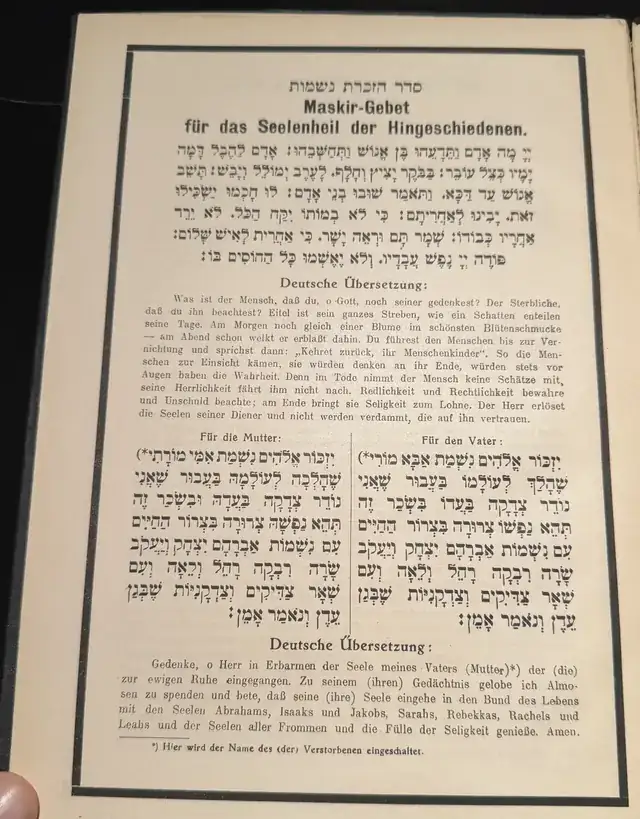 Document / objectThe Maskir prayer appears in parallel columnsThis page of the family’s mourning album shows the prayer in transliteration and German translation. The volume was completed for Paul Reichenbach and kept by his family. The layout made the words accessible to German-speaking readers, but it does not identify who used this copy.
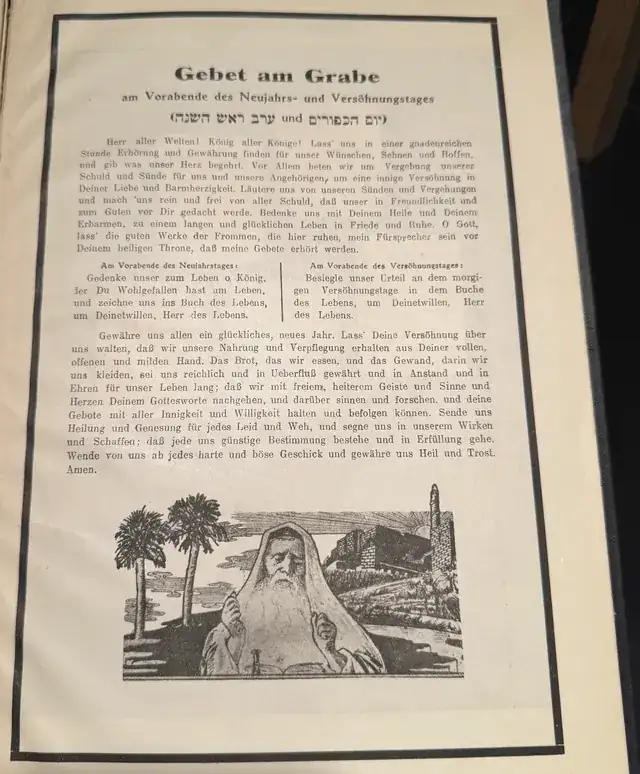 Document / objectThe album prints a prayer to say at the graveThis page of the family’s mourning album shows the cemetery illustration and the prayer headed “Gebet am Grabe”. The volume was completed for Paul Reichenbach and kept by his family. The page prepared a mourner for a visit, but it is not a view of Paul’s cemetery.
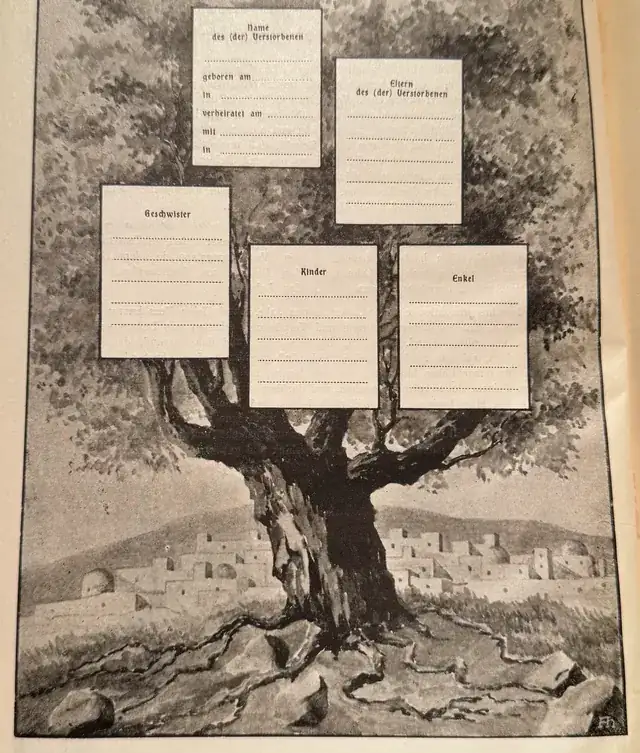 Document / objectThe album leaves its printed family tree unfilledThis page of the family’s mourning album shows the oak tree with blank genealogical shields. The volume was completed for Paul Reichenbach and kept by his family. The unused page shows what the publisher expected families to add, but it supplies no ancestry of its own.
 Document / objectBlank leaves close Paul’s mourning albumThis page of the family’s mourning album shows the final empty pages of the volume. The volume was completed for Paul Reichenbach and kept by his family. They preserve the book’s ending, but they contain no added remembrance or family note.
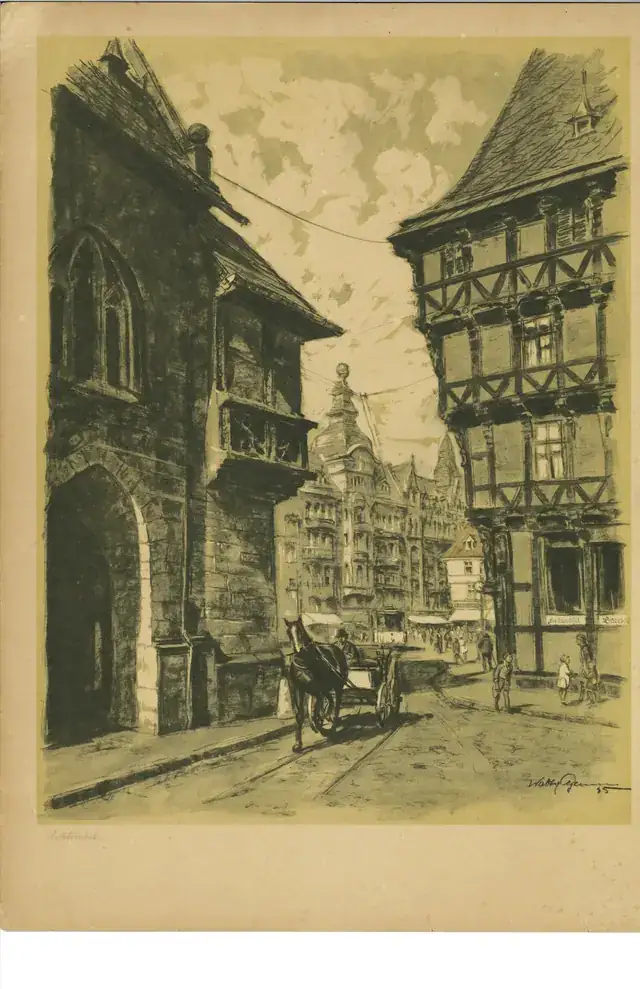 Document / objectWalter Gemm looks toward Halberstadt’s FischmarktThis portfolio sheet carries Walter Gemm’s printed signature and the date 45 as a horse-drawn cart and pedestrians move toward the market. The family kept it within a ten-sheet postwar portfolio. The view likely matches “Blick zum Fischmarkt,” but the cropped plate number cannot confirm the title alone.
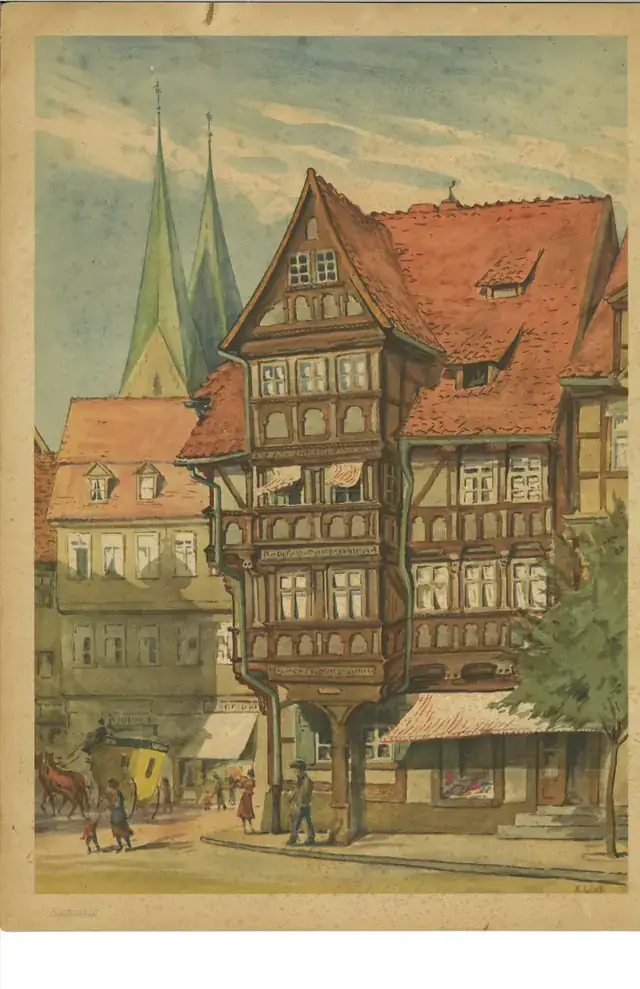 Document / objectKäthe Lipke draws the supported upper storeys of the StelzfußThis color portfolio sheet bears Käthe Lipke’s signature and shows the building known as Der Stelzfuß. Her hand proves that the family’s portfolio included artists besides Walter Gemm. The work is securely identified, but the cropped plate number and acquisition history remain open.
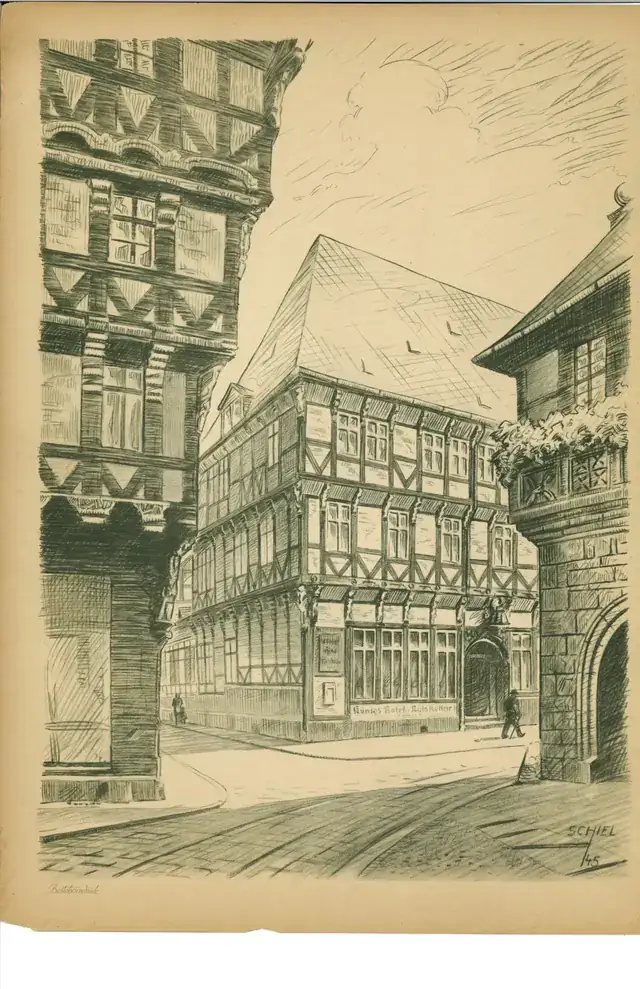 Document / objectEdwin Schiel draws the old Ratskeller and timbered housesThis portfolio sheet bears Edwin Schiel’s 1945 signature and shows Königs Hotel, the Ratskeller and adjoining timber-framed buildings. His close linework preserves a part of Halberstadt later altered by destruction and rebuilding. The title is secure from the contents list, but no separate printed title survives on the sheet.
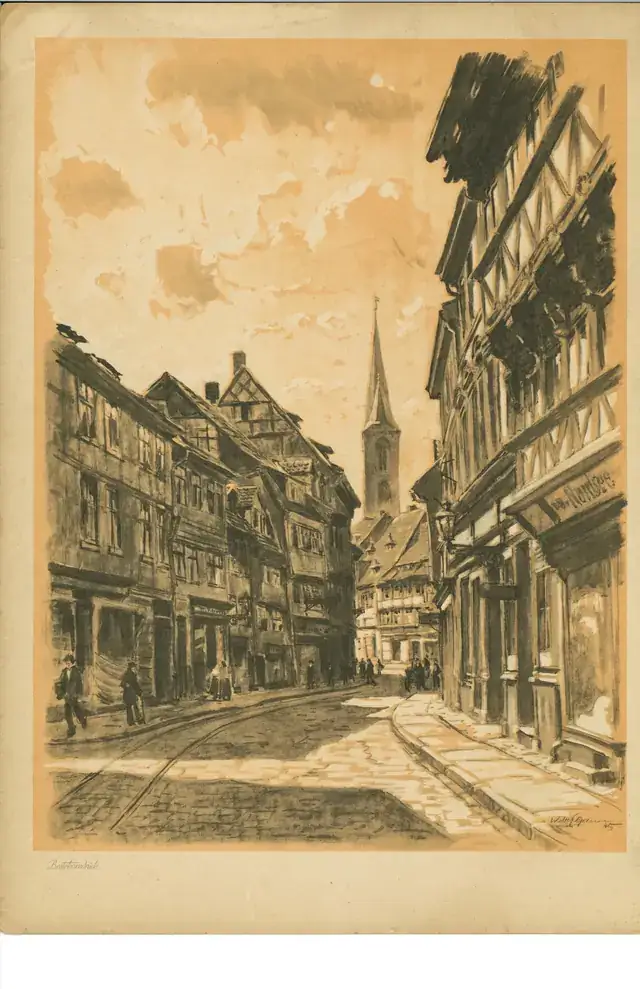 Document / objectWalter Gemm sends the eye along the Hoher WegThis portfolio view shows tram rails, shopfronts and a church tower drawing the street into the distance. Walter Gemm signed and dated the sheet, and the family kept it after the war. It probably matches the title “Der Hoheweg,” but the cropped plate number leaves that match dependent on image and contents list together.
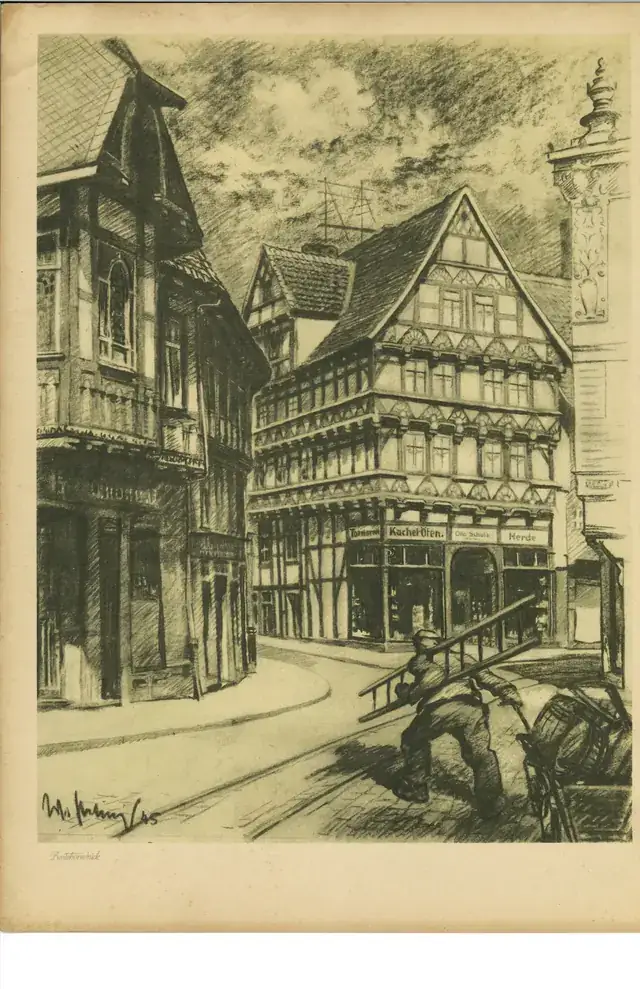 Document / objectWalter Gemm draws the steep street behind the RichthausThis signed 1945 portfolio sheet shows a close-grained street with shop signs, steps and a working figure. Gemm’s hand preserves an inhabited city rather than an empty monument. It probably matches “Hinter dem Richthaus,” but the missing plate number prevents confirmation from the sheet alone.
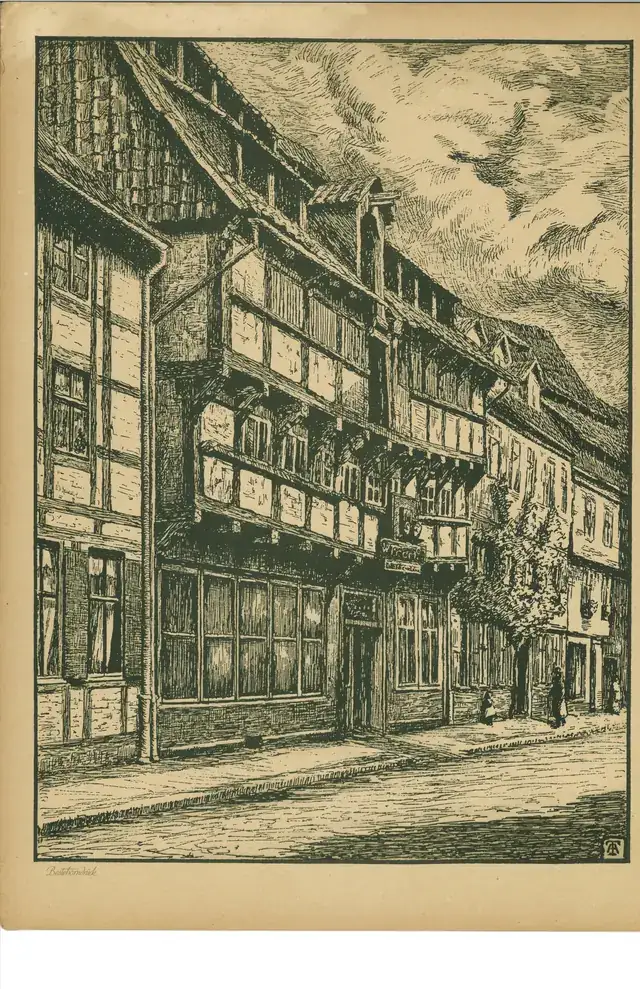 Document / objectA. Thiemann records old houses in the GerberstraßeThis high-contrast portfolio sheet bears A. Thiemann’s boxed AT monogram. The family kept it among the postwar views of Halberstadt, where it broadens the portfolio beyond Walter Gemm. The title is secure from the contents list, but browning, edge losses and the cropped number remain visible.
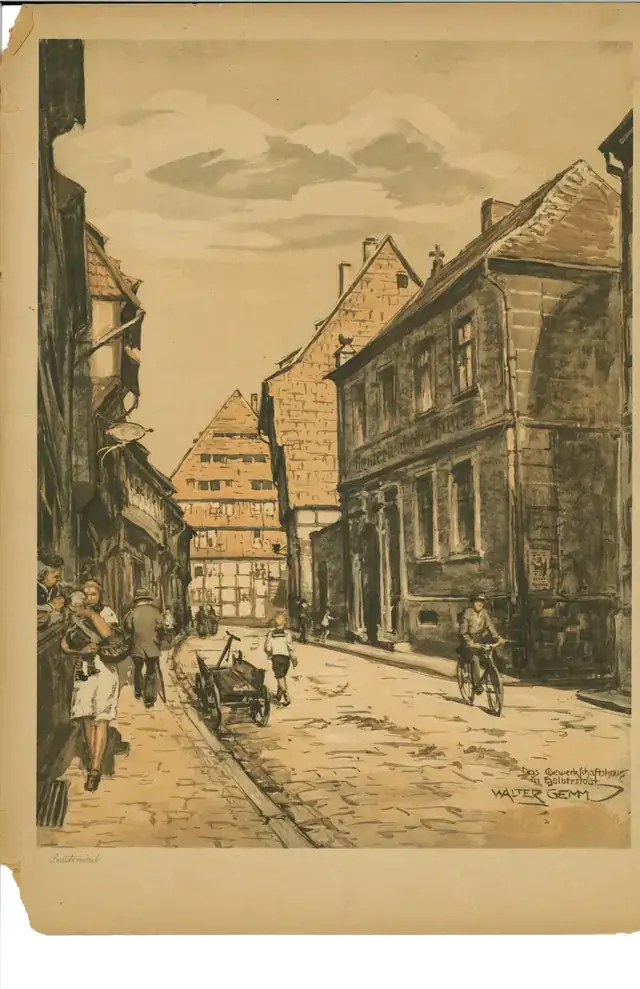 Document / objectWalter Gemm gives one Gerberstraße view two namesThis damaged portfolio sheet bears Walter Gemm’s full signature and his inscription “Das Gewerkschaftshaus in Halberstadt.” The contents list calls the same image “Die Gerberstraße,” so both titles remain with the object. The staining and missing corners are preserved, and neither title is silently discarded.
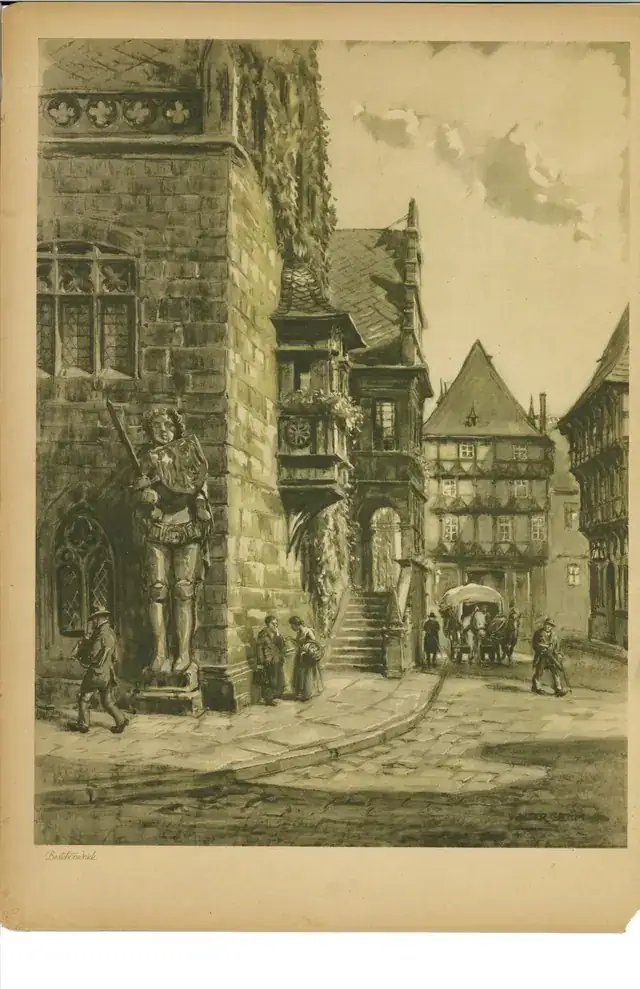 Document / objectWalter Gemm places the Rathaus steps beside the RolandThis portfolio sheet shows Halberstadt’s Rathausfreitreppe and Roland amid the traffic of the old city. Gemm made the view, and the family kept it with the postwar portfolio. The landmarks secure the title, but the cropped plate number and the portfolio’s acquisition history remain open.
 Document / objectDolf wore this gold signet ringThis gold ring with a blue intaglio stone belonged to Dolf Reichenbach. Family memory allows that it may have come from an earlier generation. The object proves Dolf’s ownership, but no document yet names its maker, first owner or date.
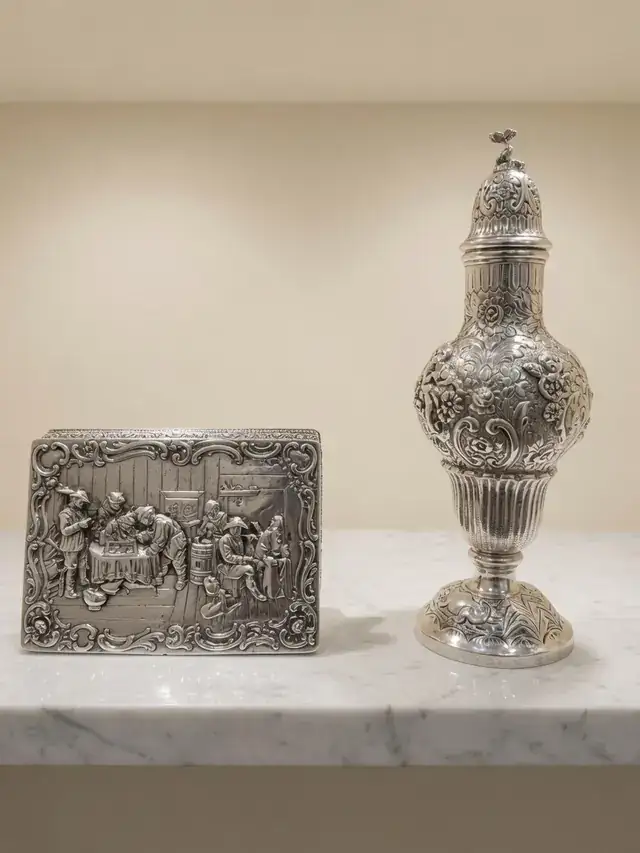 Document / objectMargarete’s silver household objectsA lidded sugar caster and a rectangular repoussé box, associated in family memory with Margarete Reichenbach’s departure from Germany. Susan Reichenbach Heyman connects the pieces to Margarete’s departure. No document yet establishes when she acquired them or who made them.
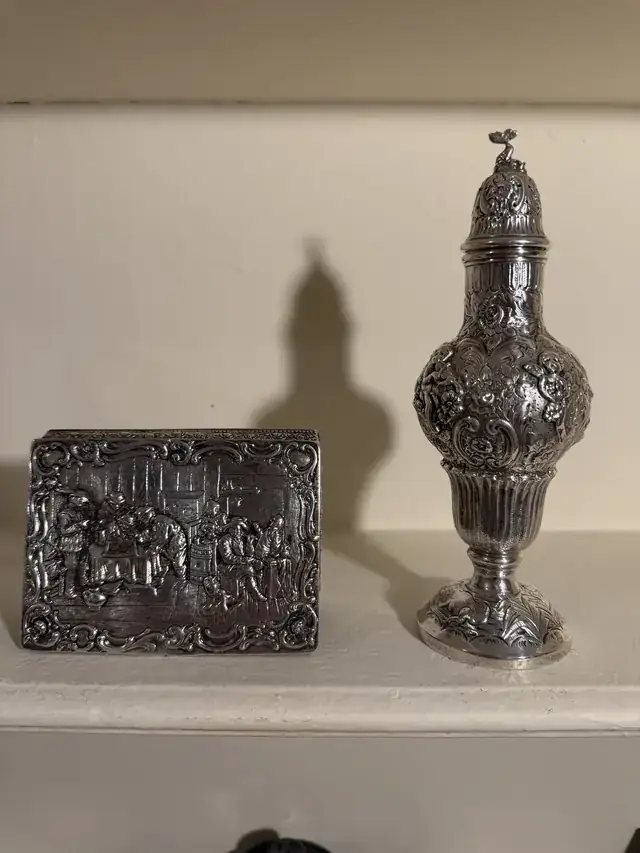 Document / objectThe family silver pieces appear together before editingThis unedited paired view shows the lidded sugar caster and repoussé box together. Susan Reichenbach Heyman connects the pieces to Margarete and the belongings carried from Germany. The view preserves their relation in the family, but it does not establish maker, date or purchase history.
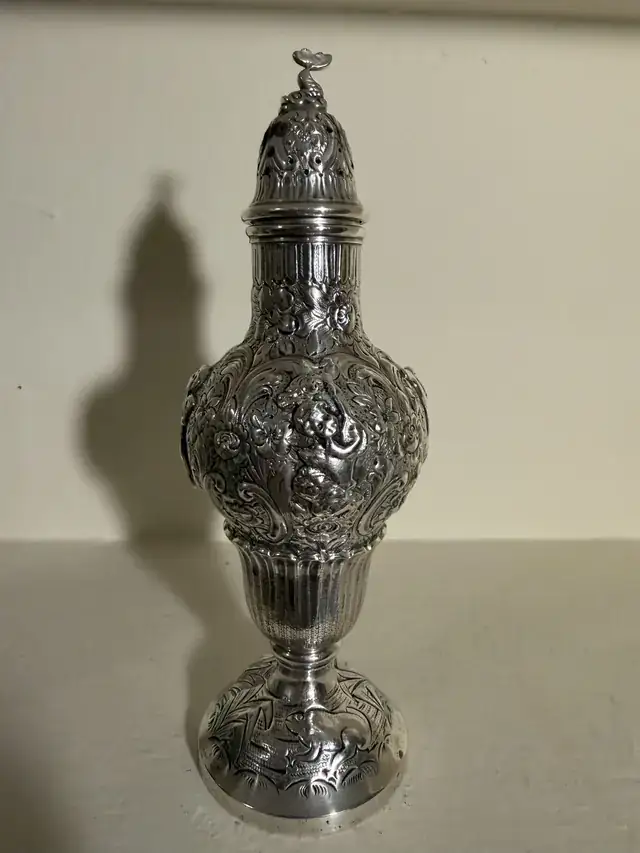 Document / objectThe sugar caster stands with its lid in placeThis close view shows the lidded sugar caster kept among Margarete’s family silver. Family hands preserved the object after migration. Its form can be examined here, but no maker, date or first owner has been established.